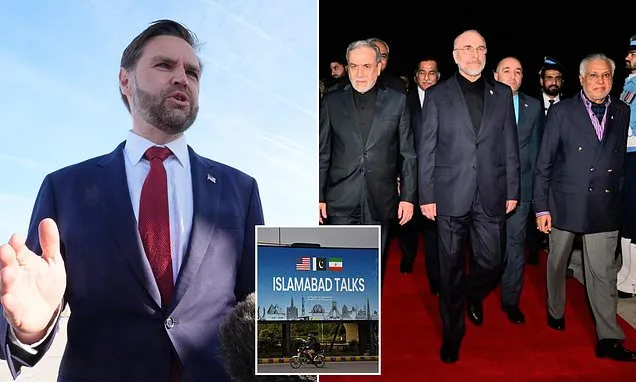
Vice President JD Vance has arrived in Islamabad, Pakistan, to spearhead U.S. peace negotiations with Iran, marking a pivotal moment in his career. Leading the American delegation, Vance joins special envoy Steve Witkoff and Jared Kushner, a team President Donald Trump described as strong and capable.
U.S. Delegation’s Departure and Stance
Before departing from Joint Base Andrews in Maryland, Vance addressed reporters, emphasizing a firm approach. “If they’re going to try to play us, they’re going to find the negotiating team is not going to be that receptive,” he stated. “The president gave us some pretty clear guidelines.”
Vance, known for his reservations about prolonged foreign military engagements, also expressed openness: “If the Iranians are willing to negotiate in good faith, we’re certainly willing to extend the open hand.”
Iranian Delegation Arrives Early
The Iranian team landed hours earlier, led by Foreign Minister Abbas Araghchi, Ali Akbar Ahmadian of the Supreme National Defense Council, Parliament Speaker Mohammad Bagher Qalibaf, Central Bank Governor Abdolnasser Hemmati, and several lawmakers. Pakistani officials, including Foreign Minister Ishaq Dar, greeted them at the airport.
Upon arrival, Vance met with Pakistan’s Chief of Army Staff Field Marshal Asim Munir and Foreign Minister Ishaq Dar, receiving a warm welcome with a bouquet of flowers.
Talks Amid Fragile Ceasefire
Scheduled to begin Saturday, the discussions occur as a temporary ceasefire teeters on the edge of collapse. Gaps persist between Iran’s demands—such as a Lebanon ceasefire targeting Hezbollah and release of frozen assets—and positions from the U.S. and Israel.
Qalibaf posted on social media that these conditions must precede formal talks, without further details.
Trump’s Optimism and Strait of Hormuz Concerns
President Trump wished Vance success before his own departure, noting, “He’s got a big thing. We’ll find out what’s going on. They’re militarily defeated.”
Trump rejected any Iranian tolls on the Strait of Hormuz, calling it international waters. “If they’re doing that, we’re not going to let that happen,” he said. He predicted the strait would reopen soon, benefiting global trade, even as the U.S. relies less on it.
Athens-based Marine Traffic reports only 14 vessels—half laden—have transited the strait since the April 8 ceasefire, compared to over 100 daily before the conflict. Sanctioned or shadow-fleet ships made up nearly two-thirds of recent crossings, with Persian Gulf exits at 70%.
Trump voiced confidence in his envoys: “It’s JD and Steve and Jared. We have a good team, and they meet tomorrow. We’ll see how it all works out.” He anticipates challenges but expects results, vowing to reopen the Gulf regardless.