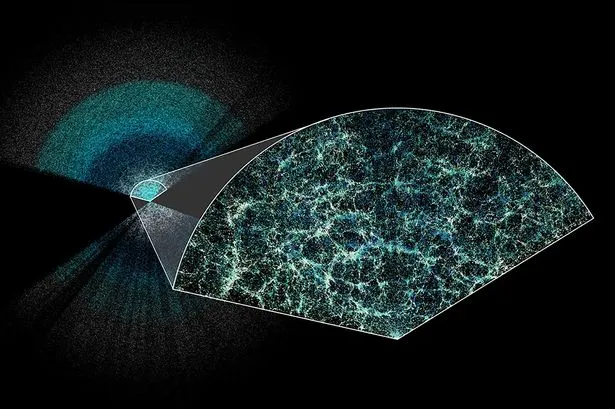
Researchers from the University of St Andrews have played a key role in developing the most extensive 3D map of the universe to date. This monumental project leverages the Dark Energy Spectroscopic Instrument (Desi), positioned at the Mayall telescope in Arizona. Scientists from St Andrews collaborated with experts from the University of California, Berkeley, and teams across 70 institutions globally.
Desi’s Ambitious Scope and Achievements
Over five years, Desi has gathered data on millions of galaxies and quasars, producing a detailed 3D cosmic map. The instrument targets dark energy, which experts theorize dominates the universe’s composition. Launched in May 2021 with a goal of observing 34 million galaxies and quasars, the project surpassed expectations by mapping 47 million galaxies and quasars, along with 20 million stars.
Unlocking Cosmic Secrets
Desi delivers unprecedented resolution of the cosmic web, enabling fresh insights into galaxy formation and evolution. Rita Tojeiro, Professor of Astronomy at the University of St Andrews, highlighted the project’s significance: “Desi undeniably transforms cosmology. Beyond its revolutionary survey, this 3D map fuels world-class legacy science.”
She emphasized the value of individual observations: “Each of the 47 million galaxies and quasars shares a unique story. By compiling these, we uncover how galaxies form and evolve across cosmic time. Desi’s detailed view of the three-dimensional cosmic web allows us to examine galaxy interactions with surrounding structures in novel ways.”
Future Probes into Dark Energy and Matter
With this map, scientists now pursue deeper understanding of dark energy and dark matter—components believed to form the bulk of the universe, yet undetected physically. Professor Tojeiro expressed enthusiasm: “I’ve anticipated this cosmic map for over a decade. Now available, we can expand and refine it. Its incredible detail and information richness will sustain exploration for the next 10 years.”