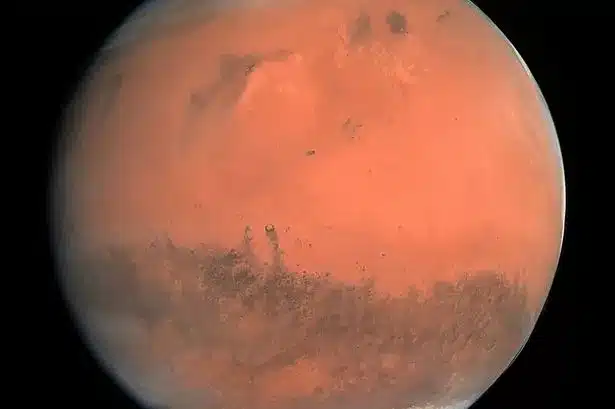
NASA scientists have uncovered a significant breakthrough on Mars, detecting key chemicals that serve as building blocks for life. The Curiosity rover, exploring the Red Planet for more than a decade, conducted a pioneering experiment revealing the Martian surface’s ability to preserve ancient molecules for billions of years.
Groundbreaking Chemical Detection
In this first-of-its-kind test on another planet, the rover identified over 20 distinct chemicals. Among them, nitrogen-bearing molecules stand out due to their structure, which closely resembles DNA precursors. Researchers also spotted benzothiophene—a compound carried by meteorites—for the first time on Mars’ surface.
These findings demonstrate that organic matter can endure in Mars’ shallow subsurface over vast timescales, opening new avenues for habitability studies.
Expert Analysis on Preservation and Origins
Professor Amy Williams, a lead scientist from the University of Florida involved in the Curiosity and Perseverance missions, highlights the discovery’s importance. She stated: “We think we’re looking at organic matter that’s been preserved on Mars for 3.5 billion years. It’s really useful to have evidence that ancient organic matter is preserved, because that is a way to assess the habitability of an environment. And if we want to search for evidence of life in the form of preserved organic carbon, this demonstrates it’s possible.”
The detection of benzothiophene points to ancient meteorite impacts similar to those that delivered life’s ingredients to Earth. Professor Williams added: “The same stuff that rained down on Mars from meteorites is what rained down on Earth, and it probably provided the building blocks for life as we know it on our planet. We now know that there are big complex organics preserved in the shallow subsurface of Mars and that holds a lot of promise for preserving large complex organics that might be diagnostic of life.”
While the exact origins remain unclear, returning samples to Earth for detailed analysis could confirm if these molecules stem from ancient Martian life. The results appear in the journal Nature Communications, strengthening evidence that Mars once supported habitable conditions.