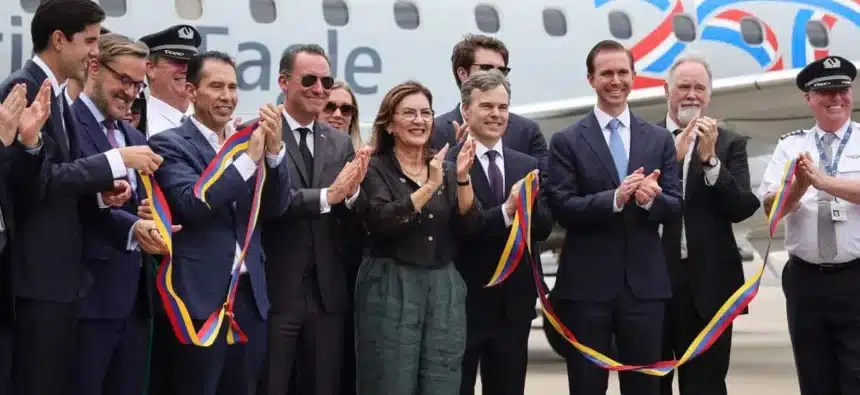
The inaugural direct flight from the United States to Venezuela in seven years has arrived in Caracas, signaling a major thaw in bilateral relations. Operated by Envoy Air, a subsidiary of American Airlines, Flight 3599 departed Miami at 10:26 a.m. local time on Thursday and landed less than three hours later.
Diplomatic and Symbolic Importance
Senior U.S. officials traveled on the flight to engage with Venezuelan government representatives, a development that would have seemed impossible months earlier. The aircraft received a ceremonial water salute from two Venezuelan fire trucks upon arrival, highlighting the end of Venezuela’s prolonged isolation from U.S. carriers and its return to international aviation networks following last year’s airline exodus amid heightened tensions.
U.S. Chargé d’Affaires in Venezuela John Barrett welcomed the passengers, declaring in Spanish, “Today marks a new historic chapter in relations between the US and Venezuela.” He emphasized that the country is now “open for business.” Venezuelan Ambassador to the U.S. Félix Plasencia and representatives from Miami, a key hub for Latin American communities, also greeted arrivals at the gate.
Passenger Reactions and Convenience
Travelers expressed relief and excitement over the restored direct service. Isabel Parra, a Venezuelan-born travel agent who had not visited since 2018, described herself as “super excited.” “For years, we had to go through Curaçao, the Dominican Republic, or Bogotá, so having this direct flight is a real pleasure,” she said. Parra noted the inaugural ticket cost $3,000, but prices should decrease soon, especially with a second daily round-trip starting May 21.
Oscar Fuentes, a 64-year-old lawyer from Houston, prepared for the return flight to Miami. “It’s going to make life so much easier. Tonight, I’ll be able to sleep in my own bed!” he remarked, contrasting it with previous routes via the Dominican Republic. The flight offered a special Venezuelan menu featuring cachapas corn pancakes and chicken salad.
Economic and Political Context
With 1.2 million Venezuelans residing in the U.S. and the nation holding the world’s largest proven oil reserves, improved ties promise expanded American business opportunities. Venezuela has opened its oil and mining sectors to private investment. In response, the U.S. has begun easing sanctions, including those previously targeting Vice President Delcy Rodríguez, who assumed leadership after the January 3 U.S. raid in Caracas that captured deposed leader Nicolás Maduro and his wife. The couple faces drug trafficking charges in New York, which they deny.
Rodríguez has cooperated with U.S. interests despite her background, earning praise from President Donald Trump for policies favoring American companies. Trump has enforced compliance through firm measures while simultaneously ending a migrant protection program, prompting deportations of some Venezuelans.
Aviation Revival Amid Challenges
American Airlines, with deep Latin American roots, launched Venezuela service in 1987 and handled the most passengers between the countries before suspending flights in 2019 amid deteriorating relations and disputed elections. The U.S. State Department urges citizens to reconsider travel due to crime but lifted its blanket advisory in March.
This resumption occurs despite industry headwinds from soaring oil prices following the U.S. and Israeli strikes on Iran on February 28.