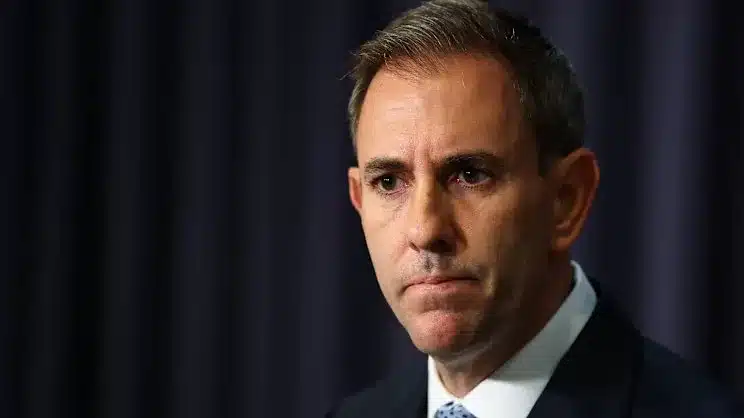
Treasurer Jim Chalmers remains noncommittal on new income tax reductions ahead of next week’s federal budget, while the government positions potential changes to negative gearing as a responsible policy shift. Officials suggest these reforms could pair with tax relief for workers to offset impacts on property investors and landlords.
Treasurer’s Comments on Tax Policy
During a Monday briefing, Chalmers emphasized existing tax measures when questioned about further cuts. “We’ve already got tax cuts coming,” he stated, highlighting minor income tax reductions set for July and a new $1,000 standard deduction. He did not dismiss the possibility of additional relief starting next year.
Government insiders confirm preparations to revive elements of the 2019 tax platform, including limits on negative gearing, capital gains discounts, and stricter rules on family trusts. Unlike previous proposals, changes to franking credits are off the table. These steps aim to broaden the revenue base amid rising economic pressures.
Historical Precedent and Election Promises
Major tax overhauls, such as those under Paul Keating in the 1980s and John Howard in the early 2000s, balanced new levies with substantial income tax cuts. Prime Minister Anthony Albanese previously declared negative gearing changes “off the table” during last year’s debate with Peter Dutton, arguing they would not boost housing supply.
Any revisions would likely grandfather existing investments and target new properties to support housing growth. Chalmers justified potential shifts by citing the stage 3 tax cut adjustments, noting, “You build trust by taking the right decisions for the right reasons.”
Opposition Response and Economic Challenges
Shadow Treasurer Tim Wilson criticized the approach as a “full suite of family savings taxes,” accusing Chalmers of hypocrisy. “Chutzpah is Jim Chalmers arguing he needs to betray Australians to be trusted,” Wilson remarked.
Inflation remains above the Reserve Bank’s target, exacerbated by the Iran conflict and the Strait of Hormuz closure, which has driven up fuel prices. Labor has allocated nearly $2.5 billion to reduce the fuel excise. Consumer confidence wanes amid higher costs, prompting calls for household relief.
Productivity Commission Chair Danielle Wood advocated pairing property tax changes with income tax reductions. “We would certainly hope to see these types of changes reduce pressure on income tax over time,” she said recently.
Budget Outlook and Rate Pressures
Existing tax measures include modest cuts delivering $5 weekly for earners over $45,000 from July, costing $3 billion in 2026-27, plus a $6.7 billion second round in 2027 and $1.2 billion for the deduction. Chalmers and Finance Minister Katy Gallagher described the budget as “very responsible,” banking upgraded revenue forecasts.
The Reserve Bank anticipates another rate hike on Tuesday, with markets pricing a 75% chance and more increases by October. On a $600,000 mortgage, repayments could rise nearly $300 monthly cumulatively. HSBC Australia’s Paul Bloxham suggested targeted spending cuts to ease monetary tightening.
ANZ analysts Daniel Hynes and Soni Kumari warn of lasting oil market disruptions. Even if supply recovers, Brent crude may exceed $US90 per barrel through 2026 due to ongoing Middle East tensions and potential Strait closures.