Paris Erupts in Chaos as Joyous Celebrations Descend into Riots
The air in Paris filled with the acrid sting of tear gas as jubilant celebrations for a European football victory escalated into widespread rioting. What began as a euphoric outpouring of support for Paris Saint-Germain quickly devolved into scenes of destruction that engulfed the city until dawn.
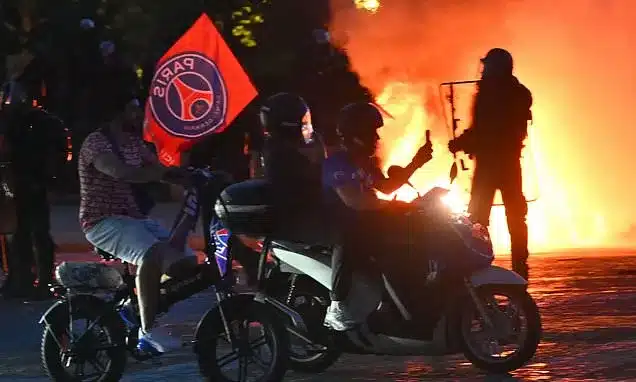
White smoke billowed across intersections, mingling with the vibrant flares and fireworks launched by thousands of ecstatic fans. As a car drove through the haze, followed by a cyclist, the sharp crack of multiple fireworks became distinguishable. Suddenly, a searing burn struck the eyes, and fumes filled the airways – it was tear gas, not the lingering remnants of a flare. Unidentified individuals, not part of the riot police presence, had apparently unleashed gas canisters into the street, ostensibly as a form of celebration.
Many caught in the gas surge rushed to public fountains to rinse their faces, while masked fans continued their march, brandishing flares. Despite this disruption, the atmosphere remained largely jovial, barely thirty minutes after the decisive penalty was scored. This mood was short-lived, however, as the celebrations spiraled into full-scale clashes between fans and law enforcement, mirroring the chaos of the previous year.
Escalation from Celebration to Conflict
Lines of riot police remained stationed near their vehicles, and cars had yet to be set ablaze. Tens of thousands of supporters, singing and waving flags, marched from the Parc des Princes, where many had gathered to watch the match on large screens. The procession was a vibrant display of team spirit, with fans honking horns in solidarity with passing cars and scooters weaving through the crowds, their horns adding to the cacophony.
Chants of ‘Ici, c’est Paris,’ the team’s rallying cry, echoed from balconies as residents leaned out their windows, illuminated by the red glow of numerous flares. The energy was palpable, with one fan even climbing onto the roof of a car stopped in a busy intersection, conducting the cheering crowd. Others launched fireworks into the sky, though the late afternoon light diminished their visual impact.
Yet, beneath the surface of good-natured revelry, a sense of foreboding persisted, amplified by memories of the previous year’s disorder. The potential for the jubilant party to transform into a warzone was a tangible concern, a premonition that would unfortunately prove true once more.
A Repeat of Last Year’s Disorder
Last May, following PSG’s victory over Inter Milan, two fatalities and nearly 200 injuries were reported. The city experienced widespread damage, with approximately 300 cars set ablaze, monuments defaced, and shops looted. This year, authorities appeared more prepared, with increased police presence and barricaded roads designed to channel supporters along specific routes, aiming to prevent the widespread chaos witnessed previously.
As the night wore on, the trajectory of fireworks became increasingly concerning. In this affluent district, supporters began firing them horizontally, like projectiles, towards random groups of pedestrians and police officers. Law enforcement responded with batons, water cannons, and their own tear gas.
Amidst the burning Lime bikes, some supporters wore t-shirts bearing provocative slogans. By approximately 2 a.m., witnesses observed a group of topless youths dragging a burning wheelie bin down the street. An elderly woman voiced her disapproval from her seventh-floor balcony, while another resident monitored her car parked on the street, fearing it would become another charred wreck.
Tragic Consequences and Continued Violence
By morning, the grim toll of the night’s events became apparent. A 17-year-old fan was found stabbed near the Champs Elysee and was in intensive care. Approximately 800 individuals were arrested in connection with the riots, and over 200 people sustained injuries. A police officer was struck by a vehicle that then fled the scene. The interior minister reported that 57 officers were wounded.
Despite the widespread unrest, plans for a victory parade at the Eiffel Tower remained scheduled, with six thousand officers reportedly on standby. Further incidents included an attempt by a group to storm a police station in the 8th arrondissement and more instances of shops being raided. Tragically, a 23-year-old motorcyclist died after colliding with a wall.
What should have been a moment of collective triumph for Paris Saint-Germain ultimately devolved into scenes of shame and destruction, a disheartening repetition of past events.