Former Prime Minister Jacinda Ardern Expresses Belief in New Zealand Republic
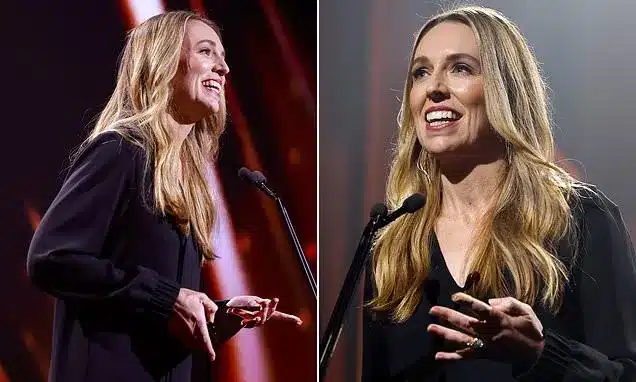
Former Prime Minister of New Zealand, Dame Jacinda Ardern, has voiced her conviction that the nation will transition to a republic during her lifetime. Ardern, who made history as the country’s youngest Prime Minister in 150 years when she took office at 37 in 2017, suggested that a significant portion of New Zealanders see a republican future for their nation.
Currently residing in Australia with her husband Clarke Gayford and their daughter Neve, Ardern acknowledged that such a change would be a gradual process. She highlighted the complexity of the transition, particularly concerning the Crown’s historical relationship with indigenous New Zealanders and the presence of numerous other pressing national issues.
“It’s not top of the agenda for New Zealand but I believe it will become a republic in my lifetime,” Ardern stated. “If you ask the question, many would say it’s something that should be in our future.”
Understanding the Shift to a Republic
A move to a republic would signify the end of the British monarch’s role as New Zealand’s Head of State. As a Commonwealth realm, New Zealand, alongside 15 other nations including Canada and Australia, currently recognizes King Charles as its monarch, despite being an independent sovereign state.
Unlike Australia, where republican sentiment has been more pronounced, public enthusiasm for removing the monarch’s role in New Zealand has not reached a similar intensity. Reports suggest that the indigenous Maori population places value on the Crown’s position due to its commitments under the Treaty of Waitangi, which safeguards their rights.
Reflections on Leadership and Public Service
Ardern, who led New Zealand through the demanding period of the COVID-19 pandemic, recalled receiving valuable counsel from the late Queen Elizabeth II during a state visit. She described the Queen’s advice as “simple, practical advice” – the simple directive to “just have to get on with it” – which she found to be precisely what she needed during her pregnancy.
“What she was saying was there’s no big secret to it, you just take every day as it comes,” Ardern shared in a recent interview. The former leader, who earned widespread acclaim for her decisive leadership during the pandemic and in the aftermath of the 2019 Christchurch mosque shootings, admitted that she “wouldn’t wish managing a pandemic on anyone.”
Views on Gun Control and Political Discourse
Reflecting on the swift implementation of a ban on semi-automatic weapons following the mosque massacre that claimed 51 lives, Ardern noted that the decision on whether such firearms should be “routinely available” rests with individual countries.
Ardern, who was the second elected world leader to give birth while in office, remained pragmatic about her past popularity, often referred to as ‘Jacindamania,’ stating she “refused to believe it existed.” She emphasized her experience in recognizing the inherent “ups and downs” of public office. She also called for enhanced support for contemporary politicians navigating what she described as a less extreme political landscape.
“People should do a better job of supporting politicians who aren’t using blame, fear and isolation as a tool,” she urged, characterizing the current political climate as an “incredibly difficult time.” She expressed concern over the ease with which individuals can become “demoralised” by support for “authoritarianism or the far right.”
The Challenges of Public Life for Families
In her bestselling book, “A Different Kind of Power,” Ardern details her experiences, including her upbringing. She suggested that the prevailing sentiment for any parent considering a political career for their child today would likely be “fear” due to the highly divisive nature of modern politics.
“If you fear a career for your child, that tells us that something needs to change,” Ardern asserted. She condemned the threats and violence directed at politicians, stating that the situation has “definitely got worse.”
Ardern, who resigned from her position in 2023 after securing a second election victory in 2020, citing fatigue and the inability to commit to another four years, also discussed her “fertility journey.” She explained the need to inform the public about her pregnancy shortly after her election win. “I just felt like I was part of this very large club of women trying to make it work,” she reflected.