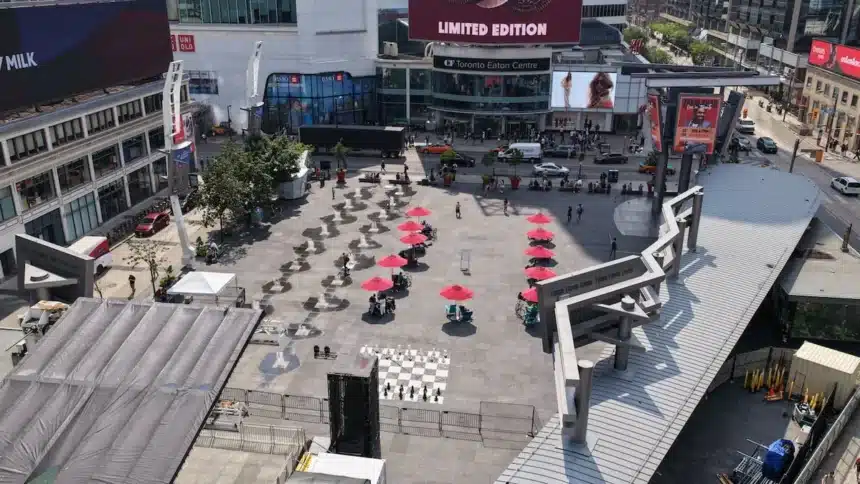
A prominent mayoral candidate has put forth a plan to rename Sankofa Square, formerly known as Yonge-Dundas Square, to Toronto Square. The proposal aims to revitalize the downtown public space, which the candidate described as a “bit of a wasteland” that has become unsafe and lacks vibrant public activity. The plan includes increased police presence, expanded social services, and new programming, with the goal of transforming the square into a welcoming gathering place once again.
Revitalizing a Downtown Public Space
Mayoral candidate Brad Bradford unveiled his proposal on Monday, asserting that Sankofa Square no longer serves its intended purpose as a central hub for community engagement. Speaking from a vantage point overlooking the square, Bradford characterized the current atmosphere as dominated by drug use and individuals who are unconscious, rather than positive public interaction. His vision for the square involves bringing “back to life” a space he believes has fallen into disrepair and disuse.
The core of Bradford’s initiative focuses on enhancing safety and restoring the square’s appeal. Key components of his plan include:
- Establishing a Police Substation: To ensure a consistent and visible safety presence, a dedicated police substation is proposed for the square.
- Expanding Social Services: The plan calls for increased outreach and support for individuals struggling with mental health issues and homelessness in the vicinity.
- Introducing Year-Round Programming: A calendar of diverse events and activities is envisioned to attract a wider range of visitors and foster a more dynamic environment.
- Digital Displays: The proposal suggests featuring prominent Canadians on the square’s digital screens, adding a cultural and national element.
Bradford emphasized that his plan would not impose any additional financial burden on property taxpayers. He indicated that the funding for the cleanup, programming, and renaming would be secured through partnerships with major Canadian brands and contributions from local businesses and advertisers operating around the square.
Context of the Renaming Debate
The public square was renamed Sankofa Square in 2023 following a city council vote. This decision stemmed from a petition that raised concerns about the original name, Yonge-Dundas Square, and its association with Henry Dundas, a historical figure linked to the transatlantic slave trade. Councillor Brad Bradford was among the 19 council members who voted in favor of adopting the Sankofa name.
Henry Dundas, a Scottish politician from the late 18th and early 19th centuries, played a role in parliamentary debates surrounding the abolition of slavery. While some historical accounts criticize him for actions that delayed abolition, others, including a descendant, have suggested his intentions were strategic, aiming for a “gradual abolition.”
When questioned about his current proposal to rename the square again, Bradford stated that he felt he was “misled” by Mayor Olivia Chow during the initial renaming process. He alleged a lack of collaboration between the mayor’s office, the Yonge-Dundas Square board, and the community. The 2023 renaming process did face criticism for insufficient public consultation, leading to the resignation of two board members. Furthermore, the projected costs for the renaming significantly exceeded initial estimates, with a report indicating potential expenses as high as $860,000, compared to the city’s initial budget of $335,000.
Public Reaction to Proposed Changes
The proposal has elicited mixed reactions from individuals who frequent the area. Bea Jimenez, who was at the square with her young son, expressed indifference regarding the name change itself. While she acknowledged experiencing safety concerns “sometimes,” depending on the time of day, she voiced opposition to a permanent police presence, believing it would make the square feel “intimidating and less welcoming.”
Rashmi Singh, also present with her family, found the idea of renaming the square to Toronto Square appealing. She reported feeling “absolutely fine” in the area but recognized that safety could be a valid concern for others. Singh suggested that “more provisions could definitely be made to make this place more safe,” indicating an openness to improvements that enhance security without compromising the square’s accessibility.
The debate over Sankofa Square’s future highlights ongoing challenges in managing urban public spaces. Balancing safety concerns with community accessibility, addressing social issues, and navigating the complexities of historical naming conventions are critical factors in shaping these vital city areas. Bradford’s proposal offers a multi-faceted approach, aiming to tackle these issues directly through a combination of security measures, social support, and renewed public programming, all while seeking private sector and business backing to avoid taxpayer costs.