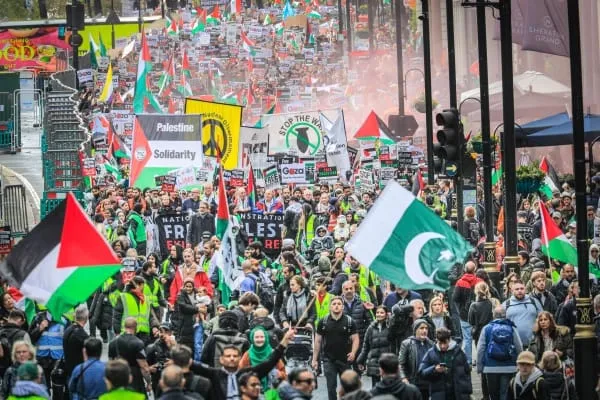
Israeli Prime Minister Benjamin Netanyahu has ignited a diplomatic firestorm by referring to Britain as the “Islamic Republic of Britain.” This inflammatory statement marks a significant escalation in the increasingly strained relationship between the Israeli government and the current Labour administration in London. The remark was made during an interview on a podcast hosted by Avi Harush, a former Israeli military officer whose son was killed during operations in Gaza.
Deepening UK-Israel Diplomatic Rift
During the podcast, Mr. Netanyahu drew a contrast between past and present Anglo-Israeli relations. He recalled a meeting with the grandson of Winston Churchill, whom he described as having represented Israel positively. He then juxtaposed this with contemporary Britain, suggesting a shift in its stance. “Try to find that now in Britain, which you could call the Islamic Republic of Britain,” he stated, adding a reported observation that it could potentially become the first Islamic republic with nuclear weapons.
These comments underscore a notable deterioration in the relationship between two nations that have historically maintained strong diplomatic and security ties. Britain has adopted a more critical perspective on Israel’s military conduct in Gaza, prompting sharp reactions from Jerusalem. The Israeli government has frequently voiced its disapproval of the Labour party’s policies, particularly after the previous administration signaled its intent to recognize a Palestinian state. Mr. Netanyahu has argued that such moves could be perceived as rewarding Hamas.
Echoes in US Political Rhetoric
The strong rhetoric employed by Mr. Netanyahu is not without precedent in recent political discourse. In 2024, US Senator JD Vance made a controversial statement, warning that Britain could become the first “truly Islamic country” to possess nuclear weapons. This remark also led to a diplomatic backlash.
For context, the Muslim population in Britain is estimated to be around 6.5% of the total population. In contrast, the Muslim population in Israel is significantly higher, approximately 18%. These demographic figures highlight the differing societal compositions of the two nations.
Labour’s Shifting Stance on Gaza
The latest diplomatic friction occurs as Prime Minister Andy Burnham seeks to refine Labour’s position on the Middle East conflict. Mr. Burnham has issued an apology for the party’s initial reaction to Israel’s actions in Gaza, asserting that Labour needs to improve its approach. In a recent video message, he emphasized the need for Britain to be “clear in our criticism” of events unfolding in Gaza, while simultaneously condemning Hamas’s October 7, 2023, attack and subsequent antisemitic incidents within Britain.
It is anticipated that the current Labour government will adopt a more assertive stance compared to its predecessor. However, Mr. Burnham has refrained from labeling Israel’s actions as genocide, a term that has been used by some Labour Members of Parliament. This nuanced position reflects the complexities of navigating international relations and domestic political sensitivities.
Broader Regional Instability
The widening diplomatic chasm between London and Jerusalem is unfolding against a backdrop of a larger regional crisis involving Israel, the United States, and Iran. Ongoing conflict and military strikes persist in the region, while disruptions to shipping through the Strait of Hormuz continue to exert pressure on global energy markets and contribute to rising household costs.
Foreign Secretary Ed Miliband has stressed the critical importance of restoring freedom of navigation through this vital waterway and securing a lasting ceasefire. He stated that these measures are “essential” for alleviating the cost-of-living pressures faced by British households. For both London and Jerusalem, however, the immediate challenge appears to be political rather than purely economic. A once-robust alliance is now being tested by fundamental disagreements over Israel’s conduct in the war, Britain’s role in the Middle East, and the appropriate limits of diplomatic restraint.
Historical Context and Future Implications
The historical relationship between the UK and Israel has been characterized by close cooperation in defense and intelligence sharing. Both nations have often found common ground on security matters and regional stability. However, the current geopolitical climate, particularly the ongoing conflict in Gaza, has introduced significant divergences in their policy approaches and public statements.
The Labour party, historically a strong supporter of a two-state solution, finds itself in a delicate position. Balancing international solidarity with domestic concerns about human rights and international law is a key challenge. The party’s leadership is under pressure to articulate a clear and consistent policy that addresses the humanitarian crisis in Gaza while upholding security concerns for Israel and condemning acts of terrorism.
Mr. Netanyahu’s remarks, while provocative, may also reflect an internal Israeli political calculation. Facing domestic challenges, such as the ongoing conflict and internal political divisions, such strong rhetoric could be aimed at galvanizing a particular segment of the Israeli electorate. The international reaction to these comments will likely shape the ongoing diplomatic dialogue and could influence future policy decisions by both governments.
The situation underscores the complex interplay of domestic politics, international relations, and regional security dynamics. The future trajectory of UK-Israel relations will depend on how both governments navigate these multifaceted challenges and whether they can find common ground amidst profound disagreements.