South Australia is grappling with an unprecedented surge in buffel grass, a highly flammable and invasive species, following a year of record-breaking rainfall. This ecological challenge has prompted renewed calls for enhanced management strategies and governmental action to control the weed’s rapid spread across the state and into neighboring regions.
Buffel Grass: An Invasive Threat
Buffel grass (Cenchrus ciliaris) is a hardy, drought-tolerant perennial grass native to Africa, the Middle East, and India. While it has been intentionally introduced to Australia for pasture improvement, its aggressive growth habits have led to significant environmental concerns. The grass thrives in arid and semi-arid conditions, forming dense monocultures that outcompete native vegetation, reduce biodiversity, and alter fire regimes.
Its high flammability is a critical issue. Buffel grass dries out quickly and burns intensely, increasing the frequency and severity of bushfires. These fires can devastate native ecosystems that are not adapted to such intense heat, leading to long-term ecological damage and posing a direct threat to human settlements and infrastructure.
Record Rainfall and the Weed’s ‘Explosion’
The recent period of exceptionally wet weather across South Australia has created ideal conditions for buffel grass to proliferate. The abundant moisture has allowed the weed to establish and spread at an accelerated rate, leading to what many observers describe as an “explosion” of the plant. This surge is particularly evident in Central Australia, where buffel grass has already significantly altered the landscape.
The current situation is a stark reminder of how environmental factors can exacerbate the impact of invasive species. The increased growth means a greater fuel load, heightening the risk of uncontrollable wildfires. Experts are concerned that this unchecked growth could soon extend the weed’s reach into new territories, including the outskirts of Adelaide and parts of western New South Wales, areas not traditionally associated with widespread buffel grass infestation.
Government Response and Management Strategies
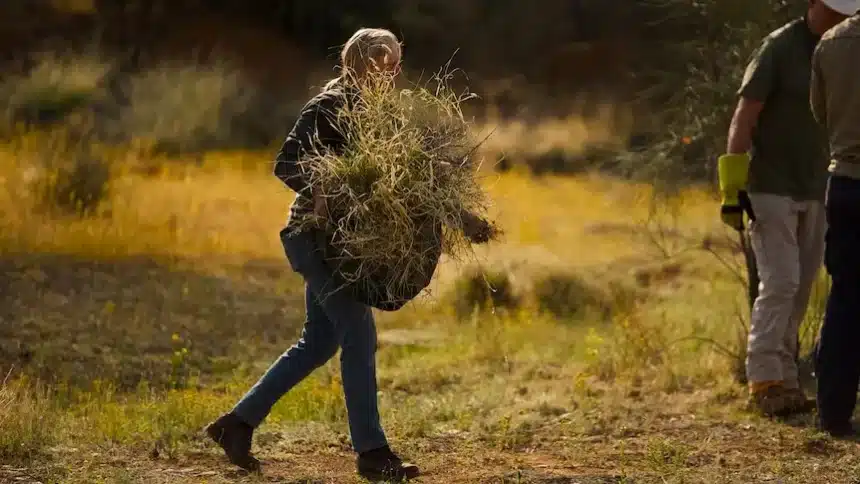
In response to the escalating threat, the South Australian government has committed to continued funding for the state’s buffel grass coordinator role. This position is crucial for developing and implementing strategies to manage and control the invasive grass.
However, environmental advocates and land managers argue that the current funding and the scope of the coordinator’s role are insufficient to tackle the scale of the problem. They are urging the government to strengthen the position, potentially by increasing resources, expanding its responsibilities, or elevating its authority to implement more decisive control measures.
Advocacy for National Recognition
A key strategy being pursued by the South Australian Department of Climate, Environment and Water is advocating for buffel grass to be officially listed as a Weed of National Significance (WONS). This designation is reserved for invasive plant species that have the potential to cause significant economic, environmental, or social harm, and whose impact would be nationally significant.
Achieving WONS status would unlock access to greater national funding, coordinated research efforts, and a unified approach to management across state and territory borders. It would also elevate the profile of the threat, encouraging broader public awareness and participation in control efforts. The government has stated its commitment to continuing these advocacy efforts, recognizing the national implications of the buffel grass invasion.
Ecological and Economic Impacts
The proliferation of buffel grass carries substantial ecological and economic consequences:
- Biodiversity Loss: Dense stands of buffel grass suppress native plant species, reducing habitat and food sources for native fauna. This can lead to a decline in local biodiversity.
- Altered Fire Regimes: The grass’s high flammability increases fire frequency and intensity, which can be detrimental to native ecosystems adapted to less frequent, less severe fires.
- Water Scarcity: Buffel grass is a thirsty plant, consuming significant amounts of water, which can exacerbate water shortages in already arid regions and impact native vegetation reliant on limited water resources.
- Agricultural Impacts: While sometimes promoted for pasture, its aggressive nature can lead to it dominating grazing lands, reducing the quality and diversity of forage available for livestock. It can also invade cropping areas.
- Management Costs: Significant resources are required for control programs, including manual removal, chemical treatment, and mechanical clearing, placing a burden on government agencies and landowners.
Looking Ahead: The Path to Control
The current outbreak underscores the urgent need for a comprehensive and sustained approach to managing buffel grass. While record rainfall has provided the immediate catalyst for the current surge, the underlying issue is the weed’s inherent invasiveness and its suitability to Australian conditions.
Effective management will likely require a multi-pronged strategy involving:
- Integrated Weed Management: Combining various control methods, including biological controls, targeted herbicide application, mechanical removal, and revegetation with native species.
- Community Engagement: Educating landowners and the public about the risks of buffel grass and encouraging participation in monitoring and control efforts.
- Cross-Jurisdictional Cooperation: Enhanced collaboration between South Australia, neighboring states, and the federal government, particularly if buffel grass gains WONS status.
- Research and Development: Continued investment in understanding buffel grass biology, its ecological impacts, and the most effective and sustainable control techniques.
The battle against buffel grass is a long-term challenge, intensified by climate patterns. The South Australian government’s commitment to its coordinator role and its push for national recognition are critical steps, but sustained effort and increased resources will be vital to protect the state’s unique environment from this persistent and dangerous invasive species.