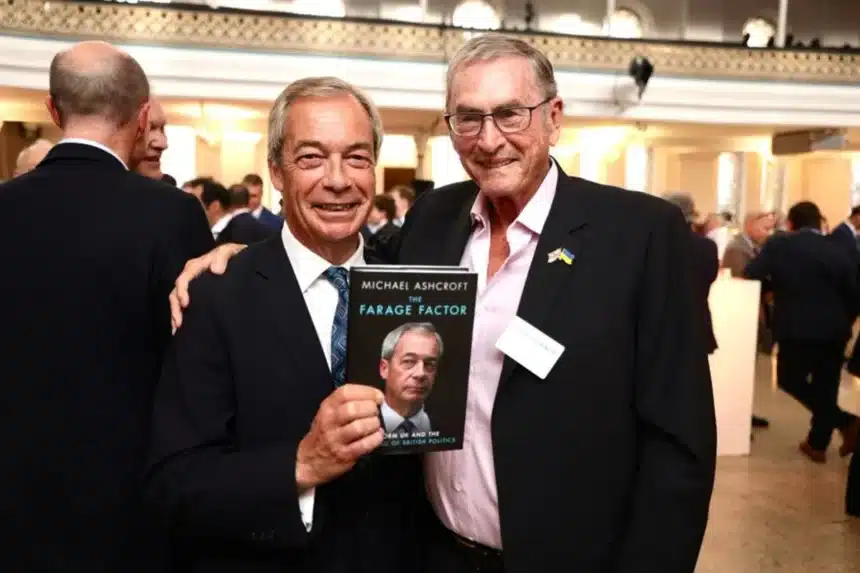
Nigel Farage, the leader of Reform UK, has appointed Miles Goslett as his new chief of communications. This move comes as the party faces recent polling shifts and a series of challenges, including scrutiny over donations and candidate selection. Goslett, who previously worked as a researcher for Conservative peer Lord Michael Ashcroft, will focus on longer-term strategic communication efforts for Reform UK.
Strategic Shift in Reform UK’s Communications
The appointment of Miles Goslett signals a strategic pivot for Reform UK’s communication efforts. Goslett’s role will reportedly involve opposition research, developing content for platforms like Substack, and other long-term initiatives, rather than handling day-to-day press inquiries. A source close to the party described Goslett as a “massive addition,” emphasizing his contribution to the party’s strategic development.
This appointment follows a period of heightened scrutiny for Nigel Farage and Reform UK. Recent polling data from BMG suggested a shift in public support, with a Labour-led government potentially overtaking Reform UK’s previous lead. This development underscores the urgency for the party to solidify its messaging and public standing.
Goslett’s Background and Experience
Miles Goslett brings a distinctive background to his new role. He has been instrumental in researching and co-authoring several books for Lord Ashcroft, often focusing on political figures. These projects have included critical examinations of prominent politicians such as former Deputy Prime Minister Angela Rayner, current Prime Minister Sir Keir Starmer, and Conservative figures Kemi Badenoch and Rishi Sunak. Most recently, Goslett was involved in researching a book about Nigel Farage himself.
Before his work with Lord Ashcroft, Goslett established a reputation as an award-winning journalist. He was known for his work in right-wing media circles, including leading the London bureau of Rupert Murdoch’s website, Heat Street, which focused on cultural and political commentary often critical of mainstream institutions like the BBC.
Navigating Recent Setbacks for Reform UK
The leadership change in communications occurs against a backdrop of several recent difficulties for Reform UK. The party has faced questions regarding a significant undeclared donation from cryptocurrency billionaire Christopher Harborne and the non-disclosure of Farage’s multiple properties. These issues have contributed to a decline in the party’s poll numbers, which have reportedly fallen from a peak of around 35% last year to approximately 24% in recent surveys.
In addition to financial and disclosure scrutiny, Reform UK has experienced electoral setbacks. While the party secured a notable number of council seats in English local elections in May, some allies believe that a more hardline stance on immigration, particularly rhetoric about “mass deportations,” may have cost them an additional 500 seats. Furthermore, the party suffered a significant defeat in the Makerfield by-election, a seat they had targeted. This loss was compounded by issues with candidate selection, as their chosen candidate, Robert Kenyon, had a controversial history on social media.
Candidate Selection Concerns
The Makerfield by-election highlighted ongoing concerns about the vetting of candidates. Reports emerged that Robert Kenyon’s past social media activity was problematic. This incident is part of a broader pattern of challenges the party has faced in ensuring its candidates align with its image and values. The party’s Home Affairs spokesperson, Zia Yusuf, has publicly acknowledged internal friction, noting that he himself was reportedly blocked from running in by-elections, indicating potential internal disputes over candidate approvals.
Farage’s Media Strategy
Nigel Farage has also recently altered his media engagement strategy. He withdrew from a scheduled interview with the BBC’s Laura Kuenssberg at the last minute. This decision, coupled with the party’s focus on developing its own communication channels, suggests an effort to control the narrative more directly. Plans are reportedly underway to enhance Farage’s presence on social media and potentially launch a podcast, allowing him to communicate his message directly to supporters and bypass traditional media outlets where he might face challenging questions.
Conclusion: A New Chapter for Reform UK’s Messaging
The appointment of Miles Goslett as chief of communications marks a significant moment for Reform UK. As the party navigates a complex political landscape, characterized by shifting poll numbers, increased scrutiny, and electoral challenges, this strategic move aims to bolster its long-term communication infrastructure. Goslett’s expertise in research and strategic communication, combined with Farage’s focus on direct-to-audience platforms, suggests a concerted effort to reassert Reform UK’s position and influence in the political arena.