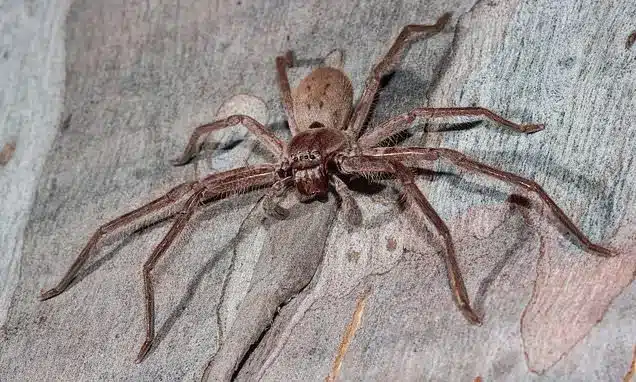
Scientists have compiled the most extensive dataset on spider sprinting speeds to date, revealing that some species can move with astonishing quickness. The research, which analyzed 258 different spider species, found that the brown huntsman spider is the fastest recorded, capable of reaching speeds of up to 3.59 meters per second, or approximately 8 miles per hour. While this speed is slower than a human’s top sprinting pace, researchers caution that in a real-life encounter, a spider’s agility and proximity could make escape difficult.
Understanding Spider Speeds: A New Study
The comprehensive study combined new laboratory measurements with existing research to create a robust database of spider locomotion. The findings indicate a significant correlation between a spider’s body mass and its running speed, with larger spiders generally exhibiting faster movement. However, the study also highlighted that lifestyle and evolutionary adaptations play crucial roles in determining speed.
The Speed Champion: Brown Huntsman Spider
The brown huntsman spider (Heteropoda venatoria) emerged as the clear speed leader. Its ability to reach nearly 3.6 meters per second is attributed to its relatively large legs, which provide efficient propulsion without being disproportionately heavy for its body. Researchers noted that while this species is native to Queensland, Australia, huntsman spiders can sometimes be accidentally introduced to other regions, including the UK.
Ground Hunters vs. Web Builders
A key discovery from the research is the distinction between ‘ground active hunters’ and web-building spiders. Ground hunters, such as huntsman, jumping, and wolf spiders, actively pursue or ambush their prey on the ground. These species tend to be faster, possess stronger legs, and rely on keen eyesight or vibration detection to locate food. In contrast, spiders that spin webs to catch their meals typically move at slower speeds.
The study measured speeds ranging from a sluggish 0.018 meters per second for the tiny ‘money spider’ (family Linyphiidae) to the brown huntsman’s impressive 3.59 meters per second. The money spider, common in the British Isles, measures only about 1.5 millimeters long and moves at a pace equivalent to just 0.04 miles per hour, offering ample time for evasion.
Factors Influencing Spider Speed
Dr. David Labonte from Imperial College London, a member of the research team, explained that while physics dictates the theoretical limits of speed, evolutionary pressures shape the specific adaptations spiders develop. The need to chase prey or evade predators drives the development of extraordinary physical traits.
Leanda Mason of Edith Cowan University in Perth, Australia, further elaborated on the significance of leg structure. She stated that long legs act as a ‘speed gear’ for spiders. The research suggests that fast running is not solely determined by size or whether a spider spins a web, but rather by a combination of leg architecture and evolutionary history. After accounting for body size and shared ancestry, the study concluded that faster running is associated with relatively longer legs, but not necessarily slender ones.
Exceptions to the Rule
While larger spiders generally move faster, there are notable exceptions. The tiny orange goblin spider, for instance, weighs significantly less than the brown huntsman but is only a fraction of its speed. This suggests that specialized adaptations can allow smaller species to achieve remarkable velocities relative to their size.
Spider Encounters in the UK
The UK is home to several species of ground-active hunters, including the grey wolf spider and the great fox spider. While these spiders are part of the UK’s native fauna, accidental imports can sometimes introduce species like the huntsman spider. It is important to note that while some spiders, like the noble false widow, possess venom that can cause adverse reactions in humans, most spiders are harmless and play a vital role in the ecosystem.
Conclusion: A New Perspective on Arachnid Agility
This extensive study provides valuable insights into the diverse running capabilities of spiders. The findings underscore that speed is a complex trait influenced by a combination of physical attributes, evolutionary pressures, and lifestyle. While the brown huntsman spider holds the record for the fastest sprint, the research offers a broader understanding of how different species have adapted to their environments, challenging previous assumptions about what determines an arachnid’s pace.