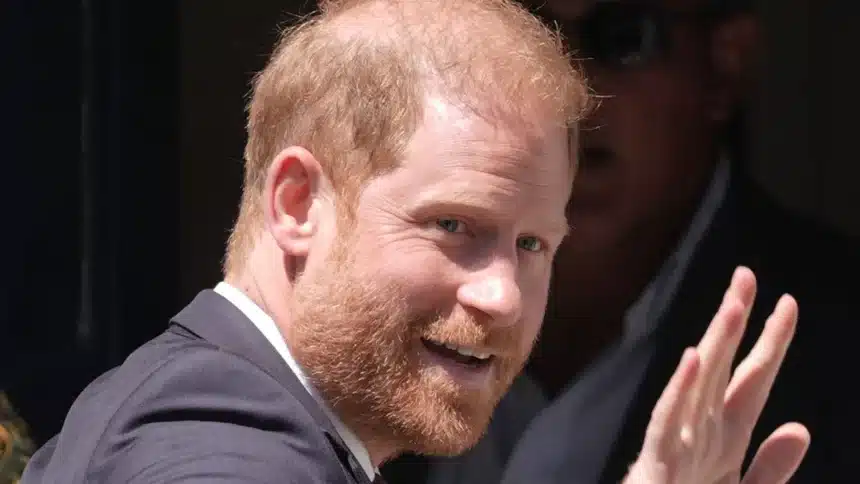
Prince Harry has been unsuccessful in his High Court privacy lawsuit against Associated Newspapers Limited (ANL), the publisher of the Daily Mail and Mail on Sunday. The ruling came on Tuesday, shortly after the Duke of Sussex began a series of engagements in the United Kingdom, including an Invictus Games event at Chatham House. The claims, brought by Prince Harry, Sir Elton John, and five other individuals, alleged unlawful information gathering by ANL. However, the High Court judge, Mr Justice Nicklin, dismissed all allegations following an 11-week trial earlier this year.
High Court Dismisses Privacy Claims
In a comprehensive 436-page judgment, Mr Justice Nicklin stated that the group of seven claimants had failed to prove their allegations of unlawful information gathering. “For the reasons given in this judgment, each of the claimants’ claims is dismissed,” the judge declared. Associated Newspapers hailed the decision as an “overwhelming victory” and a “magnificent vindication of the Daily Mail’s journalism.”
Details of the Trial
The trial, which took place in London, featured evidence from numerous individuals. This included Prince Harry himself, alongside other public figures such as Liz Hurley, Sadie Frost, and Sir Simon Hughes. Current and former journalists and executives from Associated Newspapers also provided testimony. During his cross-examination in January, which lasted approximately two hours, Prince Harry indicated that his reluctance to complain about certain articles at the time was influenced by his position within the royal institution. He also submitted written evidence asserting that information was deliberately falsified in stories to mislead him and obscure unlawful methods, such as the interception of voicemails.
Associated Newspapers’ Defence
In its defense, Associated Newspapers presented arguments that its journalists obtained information through legitimate means. The publisher detailed a pattern of sourcing articles from various channels, including contacts within social circles, press officers, spokespersons, previous reporting, freelance journalists, and other news outlets. ANL contended that these methods constituted a “compelling account of a pattern of legitimate sourcing of articles.”
Statute of Limitations Issue
A significant aspect of the trial also involved arguments concerning the timeliness of the legal action. Under the law, claims related to unlawful information gathering must typically be initiated within six years of the claimant discovering they have grounds for a claim. This legal technicality added another layer of complexity to the proceedings as both sides presented their cases regarding when the alleged unlawful acts occurred and when the claimants became aware of them.
Prince Harry’s Stance on Royal Institution
Prince Harry’s testimony shed light on the unique pressures faced by members of the royal family. He suggested that the institutional environment in which he operated constrained his ability to challenge certain media practices at the time. His written evidence further detailed his belief that fabricated information was used in reporting to divert attention from the methods used to obtain stories, which he alleged included illegal eavesdropping on voicemails. This claim points to a broader concern about the lengths to which some media organizations might go to secure information.
Broader Implications of the Ruling
The dismissal of Prince Harry’s privacy case has significant implications for both media organizations and public figures. For ANL, the ruling represents a substantial legal victory, reinforcing their journalistic practices. For claimants alleging unlawful information gathering, it underscores the high burden of proof required in such cases. The case also highlights the ongoing tension between the public’s right to know and an individual’s right to privacy, particularly for those in the public eye. The complex legal arguments, including the statute of limitations, demonstrate the intricate nature of privacy law in the digital age.
Conclusion
The High Court’s decision to dismiss Prince Harry’