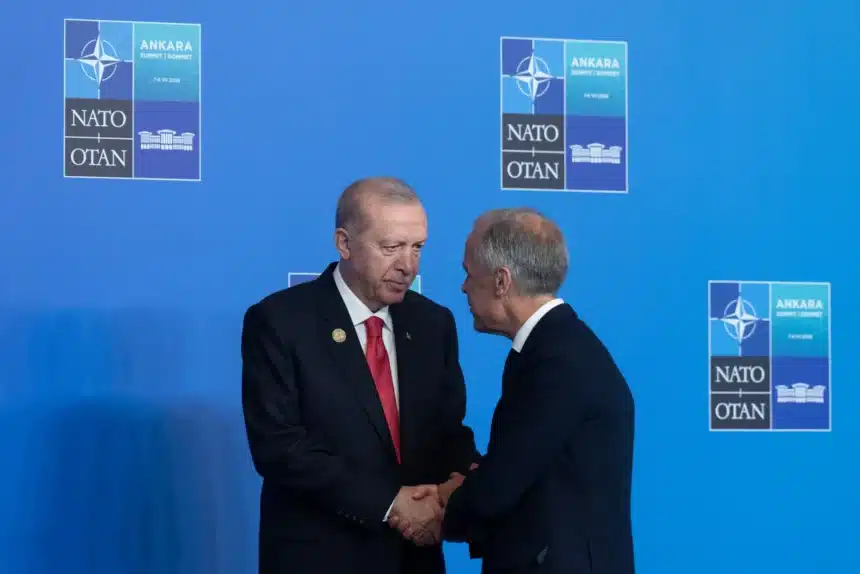
Prime Minister Mark Carney’s personalized pistol, gifted by Turkish President Recep Tayyip Erdogan during a NATO summit in Ankara, has been transferred to the Royal Canadian Mounted Police (RCMP) for decommissioning. The unusual present, which included live ammunition, was presented to all leaders attending the summit. Global Affairs Canada confirmed the firearm’s transfer, stating that the ammunition remained in Turkey. This action aligns with Canadian laws, security protocols, and government policies regarding the handling of official gifts.
A Unique Diplomatic Gesture
During the recent NATO summit held in Ankara, Turkish President Recep Tayyip Erdogan presented a distinctive gift to the attending heads of state: a personalized, engraved pistol along with a box of live ammunition. Prime Minister Mark Carney was among the leaders who received this unique item as he concluded his visit on Tuesday. The Prime Minister’s Office confirmed that this was a uniform gesture extended to all NATO leaders present at the summit.
The nature of the gift, particularly the inclusion of a firearm, prompted immediate attention regarding its handling under Canadian regulations. Global Affairs Canada issued a statement to journalists accompanying the Prime Minister, clarifying the protocol. “The gift in question was provided to every NATO leader and is being transferred to the possession of the RCMP for decommissioning,” the statement read. Crucially, it was noted that “the ammunition remained in Turkiye.” This distinction highlights the careful consideration of international and domestic regulations governing the transport and possession of such items.
Navigating Canadian Import Laws
The transfer to the RCMP signifies the Canadian government’s commitment to adhering to all applicable laws and security requirements. “All official gifts are handled in accordance with applicable Canadian laws, security requirements and government policies,” Global Affairs Canada emphasized. This process ensures that even items of significant diplomatic value are managed responsibly and in compliance with national legislation.
The situation mirrors that of other leaders. United Kingdom Prime Minister Keir Starmer, speaking to reporters on his return flight, also confirmed receiving a similar inscribed pistol and ammunition. However, Starmer indicated that he had to leave his gift in Turkey. He explained that importing such a firearm into the UK would be illegal, despite a letter from President Erdogan reportedly attempting to lift export controls on the weapons. This underscores the complexities and differing legal frameworks that leaders must navigate when accepting such diplomatic offerings.
Potential Future for the Gifted Firearm
While the immediate step involves the RCMP’s decommissioning of the pistol, a senior government source, speaking on condition of anonymity, suggested a potential future for the artifact. “Following guidance from Canadian authorities, the government will look to find an appropriate placement for the gift, including at a museum,” the source revealed. This indicates a possibility that the pistol could eventually be preserved as a historical or diplomatic memento, rather than being destroyed.
Such a placement would allow the item to serve as a tangible reminder of international relations and diplomatic exchanges, albeit in a controlled and public setting. Museums often house artifacts that represent significant historical moments or cultural interactions, and this pistol could potentially fit that role, subject to governmental and institutional approval.
The Broader Context of Diplomatic Gifts
The practice of exchanging gifts between world leaders is a long-standing tradition in diplomacy, often serving to foster goodwill and strengthen bilateral relationships. These gifts can range from the symbolic to the highly valuable, encompassing art, textiles, jewelry, and, on occasion, weaponry. Each gift carries a unique narrative, reflecting the culture and intentions of the giver.
However, the acceptance and handling of these gifts are subject to strict protocols in most countries. Governments typically have guidelines in place to manage the valuation, declaration, and eventual disposition of official gifts. These rules are designed to prevent conflicts of interest, ensure transparency, and comply with national laws, particularly concerning items like firearms or those with significant monetary value. The case of Prime Minister Carney’s gifted pistol highlights the meticulous process involved in navigating these protocols, ensuring that diplomatic gestures are managed with both respect for tradition and adherence to legal and security standards.
Conclusion
The transfer of Prime Minister Carney’s gifted pistol to the RCMP underscores the careful balance governments must strike between acknowledging diplomatic gestures and upholding national laws and security. While the firearm itself will undergo decommissioning, its potential future as a museum piece suggests a path for preserving the historical context of this unique diplomatic exchange. The incident serves as a clear example of the complex international protocols governing gifts between world leaders.