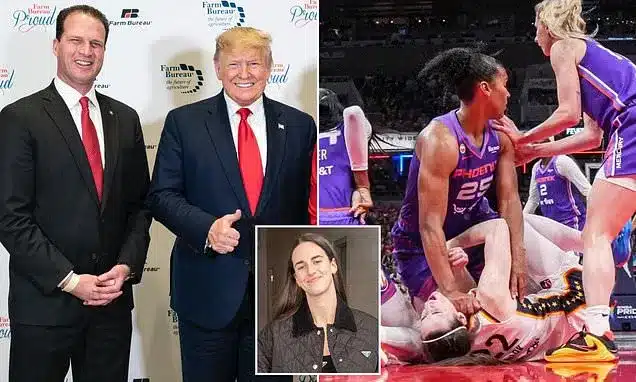
A group of Republican lawmakers has formally requested answers from the WNBA regarding player safety protocols and the handling of on-court incidents, specifically referencing controversies surrounding Indiana Fever star Caitlin Clark. The inquiry, led by U.S. Representative August Pfluger of Texas, was sent in a letter to WNBA Commissioner Cathy Engelbert, expressing concerns over what they describe as “multiple attacks” on Clark and questioning the league’s commitment to ensuring a secure playing environment.
Congressional Inquiry into WNBA Player Safety
The letter, signed by 11 Republican members of Congress, highlights Caitlin Clark’s prominent role as “the face of your league” and attributes a significant increase in fan interest, television ratings, and corporate sponsorships to her presence. The lawmakers assert that Clark has been subjected to “unnecessary physical hostility and violence” during games. They further raised the possibility that these “attacks,” which they claim include actions like hip-checking, eye-poking, and a recent incident where Clark was struck in the throat, “may be racially motivated.”
The congressmen and women emphasized the Commissioner’s responsibility to guarantee that “every player competes in a safe and professional environment, both on and off the court, free from violence, discrimination, or retaliation.” They stated that if discrimination or retaliation is indeed occurring and creating a hostile work environment, they would support investigations by relevant federal agencies, such as the Department of Justice, the Department of Labor, or the Equal Employment Opportunity Commission, noting that such conduct could violate federal civil rights laws.
Key Questions Posed to Commissioner Engelbert
The congressional group posed three specific questions to Commissioner Engelbert, seeking detailed information on the league’s operational procedures:
- What is the WNBA’s review process for instances of “physical hostility and violence on the court”?
- How does the league hold players accountable for “overly aggressive acts on the court”?
- What concrete steps is the WNBA taking to protect players from online harassment?
A response to these questions was requested by July 24.
Context: The Alyssa Thomas Incident and Fallout
The lawmakers’ letter follows a controversial incident on June 24, where Phoenix Mercury forward Alyssa Thomas struck Caitlin Clark in the throat with a closed fist while Clark was on the ground attempting to retrieve the ball. The play occurred as multiple Mercury defenders vied for possession. The WNBA’s response to the incident, which some observers felt was insufficient, has drawn significant criticism from fans, players, and analysts, leading to a broader discussion about player protection within the league.
In the aftermath of the incident, Alyssa Thomas reported experiencing racial abuse and threats directed at her and her family online. Clark, speaking publicly for the first time on the matter, condemned the harassment directed at Thomas. “As I’ve stood up here and said before, like the harassment, the hate, none of that is okay,” Clark stated to reporters. “That goes for the opposing team we play, that goes for my teammates, that goes for my coaches, there should never be a question of character.”
Clark also expressed concern that the continued media focus on the incident, which occurred nine days prior to her comments, was detrimental to the league. “It’s really interesting to me because, I turned the TV on on Sunday, and that game was on Wednesday, and that’s all people are still talking about,” Clark observed. “And I feel like that’s just a real disservice to our league.” She added that the prolonged discussion detracted from other significant performances, noting, “They played on Friday and they dominated and they played really well and nobody wanted to talk about that. They were just worried about everything else.” Clark suggested that refocusing the narrative is a collective responsibility that could aid the game’s growth.
Indiana Fever’s Stance
A representative for the Indiana Fever informed ESPN that the organization was unaware of the congressional letter and had no prior interaction with the group. “Our organization nor Caitlin has had any interaction with anyone in this congressional group and we were unaware of their letter,” the team stated. The statement also affirmed the team’s commitment to player safety and league standards: “We have been clear in our public comments and in our ongoing dialogue with the League about the priority of player safety. Our players and our fans know where we stand on those issues, and we will continue to stick up for our team and a standard of excellence across the league.”
Broader Implications for the WNBA
The involvement of members of Congress introduces a new dimension to the ongoing discussions about player conduct and safety in the WNBA. The lawmakers’ letter frames the issue not just as an internal league matter but as one with potential legal and civil rights implications. The questions posed suggest a desire for greater transparency and accountability from the WNBA regarding its policies and enforcement mechanisms. As the league navigates increased attention and scrutiny, particularly with the surge in popularity driven by stars like Caitlin Clark, addressing these concerns effectively will be crucial for maintaining player well-being and the sport’s integrity.
The situation underscores the delicate balance the WNBA must strike between fostering competitive play, ensuring player safety, managing public perception, and responding to external pressures. The league’s forthcoming response to the congressional inquiry is anticipated to provide further insight into its strategies for addressing these complex challenges.