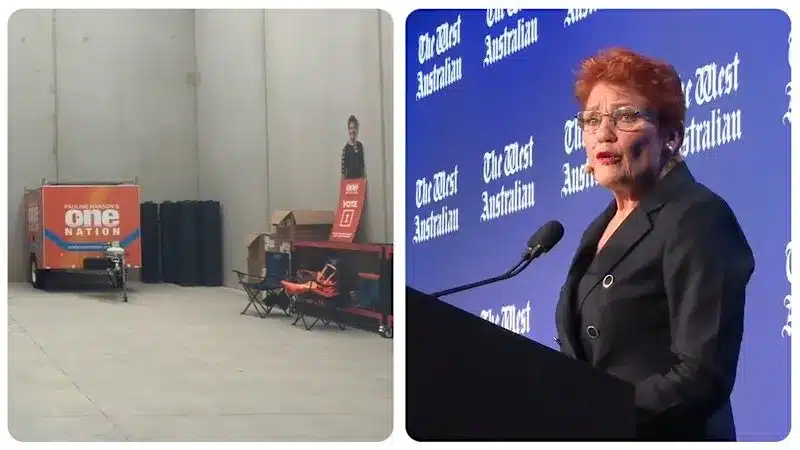
Months before a pivotal election that federal leader Pauline Hanson has earmarked as a significant moment for One Nation, the party’s Victorian headquarters present a scene of quietude. The facility, intended to be a hub of activity, appears largely deserted, raising questions about the party’s operational tempo in the state.
A Look Inside the Victorian Operations
The state headquarters, located in a commercial area, typically serves as the nerve center for campaign planning, volunteer coordination, and administrative tasks. However, observations suggest a significantly reduced level of activity. The premises, which one might expect to buzz with the energy of an impending election, instead convey an impression of dormancy. This lack of visible activity, particularly during a critical pre-election period, contrasts with the usual hustle and bustle associated with political organizations gearing up for a significant electoral contest.
Hanson’s Election Ambitions for One Nation
Pauline Hanson has consistently articulated ambitious goals for One Nation in the upcoming election. She has framed this particular election as a crucial opportunity for the party to solidify its presence and expand its influence across the political landscape. The strategy, as outlined by Hanson, involves leveraging the party’s established base while also appealing to a broader range of voters. The success of this strategy, however, relies heavily on robust state-level operations to mobilize support, disseminate campaign messages, and engage with the electorate effectively.
The party aims to capitalize on current political sentiment, positioning itself as a voice for specific segments of the population. This involves a multi-pronged approach that includes grassroots campaigning, media engagement, and policy advocacy. The effectiveness of these efforts is directly tied to the operational capacity and visibility of the party’s state branches. A subdued presence at the Victorian headquarters could potentially impact the party’s ability to execute its campaign plans at the ground level.
Factors Influencing Party Operations
Several factors can contribute to the observed level of activity at a political party’s headquarters. These may include the stage of the electoral cycle, the specific strategic focus of the party at a given time, resource allocation, and the effectiveness of internal organization. In the case of One Nation’s Victorian branch, the current appearance of low activity could stem from a variety of internal or external influences.
Political parties often adjust their operational tempo based on proximity to elections, campaign phases, and strategic priorities. It is possible that campaign activities are being managed through decentralized networks or are focused on specific, less visible initiatives. Alternatively, the current state might reflect broader challenges related to volunteer engagement, funding, or strategic direction within the state branch.
The party’s national platform and messaging are crucial, but their translation into tangible electoral success often depends on the strength and dynamism of state and local organizations. The visible operations at a headquarters can serve as an indicator of the party’s readiness and capacity to engage voters and campaign effectively.
The Road to the Election
With the election drawing nearer, the focus will inevitably shift to the parties’ ability to connect with voters and present a compelling case for support. For One Nation, the upcoming electoral contest is presented as a critical juncture. The party’s leadership has emphasized the importance of this election for its long-term viability and influence. The effectiveness of its campaign machinery, from national strategy down to state-level execution, will be closely scrutinized.
The appearance of its Victorian headquarters, while just one facet of its operations, offers a snapshot of its current state. As the election campaign intensifies, the party’s ability to mobilize resources, engage volunteers, and project a strong, active presence will be key indicators of its electoral prospects.
Conclusion
The quiet state of One Nation’s Victorian headquarters, observed in the months leading up to a significant election, presents a notable contrast to the expected pre-campaign fervor. While the party’s federal leadership has articulated ambitious goals for this electoral period, the visible operational tempo at its state base raises questions about the ground-level execution of its strategy. The coming months will reveal whether this subdued appearance reflects a deliberate campaign tactic or potential challenges in mobilizing for the pivotal election ahead.