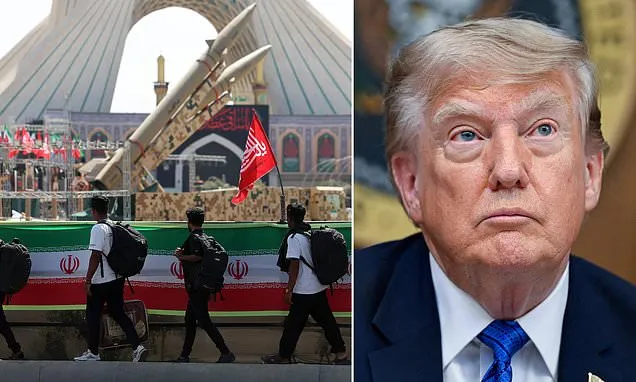
U.S. citizens residing in or traveling through ten Middle Eastern countries have been advised to consider departing or prepare for immediate evacuation due to escalating tensions with Iran. The U.S. Embassies in the affected nations issued urgent security alerts, warning of potential flight cancellations and airspace closures as the situation intensifies. This advisory comes as President Donald Trump indicated a readiness for significant military action against Iran, stating, “We’ll be hitting them very hard.”
Heightened Security Alert Issued to Americans Abroad
The U.S. State Department, through its embassies across the region, has alerted American citizens to the volatile security environment. The initial alert advised heightened vigilance and preparedness for disruptions. Subsequently, a more direct warning was issued, urging individuals to “consider departing, or be prepared to depart should there be escalation.” This comprehensive advisory now encompasses the United Arab Emirates (UAE), Qatar, Oman, Iraq, Jordan, Israel, Kuwait, Saudi Arabia, Bahrain, and Egypt.
The Department of Defense has confirmed its readiness for potential operations. A spokesperson for the Pentagon stated, “The Department of War is locked and loaded, ready to execute the President’s directives at a moment’s notice.” However, specific targets or the nature of any intended actions were not disclosed.
Context of Escalating Iran Tensions
Reports suggest that the heightened alert is linked to intelligence indicating potential U.S. and Israeli preparations for substantial strikes against Iran’s energy infrastructure. While the final authorization has not been confirmed, sources have indicated that such actions could commence imminently, with Israel reportedly being informed and coordinating with Washington. The objective behind targeting energy infrastructure, according to former military officials, would be to significantly impair Iran’s capacity to fund its military, provide essential services, and maintain internal stability.
President Trump’s Stance on Iran
President Trump has publicly signaled a firm stance against Iran, emphasizing a desire for decisive action. During a recent Cabinet meeting, he remarked, “We will be hitting them very hard and, at some point, they’re going to say, ‘We just can’t take it anymore.'” When questioned about diplomatic avenues, the President stated, “I think we just want to win.”
These comments follow demands from the U.S. for Iran to reopen the Strait of Hormuz and adhere to a recently collapsed truce agreement. White House Press Secretary Karoline Leavitt accused Tehran of breaching the terms of a memorandum of understanding, citing alleged attacks on commercial shipping and the death of American soldiers. “President Trump is not going to stand by and allow this terrorist behavior to occur,” Leavitt stated. “Iran will continue to pay until they come to the table in, what President Trump deems, a meaningful way.” She further asserted that under President Trump’s leadership, Iran would not acquire nuclear weapons.
Iranian Response and Regional Warnings
In response to the escalating rhetoric and potential military actions, Iranian officials have issued strong warnings of retaliation. A senior Iranian security official, speaking anonymously to Iran’s Tasnim News Agency, declared that Tehran possesses the “capacity and the will” to respond to any U.S. or Israeli strikes. The official described potential attacks as “reckless” and outlined “extensive response plans” targeting “the vital infrastructure of the Zionist regime and U.S. energy infrastructure in the region.”
Furthermore, Iran’s military has accused the U.S. of increasing regional tensions. Ali Abdollahi, head of Iran’s military central command, warned that any nation providing support to the U.S. would be drawn into the conflict. “Any country serving as defensive shield for criminal and aggressive America will be engulfed by the flames of war,” he stated, according to reports.
Diplomatic and Military Considerations
While U.S. officials have indicated readiness for military action, an Israeli official stated that Israel was not aware of any decision to restart full military operations or had been asked to participate in such actions. This suggests a complex geopolitical landscape with varying levels of preparedness and awareness among allies.
The situation underscores the volatile nature of U.S.-Iran relations and the potential for wider regional instability. The advisories issued to U.S. citizens reflect a serious assessment of the risks, emphasizing the need for preparedness in the face of a rapidly evolving security environment. The coming days are expected to be critical in determining the trajectory of the current crisis.