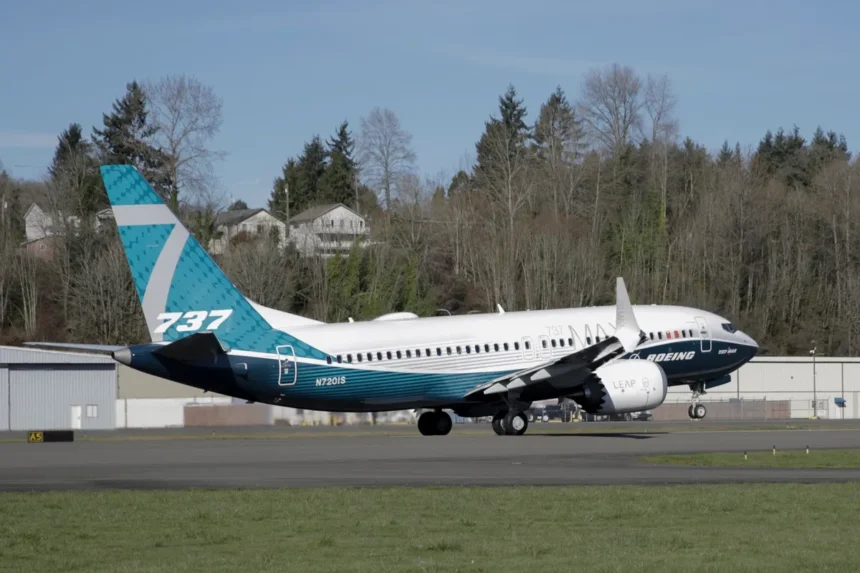
The Federal Aviation Administration (FAA) has officially certified the Boeing 737 MAX 7, clearing the smallest variant of the popular jetliner for commercial operation. This significant milestone comes after years of extensive testing, design modifications, and rigorous regulatory review, marking a crucial step for Boeing as it navigates ongoing efforts to address safety, quality, and production challenges.
A Long Road to Certification
The certification of the 737 MAX 7 concludes a lengthy process that began nearly a decade ago when Boeing first unveiled the aircraft. The path to approval was significantly extended due to technical issues and heightened scrutiny from aviation authorities worldwide. This intensified oversight followed two tragic accidents involving the larger 737 MAX 8 model in 2018 and 2019, which resulted in the loss of 346 lives. These incidents, one off the coast of Indonesia and another in Ethiopia, led to a global grounding of the MAX fleet and prompted a fundamental overhaul of how the FAA certifies Boeing aircraft.
Enhanced Safety Measures and Regulatory Oversight
Before granting its approval, the FAA mandated several critical safety enhancements from Boeing. These required changes included substantial updates to the flight-control software, improvements to cockpit alert systems designed to provide pilots with clearer and more timely information, and a redesign of the engine anti-ice system to mitigate overheating risks. The agency emphasized that its oversight of Boeing’s manufacturing processes will persist beyond this certification.
Stephanie Pope, president and CEO of Boeing Commercial Airplanes, acknowledged the demanding nature of the certification process. “Our team of dedicated engineers and test experts worked through challenges, an extended pandemic, and the transition to new certification processes,” Pope stated. This sentiment underscores the complex environment in which the aircraft’s development and approval took place.
Continued Monitoring of Production
The FAA has confirmed that its safety inspectors will maintain a presence at Boeing’s production facilities. This ongoing monitoring will include close observation of the company’s Safety Management System and its broader safety culture. This continued regulatory engagement reflects the FAA’s commitment to ensuring sustained adherence to safety standards throughout Boeing’s manufacturing operations.
Market Expectations for the MAX 7
The 737 MAX 7 is designed primarily for short- and medium-haul routes, positioning it as a key aircraft for airlines looking to optimize their domestic and regional networks. Several major carriers, including Southwest Airlines, have existing orders for the MAX 7, indicating strong market anticipation for the aircraft’s entry into service. The successful certification of this model is expected to bolster confidence in Boeing’s commercial aviation offerings and support the airline industry’s recovery and expansion plans.
Background of the 737 MAX Program
The 737 MAX family represents Boeing’s latest generation of its best-selling commercial jetliner. The program has faced significant headwinds since the fatal crashes of two MAX 8 aircraft. The Lion Air Flight 610 crash in October 2018 and Ethiopian Airlines Flight 302 in March 2019 were both linked to a faulty flight control software system, known as the Maneuvering Characteristics Augmentation System (MCAS). The subsequent investigations and regulatory responses led to a nearly two-year worldwide grounding of all 737 MAX aircraft, causing substantial financial and reputational damage to Boeing.
Following the grounding, Boeing undertook extensive efforts to rectify the issues, including redesigning the MCAS software, enhancing pilot training protocols, and implementing stricter quality control measures across its production lines. The FAA’s rigorous re-certification process for the entire MAX series, including the MAX 7, involved thorough reviews of design changes, extensive flight testing, and detailed examinations of the company’s safety management and manufacturing processes. The certification of the MAX 7 specifically required additional testing and validation due to its unique design characteristics compared to the MAX 8 and MAX 9 variants.
Future Outlook
With the 737 MAX 7 now certified, Boeing can move forward with delivering the aircraft to its customers. This approval is vital for Boeing’s recovery and its ability to fulfill existing orders, particularly for airlines like Southwest that have a large number of MAX aircraft on backlog. The successful integration of the MAX 7 into airline fleets is anticipated to contribute to operational efficiency and passenger capacity in the short-to-medium haul market. The ongoing scrutiny by the FAA signals a new era of heightened regulatory oversight for Boeing, aiming to ensure the long-term safety and reliability of its aircraft.