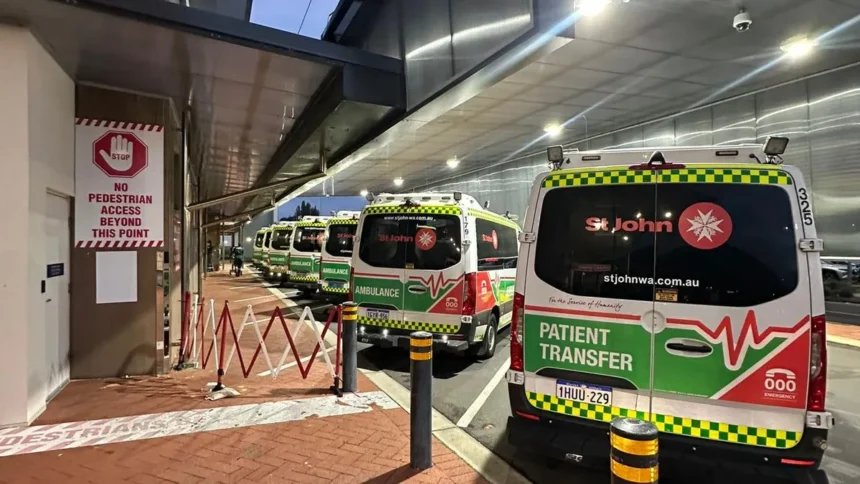
Ambulance ramping at Bunbury Regional Hospital reached a new record for 2026 in July, with patients experiencing over 215 hours of delays for treatment. This figure represents a significant increase from June, when 152 hours of ramping were recorded, and marks the fourth-highest monthly total in the hospital’s history. The surge in delays at Bunbury mirrors a broader trend of escalating ambulance ramping across Western Australia.
Record Ramping at Bunbury Regional Hospital
In July, patients arriving at Bunbury Regional Hospital faced a total of 215.7 hours of ambulance ramping. This substantial increase from the previous month’s 152 hours underscores a concerning trend of worsening delays. The figure also represents a 96 percent jump compared to July of the preceding year, 2025, according to statements from the WA shadow health minister.
Libby Mettam, the WA shadow health minister, criticized the escalating situation, labeling it “unacceptable” for patients enduring unnecessary suffering. She highlighted that despite the state experiencing a significant economic boom, essential services appear to be faltering. Mettam pointed out that while Bunbury Regional Hospital is undergoing a major redevelopment, the needs of other regional facilities, such as Margaret River and Busselton Hospitals, are being overlooked. This, she argued, places an unsustainable burden on existing infrastructure and staff.
“Our doctors, nurses and paramedics are doing an extraordinary job, but they are being forced to do more with less,” Mettam stated, emphasizing the immense pressure on healthcare professionals.
As of August 5, Bunbury Regional Hospital had already logged 46.4 hours of ambulance ramping for the current month, indicating that the upward trend is likely to continue.
Government Response and Redevelopment Efforts
A spokesperson for the State Government acknowledged the challenges, asserting that significant investments are being made to improve emergency care access statewide. They highlighted that Bunbury Regional Hospital is the site of Western Australia’s largest regional hospital redevelopment, a project valued at $572 million. This extensive redevelopment aims to significantly expand the hospital’s capacity.
The first phase of this redevelopment, a new Mental Health Observation Area, has recently opened its doors to patients. In addition to the physical expansion, the hospital is implementing various initiatives to enhance patient flow. One such initiative is the introduction of the “Hospital in the Home” program, designed to facilitate earlier discharge for suitable patients and free up hospital beds.
Factors Contributing to Increased Demand
The government spokesperson noted that July saw a higher volume of emergency department (ED) presentations and ambulance attendances compared to the same month in the previous year. While hospitalizations related to the flu have decreased, there has been an increase in Respiratory Syncytial Virus (RSV) notifications and subsequent hospitalizations.
Another significant factor contributing to hospital bed blockages is the number of medically cleared patients awaiting placement in aged care facilities. Currently, over 400 older individuals fall into this category, occupying beds that could otherwise be used for acute care patients.
Despite the current challenges, the spokesperson pointed to a statewide reduction in ramping by 15 percent compared to the same period last year. However, they conceded that continuous improvement is necessary and that lessons learned from the winter period will inform future strategies to enhance patient flow.
Public Health Initiatives and RSV Vaccinations
The government also used the opportunity to reiterate the importance of public health initiatives, particularly the free RSV vaccination program. They urged parents of infants, pregnant women, and individuals over the age of 75 to get vaccinated. This year, more than 100,000 Western Australians have received the free RSV vaccination, a substantial increase from the 20,156 who received it in 2025.
Broader Context of Regional Healthcare
The situation at Bunbury Regional Hospital serves as a microcosm of the pressures facing regional healthcare systems in Western Australia. While major infrastructure projects are underway, the immediate impact on patient care and staff workload remains a critical concern. The increase in ramping suggests that demand is outstripping capacity, even with ongoing redevelopment and operational initiatives.
The commentary from the shadow health minister highlights a perceived imbalance in resource allocation, with a focus on the primary regional hub potentially neglecting the growth needs of smaller, surrounding facilities. This can create a domino effect, pushing patients and services towards the larger hospital and exacerbating existing strain.
The government’s commitment to investment and improvement is evident, but the data from July indicates a reversal of any recent positive trends in reducing ramping times at Bunbury. The interplay of increased patient presentations, seasonal illnesses like RSV, and systemic issues such as aged care bed blockages presents a complex challenge that requires ongoing attention and strategic intervention to ensure timely and effective patient care across the state.
The efforts to improve patient flow through programs like “Hospital in the Home” and the expansion of facilities are crucial steps. However, the record-high ramping figures underscore the urgency of these measures and the need for continued focus on addressing the root causes of hospital overcrowding and delays in emergency care.