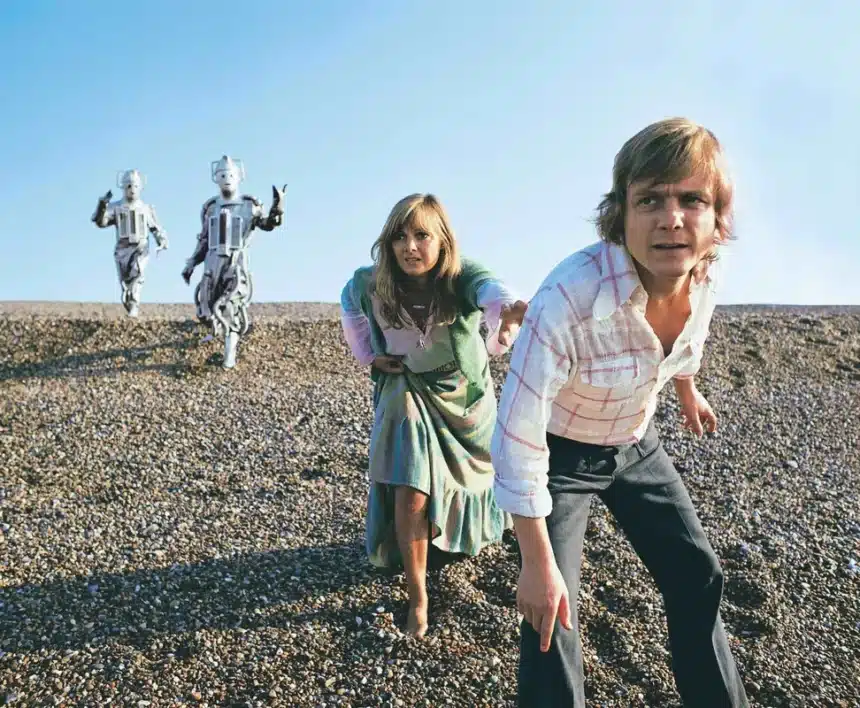
Actress Anneke Wills, who portrayed the classic Doctor Who companion Polly, has expressed a fervent hope for the recovery of missing episodes from her tenure on the show. Wills, who starred alongside Patrick Troughton’s Second Doctor from 1966 to 1967, revealed that she has heard promising rumors about potential discoveries of these lost installments. Many early Doctor Who episodes were wiped or discarded between 1967 and 1978 due to storage limitations, the cost of materials, and rights issues, a common practice for broadcasters at the time.
A “Hot Whisper” of Recovery
Speaking in an interview with Doctor Who Magazine, Wills shared her excitement about the possibility of more episodes resurfacing. “Recently I’ve heard a really hot whisper,” she stated, acknowledging that while she’s heard such rumors before, this particular one has caught her attention. “We’ve had whispers before, so I don’t usually take any notice, but recently I’ve heard a really hot whisper. Wahey! We’ll see. I keep saying, ‘Do it before I leave my body!'” Wills emphasized her personal desire to see her own stories returned, stating, “I know about the complications. But I’m only interested in the stories coming back. I want my stories back. Never mind anyone else’s. I want mine.”
Recent Discoveries Fuel Optimism
Wills’s hope comes in the wake of a significant find earlier this year. The charitable trust Film is Fabulous!, comprised of film collectors and vintage television enthusiasts dedicated to preserving film collections, successfully recovered two episodes of “The Daleks’ Master Plan.” This marked the first discovery of missing Doctor Who episodes since 2013, offering a beacon of hope for fans and participants of the show’s early era.
Sue Malden, who served as the BBC’s first archive selector and has been involved in recovering lost television programs for decades, shared her optimism. “It fills me with optimism that there is the possibility now of finding more, maybe not just Doctor Who, but other great television programmes that are missing,” Malden commented regarding the ongoing efforts to locate and restore these historical broadcasts.
Reflections on the Past and Future
Michael Troughton, son of Patrick Troughton, also reflected on the reasons behind the episode losses. “No one’s to blame,” he explained. “In those days, tape was so expensive. We all did it with VHS – we recorded over the top of it, and that’s what happened.” He expressed a personal wish to see specific episodes, particularly “The Power of the Daleks,” the first serial featuring his father’s Second Doctor. “I remember his feedback from that – he phoned up afterwards to tell us how it went and everything. He was really nervous about the first studio [record], with Michael and Anneke. I’d probably love if they found that one single episode, but the whole lot would be brilliant.”
The Significance of Lost Episodes
The disappearance of early Doctor Who episodes represents a significant gap in the show’s extensive history. These missing installments are not just historical artifacts; they are crucial components of the narrative and character development that defined the show’s initial run. The efforts to recover them are driven by a desire to preserve television heritage and to provide future generations with a complete understanding of the program’s evolution.
Challenges in Recovery
The process of recovering lost episodes is fraught with challenges. Beyond the initial reasons for their disposal, the physical degradation of film and tape over time, coupled with the difficulty in tracing ownership and rights, makes each discovery a remarkable feat. Organizations like Film is Fabulous! play a vital role in this endeavor, utilizing expertise and resources to hunt for these elusive pieces of television history.
Fan Passion and the Future
The enduring passion of Doctor Who fans worldwide fuels the ongoing search for missing episodes. Online communities, dedicated researchers, and archival organizations collaborate to share information and support recovery efforts. The possibility of finding more episodes, as hinted at by Anneke Wills and supported by recent successes, continues to inspire hope that more of the classic series can be restored and appreciated.
Conclusion: A Hope for Restoration
Anneke Wills’s call for the return of her missing Doctor Who episodes highlights a broader sentiment among actors and fans alike: the desire to reclaim and preserve a vital part of television history. With recent discoveries offering tangible proof that recovery is possible, the “hot whispers” Wills has heard may indeed herald a new era of restoration for the beloved science fiction series. The ongoing efforts underscore the importance of archival preservation and the enduring legacy of Doctor Who.