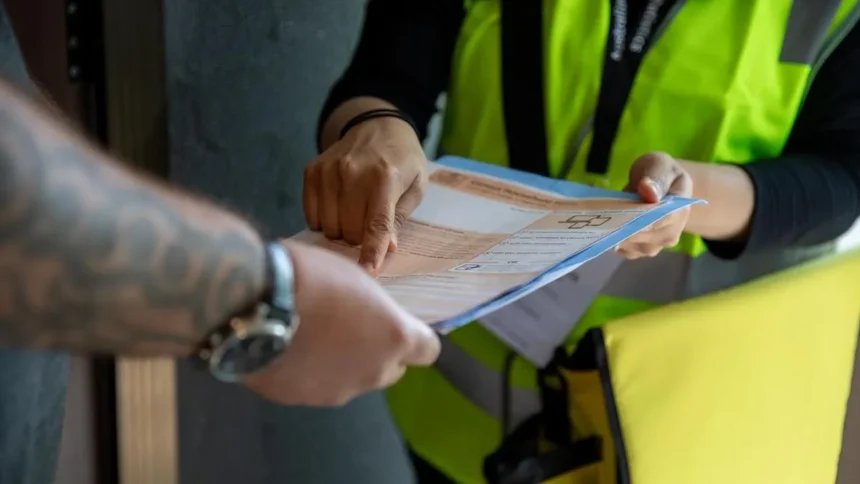
Australians are being reassured about the security of their personal information ahead of the national census, with assurances that robust cybersecurity measures are in place. The upcoming census will collect sensitive data, including details on sexual orientation, religion, and income. Assistant Productivity Minister Andrew Leigh emphasized that the Australian Bureau of Statistics (ABS) has prioritized cybersecurity, aiming for a smooth online experience for the vast majority of respondents.
National Census: A Major Logistical Undertaking
Dr. Leigh described the census as potentially the largest peacetime logistical operation undertaken by the government. He stated that cybersecurity has been a central focus in his discussions with the ABS and is a key element of their preparations to ensure the census is secure. The census, conducted every five years, is the most extensive national survey, aiming to capture a comprehensive portrait of Australia.
Learning from Past Challenges
The online nature of the census has drawn attention, particularly in light of past technical difficulties. In 2016, the ABS website experienced significant failures, preventing many Australians from completing the survey. Dr. Leigh acknowledged these past challenges, noting that the ABS has learned substantial lessons. He confirmed ongoing close collaboration with cybersecurity authorities and continuous risk assessments to uphold the integrity of the census process. To alleviate potential server strain, he encouraged Australians to complete their census forms early.
Addressing Diverse Needs and Evolving Questions
Beyond cybersecurity, the ABS is addressing other logistical challenges to ensure accurate representation for all segments of the population. This includes facilitating participation for individuals such as prisoners, people with disabilities, the homeless, and the elderly. The 2026 census also introduces new questions following advocacy from the LGBTQI community. For the first time, the survey will include specific questions on sexual orientation and gender identity. While this marks a significant step, Equality Australia continues to advocate for the inclusion of intersex people in future census iterations.
Changes Reflecting Modern Society
Further adaptations in the census reflect contemporary societal structures. References to ‘mother’ and ‘father’ will be updated to ‘parent one’ and ‘parent two’ to acknowledge diverse family compositions. Additionally, the ancestry question has been expanded, allowing respondents to select up to four options, a doubling of the previous limit of two. These changes aim to make the census more inclusive and reflective of Australia’s evolving demographics and social landscape.
Broader Context of Data Security
The reassurances come at a time when concerns about data breaches and the misuse of information, including by rogue AI bots, are prevalent. Major organizations have recently experienced significant data breaches, heightening public awareness and sensitivity regarding the protection of personal information. The government’s emphasis on the security protocols for the national census is therefore a critical component of maintaining public trust in its data collection processes.
Ensuring Census Integrity
The integrity of the census is paramount, as its data informs critical policy decisions, resource allocation, and the understanding of Australia’s population dynamics. Dr. Leigh reiterated the importance of the census operating at a high level of integrity, underscoring the extensive planning and security measures undertaken by the ABS. The commitment to a secure and comprehensive census aims to provide an accurate and reliable snapshot of the nation.
Conclusion: A Secure and Inclusive Census
With the national census approaching, the Australian government and the ABS are working diligently to address both traditional logistical challenges and modern cybersecurity threats. By learning from past experiences and implementing advanced security measures, they aim to ensure that the sensitive information collected during the census is protected. The inclusion of new questions on sexual orientation and gender identity, alongside updated terminology for family structures, signifies an effort to create a more inclusive and representative survey, reinforcing its value as a cornerstone of national data collection.