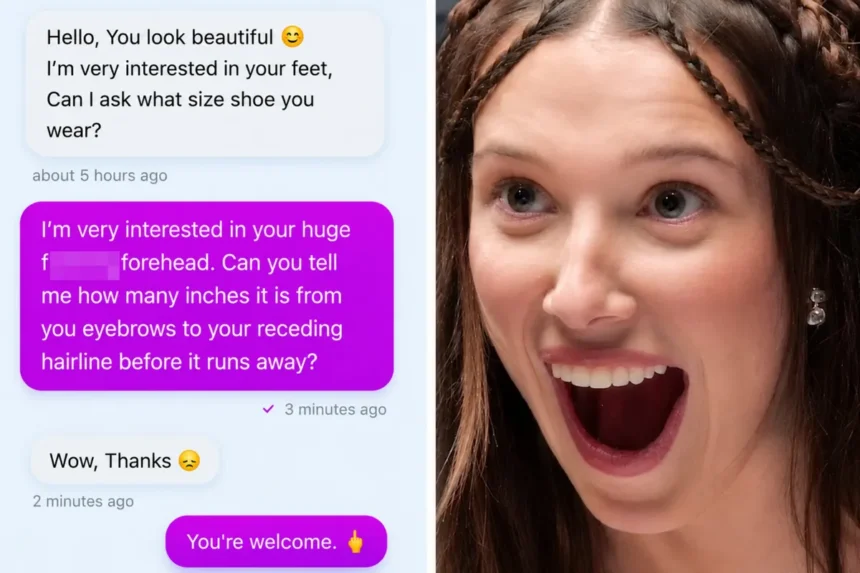
Navigating the digital landscape can sometimes involve encountering unwelcome advances and inappropriate messages. Fortunately, many women have developed sharp wit and ingenious strategies to shut down unwanted advances online. These responses, ranging from humorous to direct, demonstrate a powerful ability to reclaim personal boundaries and expose the absurdity of online harassment.
The Art of the Online Comeback
The internet, while a powerful tool for connection, can unfortunately be a breeding ground for individuals who send unsolicited and often offensive messages. These individuals, sometimes referred to as “creeps” or those engaging in harassment, frequently underestimate the resilience and intelligence of their targets. The following examples showcase how women have effectively used humor, logic, and a healthy dose of sarcasm to disarm and deter such behavior. The primary goal is not just to respond, but to do so in a way that highlights the inappropriateness of the initial message and asserts self-respect.
Humor as a Defense Mechanism
One of the most effective tools in combating online harassment is humor. By responding with wit, women can often diffuse a tense situation, expose the sender’s awkwardness, and gain the upper hand. This approach not only protects their own emotional well-being but also serves as a public or private demonstration of their cleverness.
- A classic, yet always effective, tactic involves a simple “Uno Reverse” card, metaphorically speaking, turning the sender’s own inappropriate energy back on them.
- Some responses are so cutting they feel like a “mic drop,” leaving the harasser with nothing to say.
- Employing a “Dad joke” style comeback, like “Hi Horny, I’m Dad,” can hilariously highlight the immaturity of the sender’s approach.
- Comparing the sender’s message to a fast-food order, complete with “extra never-talk-to-me-again,” adds a layer of dismissive humor.
- Mocking the sender’s assumptions, such as their belief that women are wearing something specific, can be a powerful way to highlight their misguided perceptions.
- Suggesting a reality TV show where a celebrity chef, like Gordon Ramsay, roasts online creeps, and then humorously noting the impracticality of sending such a lengthy roast, showcases a playful yet firm stance.
Logic and Directness Prevail
While humor is a popular strategy, many women opt for more direct and logical approaches. These responses often highlight the sender’s flawed reasoning or the sheer inappropriateness of their message without resorting to extensive wit.
- Pointing out the basic logical fallacy of messaging someone who has not expressed interest, especially after a failed match, is a straightforward way to shut down communication.
- Questioning the sender’s motivation for sending an inappropriate message as a first point of contact can be highly effective.
- Some replies are so precise and accurate they are described as “FACTS,” leaving no room for argument.
- A simple, yet powerful, “that’s gonna be a no” can be incredibly effective in conveying disinterest.
- Educating the sender, even with a brief history lesson or a scientific fact (like identifying a tit), can be a way to subtly shame them into realizing their ignorance.
- When faced with particularly egregious messages, such as using a pet’s death to solicit intimacy, a direct condemnation is often warranted.
Setting Boundaries and Asserting Worth
Beyond witty retorts or logical arguments, many responses serve a crucial purpose: setting boundaries and reminding the sender of the target’s inherent worth. These messages often carry a tone of self-respect and an expectation of respectful treatment.
- Some women choose to “gaslight them straight to the hospital,” a hyperbolic way of saying they will completely disorient and overwhelm the sender with their response.
- Bringing up legal recourse, like mentioning the police or a lawyer, can be a serious deterrent for those who might be testing boundaries.
- The strategy of “using their exact brand of creepiness right back at them” can be a startlingly effective way to make the sender uncomfortable with their own behavior.
- A simple reminder to “know your worth, ladies” encapsulates the underlying message of many of these comebacks.
- Some women leverage their knowledge, like correctly identifying Frankenstein’s monster, to subtly assert their intelligence and dismiss the sender.
- When faced with manipulative tactics, such as using a banana emoji in a questionable context, a direct question about their intent can be illuminating.
The Power of Allies and Creative Solutions
In the fight against online harassment, women are not alone. The digital community and even creative, hypothetical scenarios can offer support and inspiration.
- Enlisting a “male ally” to respond can sometimes be an effective strategy, demonstrating that respectful individuals of all genders condemn such behavior.
- The idea of a “demon summoned each time a man was creepy” humorously illustrates the sheer volume of such incidents.
- Hypothetical business ventures, like “honey-trapping creeps” through multi-level marketing schemes, highlight a desire to turn a negative into a positive, albeit humorously.
- The suggestion of using a haiku when in “dire straits” offers a creative and unexpected way to respond.
Conclusion: Resilience and Respect
The examples of women’s responses to online creeps underscore a broader theme of resilience, intelligence, and the unwavering demand for respect in digital interactions. These witty, logical, and boundary-setting comebacks not only protect individuals but also contribute to a larger conversation about online etiquette and the consequences of harassment. While the digital world presents challenges, the ingenuity and strength displayed by these women offer a powerful testament to their ability to navigate and reclaim their online spaces.