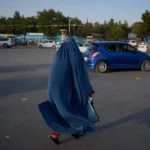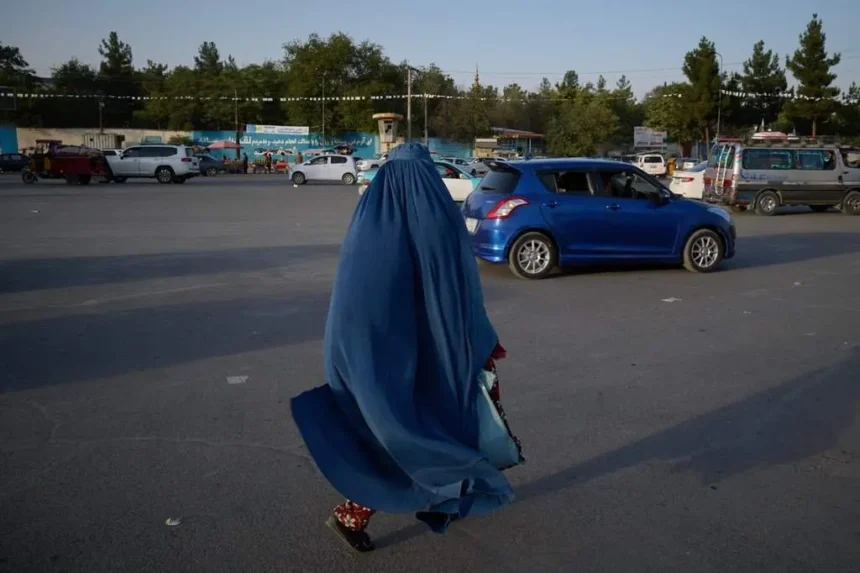
Five years after the Taliban regained control of Afghanistan, advocates are highlighting the ongoing oppression faced by women and girls and urging international attention. Murwarid Ziayee, senior director of the Calgary-based charity Right to Learn Afghanistan, emphasized the need for external action, stating, “From outside, it’s possible for the world to take action.” Ziayee, who was raised in Afghanistan, questioned why Afghan women must bear the sole responsibility for resilience and seeking opportunities. The Taliban’s return to power on August 15, 2021, led to chaotic scenes as many attempted to flee the country. Canada’s involvement in Afghanistan spanned 13 years as part of a NATO stabilization mission, during which over 40,000 Canadian Armed Forces personnel were deployed following the September 11, 2001 attacks. Many served in volatile regions like Kandahar, aiming to counter the Taliban. The mission resulted in the deaths of 158 Canadian soldiers and numerous civilians, including journalist Michelle Lang, while many others suffered physical and psychological harm or died by suicide after returning home. Canadian efforts, alongside those of aid organizations, focused on empowering Afghan girls through education and promoting women’s participation in sports, politics, and media.
Dismantling of Women’s Rights Under Taliban Rule
Following the withdrawal of U.S. and NATO forces after two decades of conflict, the Taliban resumed control. Despite initial pledges to allow women access to education and employment within their interpretation of Islamic principles, the regime has systematically excluded women from most aspects of public life. Girls are prohibited from attending school beyond Grade 6, and their access to employment is severely restricted, with bans in place for a growing list of professions. Furthermore, women are barred from public spaces such as parks, gyms, and sports centers. The ban on medical education has critically reduced the number of female healthcare providers, exacerbating challenges in a country where cultural norms often prevent men from attending to women’s medical needs. An estimated 2.4 million girls are denied education, with many not even reaching Grade 6 due to financial hardship, according to Ziayee. The United Nations reports that international sanctions and natural disasters have plunged Afghanistan into an economic crisis, leading to severe child malnutrition in some areas. UNICEF has also noted a significant rise in child marriage.
International Response and Advocacy
The UN Assistance Mission in Afghanistan has stated that the severe restrictions on women and girls hinder the country’s economic recovery and its ability to reintegrate into the international community. While Russia is the only nation to formally recognize the Taliban government, many Afghans report feeling safer due to a reduction in crime and terror attacks. The UN mission acknowledged that the decrease in conflict has provided tangible benefits and opportunities for recovery and development. However, UN Women, the leading UN agency for gender equality, asserts that Afghan women and girls face the world’s most stringent restrictions, which have intensified over the past year. The agency described Afghanistan as a global outlier, having systematically dismantled the rights of half its population in a manner unparalleled in the modern era.
Continued Efforts and Future Calls to Action
Organizations like Right to Learn Afghanistan are utilizing the internet to provide virtual learning opportunities, including online classrooms, self-directed modules, scholarships, and digital libraries. Students participating in these programs have shared reflections on their experiences under Taliban rule. One student, Mahmoda, depicted a woman in a burqa with shackles, holding a book, symbolizing hope amidst adversity. She conveyed a message of perseverance, stating, “Even though there are many problems, girls still have dreams and hope. I want people to remember that Afghan girls have not given up.” Ziayee expressed gratitude for Canada’s continued support and its advocacy for including women’s voices in international engagement with Afghanistan. However, she believes Canada can do more. Ziayee proposed offering university scholarships for Afghan girls and implementing stronger measures against the Taliban, such as travel bans and asset freezes for regime figures, and preventing their children from attending foreign universities. She suggested that Taliban leaders should be compelled to participate in negotiations via video conference, mirroring the remote learning methods available to Afghan girls.
The Risk of Being Forgotten
Ziayee is among those advocating for a formal international designation of the Taliban’s actions as gender apartheid, which would trigger further sanctions. While some caution that such measures could inadvertently lead to increased restrictions on humanitarian aid, Ziayee stressed the importance of sustained global attention. “As this news is fading away, Afghanistan and Afghan women will be disappeared from all the negotiations, discussions and spotlights,” she warned, urging continued remembrance and action on behalf of Afghan women and girls.