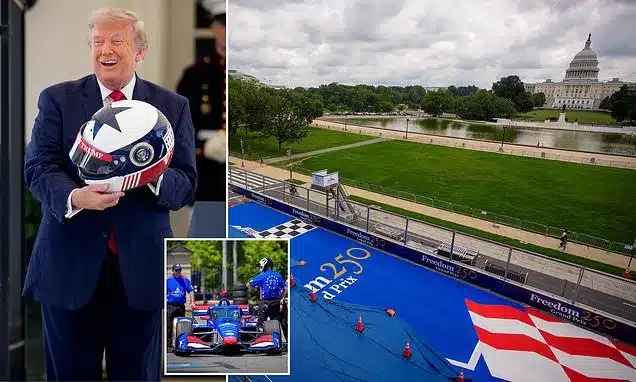
The nation’s capital is set to host a unique event in motorsports history as preparations accelerate for the inaugural Freedom 250 Grand Prix in Washington, D.C. The 1.7-mile temporary circuit will wind through iconic city streets, offering drivers a backdrop of renowned landmarks including the National Mall, the Washington Monument, and the U.S. Capitol Building. This distinctive street race was officially added to the NTT IndyCar Series calendar in January, following an executive order from then-President Donald Trump. The order directed federal departments to collaborate with District of Columbia officials to establish the event as part of the nationwide celebration of America’s 250th anniversary.
Presidential Involvement in the Freedom 250
Reports indicate that Donald Trump is slated to participate in a ceremonial lap of honor prior to the main race on August 23. He is expected to lead this procession in his presidential motorcade, adding a significant political and symbolic dimension to the event’s opening moments. A White House spokesperson emphasized the administration’s commitment to making the 250th-anniversary celebration a memorable occasion, stating that the President intended to leave a unique mark on this historic race.
This initiative builds on previous efforts by the administration to promote the race. In July, a promotional showcase was held outside the White House, featuring IndyCar drivers Alex Palou, Felix Rosenqvist, and David Malukas. The event included a live pit stop demonstration, offering a glimpse of the racing action to attendees and media.
Race Details and Preparations
Organizers have finalized the race distance to a full 250 miles. The schedule includes practice and qualifying sessions on Saturday, leading up to the main race which is set to be broadcast live on FOX on Sunday. This event marks a significant return of street racing to Washington, D.C., with the last recorded street race in the city dating back to 1801, when President Thomas Jefferson hosted a horse race.
The establishment of the Freedom 250 Grand Prix involved high-level discussions and actions. In January, Donald Trump met with Roger Penske, chairman of the Penske Corporation and a prominent figure in motorsports, in the Oval Office. It was during this meeting that Trump signed the executive order that facilitated the race’s inclusion on the IndyCar calendar. Transportation Secretary Sean Duffy, who was present at the signing, described the President’s directive to think creatively and pursue something “historic and cool” for the anniversary celebration. Duffy noted that Penske’s company was already pursuing the idea of a Washington, D.C. race, which has now materialized as the Freedom 250 Grand Prix.
A Vision for a Historic Event
The prospect of cars reaching speeds of up to 190 miles per hour on Pennsylvania Avenue has been described as potentially “wild.” The administration also released an AI-generated video visualizing the race. This futuristic depiction included elements such as eagles flying alongside Marine One as Trump arrived at a racetrack set up near the U.S. Capitol Building, with the President appearing to wave the green flag. The video also showcased military flyovers, including a B-2 bomber, and depicted Secretary Duffy waving a checkered flag to conclude the grand prix.
This race follows another significant event hosted by the administration to commemorate the semiquincentennial: a UFC event held on the South Lawn of the White House on June 14. During that event, Trump made a notable entrance from the Oval Office before taking his seat at cageside.
The Significance of the Freedom 250
The Freedom 250 Grand Prix represents more than just a sporting competition; it is positioned as a celebration of American history and innovation. The choice of Washington, D.C., as the venue, with its unparalleled historical significance, underscores this theme. The route itself, designed to pass by key national monuments, aims to integrate the race into the fabric of the nation’s capital.
The collaboration between the IndyCar Series, federal agencies, and local D.C. officials highlights a complex logistical undertaking. Constructing a temporary circuit in a densely populated urban environment requires meticulous planning and execution, from track barriers and safety measures to fan access and infrastructure. The success of such an event relies heavily on the coordination of various stakeholders to ensure a safe and engaging experience for participants and spectators alike.
As the August 23rd race date approaches, the anticipation builds for what is being billed as a landmark event in both motorsports and national commemoration. The combination of high-speed racing, iconic scenery, and presidential involvement promises to make the Freedom 250 Grand Prix a race unlike any other on the IndyCar calendar.