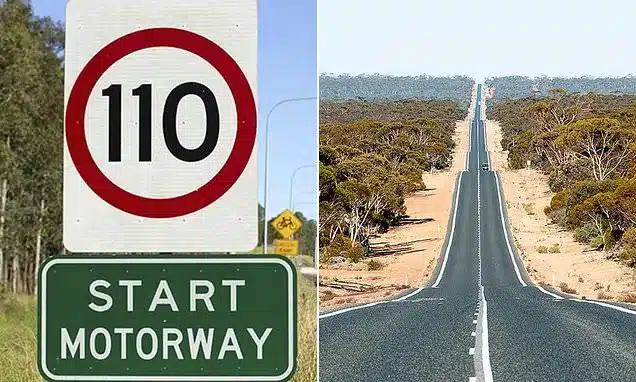
A significant increase in Australia’s road death toll has prompted a leading road safety expert to advocate for a reduction in speed limits as a crucial measure to save lives. The nation recorded 1,326 road fatalities in the 12 months leading up to July, marking the fifth consecutive year of rising road deaths. This trend has not been observed since the early 1950s, underscoring the urgency of the situation.
The Escalating Road Toll
The grim statistics reveal a concerning upward trajectory in road fatalities. In July alone, approximately 110 individuals lost their lives on Australian roads, a figure that represents a 4.6 percent increase compared to the five-year average for the same month. This consistent rise over five years highlights a persistent problem that current safety measures may not be adequately addressing.
Expert’s Proposal: Lowering Speed Limits
Professor Stuart Newstead, a prominent figure at the Monash University Accident Research Centre, argues that lowering speed limits is a proven strategy to mitigate road crashes, reduce trauma, and ultimately decrease fatalities. He emphasized the physics involved, stating that modern cars, while safe at regulatory speeds like 64 km/h, are not designed to withstand high-speed impacts with fixed objects at speeds like 100 km/h. “You think you can run into a tree at 100km/h and your safe car will save you? Do you know what? It’s only tested to a regulatory 64km/h,” Professor Newstead explained. “Beyond that, you’re on your own. You cannot have a car running into a tree or other fixed object at 100km/h. It’s not designed to do that.” This reality, he noted, contributes to the disproportionately high number of fatalities in regional areas.
Case Study: Mornington Peninsula Trial
Professor Newstead pointed to a compelling trial conducted in Victoria’s Mornington Peninsula Shire between 2019 and 2021. During this period, speed limits on 33 roads were reduced from 100 km/h to 80 km/h. Prior to the trial, the region experienced a high rate of serious road incidents, ranking second only to the larger City of Greater Geelong in Victoria for road deaths among municipalities. The results of the speed limit reduction were striking: the annual number of serious crashes plummeted by 68 percent, dropping from 19 to just six. These new, lower limits were subsequently made permanent in 2022, even though just over half of the local residents (59 percent) supported the change. A report on the trial highlighted that even modest decreases in travel speeds can lead to significantly larger reductions in the risk of fatal and serious injuries.
Speed vs. Driver Training
Professor Newstead firmly believes that reducing speed limits is a more effective solution than enhancing driver training programs. He observed that most drivers perceive themselves as highly competent, often believing that others are the ones in need of improvement. “There have been no programs that have been shown to make the sort of difference we need… because if you ask drivers, 90 per cent say, ‘I’m an excellent driver, it’s everyone else who needs training’,” he stated. He likened this to expecting a professional athlete to perform perfectly every time, emphasizing that human error is an inherent factor in driving. “It’s like saying your favourite footballer should be able to kick through the sticks from 50 metres every time… humans are not infallible, and you have got to accommodate that.” Professor Newstead added that repeated attempts at improving driver training have not yielded the desired results, as drivers tend to revert to old habits and become complacent over time.
The Role of Infrastructure and Budget Constraints
Beyond speed limits, Professor Newstead also stressed the importance of investing in road infrastructure to bolster safety. However, he acknowledged the significant challenges posed by current budget constraints, particularly in regions like Victoria, where financial resources are strained. “How do we invest in infrastructure to improve safety? That’s a real problem when in places like Victoria, for example, the budget’s in such a parlous state,” he commented. He suggested that with limited funds for infrastructure upgrades, setting appropriate speed limits remains one of the most accessible and impactful tools available for enhancing road safety. He recognized that the idea of lowering speed limits is often met with resistance, with many people expressing a desire for faster travel. “One of the key tools that is left is speed limit setting, and it’s something that you say, and everyone goes, ‘No, I don’t want to talk about it. We travel too slow now’,” he noted. “But (speed) is actually a real problem.”
The ongoing rise in road fatalities across Australia necessitates a serious re-evaluation of current road safety strategies. Professor Newstead’s call for reduced speed limits, supported by evidence from successful trials, presents a clear, actionable step that could significantly curb the tragic loss of life on the nation’s roads.