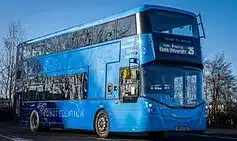
First Bus has implemented a new policy restricting unaccompanied teenagers from using its services in Stoke-on-Trent after 6 p.m. This decision follows a reported increase in anti-social behavior incidents on public transport in the area. The measure specifically requires children under the age of 15 to be accompanied by an adult when traveling to or from Hanley Bus Station during these evening hours.
Background to the New Policy
The introduction of this restriction comes in the wake of several concerning incidents. One notable event involved a large group of young people, numbering over 100, exhibiting what was described as “intimidating and aggressive behavior” at a local bus station. This incident, alongside other “growing incidents” reported on board services, prompted First Bus to take action to ensure the safety and comfort of all passengers and staff.
Rebecca Arrowsmith, general manager for First Bus in the region, emphasized that the safety of staff and customers is paramount. “The safety of our staff and customers is always our number one priority and we will always take steps to ensure everyone on board can travel in comfort and without nuisance,” she stated. “This measure has the full support of the council and will be kept under daily review. We hope to be able to end the restriction as soon as possible.”
Specific Concerns and Driver Discretion
Reports from bus drivers have detailed instances of disruptive behavior, including children swinging from handrails and running through moving buses. In response, drivers have been instructed to exercise their discretion regarding the admission of unaccompanied children after 6 p.m. The policy aims to mitigate risks and maintain a secure environment on public transport.
The ‘Great British Summer Savings’ Scheme
The new policy was introduced shortly after First Bus launched its ‘Great British Summer Savings’ scheme on August 1. This initiative offers complimentary travel to children aged between five and 15 throughout August, intended to help families enjoy days out. However, a surge in incidents on services in Stoke-on-Trent has been observed since the scheme’s inception.
While the scheme has seen significant uptake, with Simon Mathieson, the firm’s regional director for the East and Midlands, noting a “large uptake” and stating, “Buses are important, buses matter. We know people like to travel by bus,” he also stressed the need for responsible behavior. “We’ve seen good use of this scheme, but we just need people to act sensibly when they’re on the bus and in the bus station.”
Scheme’s Impact Debated
Despite the timing, Finlay Gordon-McCusker, Stoke-on-Trent council’s cabinet minister for transport, has indicated that the free travel scheme is not solely to blame for the rise in incidents. He suggested that other factors might be contributing to the behavioral issues. A government spokesperson commented on the scheme, noting its purpose: “Our Great British Summer Savings scheme allows kids under 15 to travel for free on participating services, to give families room to breathe and enjoy days out throughout August.”
Future Review and Community Impact
First Bus has committed to a daily review of the new restriction, expressing a desire to lift it as soon as the situation improves. The company is working with local authorities to address the underlying issues contributing to the anti-social behavior. The aim is to restore a safe and pleasant travel experience for all passengers, particularly during the evening hours.
The policy highlights the ongoing challenge of balancing accessibility and affordability in public transport with the need to maintain order and safety. The ‘Great British Summer Savings’ scheme, while popular and beneficial for families, has inadvertently coincided with a period of increased disruption, leading to this temporary but significant change in travel rules for young people in Stoke-on-Trent.
Local authorities and First Bus are collaborating to find sustainable solutions that address the root causes of the disruptive behavior, ensuring that public transport remains a viable and safe option for everyone in the community. The success of this initiative will depend on continued cooperation between the bus operator, the council, and the public.