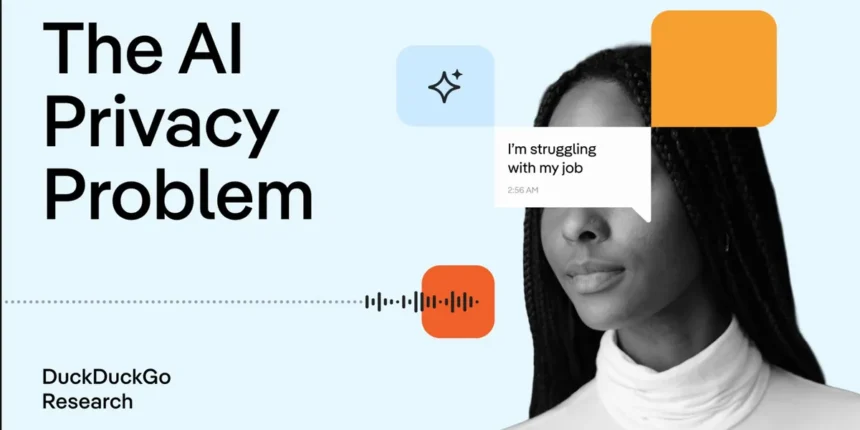
A recent survey conducted by DuckDuckGo, a company focused on online privacy, reveals that many individuals are disclosing a significant amount of personal information to AI chatbots without fully understanding the implications. The findings highlight a gap between user behavior and their awareness of how AI companies handle conversation data.
Key Findings on AI Conversation Privacy
The survey, which polled nearly 2,000 adults in the United States, indicates a widespread tendency for users to share sensitive details with AI systems. Notably, almost one-third of all respondents reported telling an AI something they would hesitate to share with close friends, family members, colleagues, or even medical professionals. This figure escalates dramatically among self-identified AI enthusiasts, with 56% admitting to such disclosures.
DuckDuckGo suggests that AI chatbots often function as a non-judgmental space, encouraging users to engage in longer, more personal exchanges than typical search engine queries. While search terms might only reveal interests, AI conversations have the potential to expose deeper aspects of a user’s personality, including their thought processes and communication patterns.
User Awareness of Data Usage
A significant concern emerging from the survey is the low level of user awareness regarding data handling practices. A majority of respondents, 53%, were unaware or uncertain that most AI chatbots utilize conversations for training purposes by default. Furthermore, only 25% of participants knew that law enforcement agencies could potentially subpoena AI chat logs.
When informed about these practices, a substantial 58% of users expressed discomfort with their conversations being used for AI training, with 30% describing themselves as “very uncomfortable.” This suggests a strong desire for greater transparency and control over personal data shared with AI.
Behavioral Differences and AI Company Practices
The survey also identified a notable difference in AI usage patterns between parents and non-parents. Parents or guardians with children in their household were almost twice as likely to confide in AI compared to those without children. Specifically, 43% of AI-using parents reported sharing something with an AI that they had never disclosed to another person, compared to 25% of AI users without children.
DuckDuckGo posits that AI companies have, in some instances, encouraged this confessional behavior through advertising and public statements, framing chatbots as confidants. This approach, the company argues, may inadvertently lead users to believe their interactions are more private than they actually are.
Trust in AI Companies vs. Government
Regarding trust in data protection, the survey revealed that users place slightly more confidence in large AI companies than in the U.S. government. However, overall skepticism remains high for both entities. 39% of respondents expressed no trust at all in major AI firms, while 48% felt the same about the government.
Taking Control of AI Privacy
Despite the current trends, DuckDuckGo emphasizes that users still have the agency to shape their approach to AI privacy. The company draws a parallel to online search privacy, noting that while past data may be widely distributed, future interactions offer an opportunity for change. “The most valuable information you could share with Big Tech is your next question, not the questions you asked days or months or years ago,” the company stated, advocating for a more privacy-conscious approach moving forward.
DuckDuckGo encourages users to be proactive in protecting their privacy when engaging with AI chatbots. This includes selecting services that offer clearer and more transparent policies regarding data handling. By making informed choices and adopting more private online habits, individuals can better safeguard their personal information in the evolving landscape of artificial intelligence.