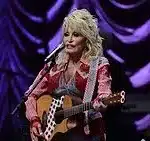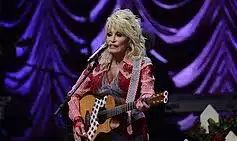
Dolly Parton, the iconic singer-songwriter beloved for her music, authenticity, and humor, consistently maintained a stance of political neutrality throughout her illustrious career. While known for her openness in interviews, she deliberately steered clear of partisan discussions, a strategy she explained was rooted in her desire to maintain a broad fanbase. This approach, however, was tested on occasion, leading to memorable exchanges and a clear illustration of her priorities.
Dolly Parton’s Stance on Politics
Parton’s decision to avoid political commentary stemmed from a pragmatic understanding of her audience. “I’ve got as many Republican fans as Democrats and I don’t want to make any of them mad at me, so I don’t play politics,” the “Jolene” hitmaker explained in an interview. This philosophy allowed her to connect with a diverse range of listeners without alienating segments of her dedicated following.
In a notable instance from 2016, Parton offered a rare comment on the prospect of Hillary Clinton becoming president. In an interview with The New York Times, she remarked, “Hillary might make as good a president as anybody ever has.” She further elaborated on the concept of “presidential mood swings,” suggesting that regardless of whether the president was Hillary Clinton or Donald Trump, the nation might face such challenges. However, she expressed a personal belief that “a woman would do a great job” and considered Clinton “very qualified,” stating she would support her if elected.
The remarks, interpreted by some as an endorsement of Clinton, led to a degree of backlash from fans. In response, Parton humorously addressed the situation, releasing a statement that joked, “I might as well run myself… they could always use more boobs in the race.” This lighthearted deflection underscored her preference for managing political discussions with wit rather than direct engagement.
Encounters with Political Figures and Topics
Parton’s avoidance of politics extended to her personal interactions with political figures. She reportedly turned down the Presidential Medal of Freedom on three separate occasions, involving two different presidents: Donald Trump and Joe Biden. While the specific reasons for each refusal were not detailed, it aligns with her broader strategy of not engaging in overtly political acts.
Journalist Hadley Freeman of The New York Times recounted an experience that highlighted Parton’s firm boundaries when political topics arose. Freeman noted that the only time she witnessed Parton’s “steeliness” was when she asked about Donald Trump in 2019. Parton had previously stated, “in every man I see someone in my family.” When Freeman, perhaps unfairly, inquired if she could see her brothers in Trump, Parton responded sharply, “I ain’t talking about Trump!”
Freeman reflected on this moment, observing, “Parton understood, even as others forgot, that we don’t need our celebrities to be political, to reveal their biases and preferences and their hot takes on every single news event.” This observation encapsulates Parton’s unique position as a public figure who maintained immense popularity without becoming a partisan figurehead.
Tributes and Post-Mortem Comments
Following news of Parton’s passing, numerous public figures offered tributes. Former President Donald Trump ordered flags to be lowered to half-staff across the United States for a week in her honor. He also posted on Truth Social, calling her loss “a true loss for millions of people” and stating, “There has never been anyone like her, and never will.”
In an interview with Glenn Beck shortly after the announcement of her death, Trump claimed that Parton “really liked” him. He suggested that while she wasn’t a very political person, she privately held positive feelings towards him but refrained from expressing them publicly to avoid upsetting a portion of her fanbase. Trump estimated this segment of fans to be around 20 percent, rather than the 50 percent he initially considered, adding that she was “a great person, just a nice person. I liked her a lot.”
Former US President Joe Biden also paid tribute, describing Parton as “an American original” and “an inspiration to millions.” He highlighted her role as “a relentless advocate” for women and equality, commending her philanthropic efforts, particularly her work providing books to children globally. Biden concluded by noting, “She lived her values with a flair and vitality for life that was uniquely her own,” calling her “a trailblazer in every sense of the word.”
Conclusion: A Legacy of Inclusivity
Dolly Parton’s deliberate decision to remain apolitical was a cornerstone of her public persona, enabling her to transcend political divides and connect with a vast audience on a universal level. While she occasionally offered brief, nuanced opinions, her primary focus remained on her music and her connection with fans, ensuring her legacy was one of unity and broad appeal rather than partisan division. Her approach serves as a notable example of how a celebrity can navigate the complexities of public life while maintaining personal integrity and widespread adoration.