





Australia is experiencing a significant surge in data centre development, attracting substantial investment and positioning itself as a potential global hub for this critical digital infrastructure. However, this rapid expansion is raising serious concerns among local communities and environmental experts regarding its impact on water supplies, energy consumption, and the broader environment. The debate centers on whether the economic benefits of embracing the artificial intelligence (AI) race outweigh these considerable costs.
The Rise of Data Centres in Australia
Data centres, the physical infrastructure powering the digital world, have become increasingly prominent across Australia. These large, often windowless buildings house servers, storage systems, and networking equipment essential for cloud computing, online services, and, more recently, the burgeoning field of artificial intelligence. The sheer scale and operational noise of these facilities are often the first indicators of their presence to nearby residents, with some describing the sound as akin to a jet engine.
The appeal for investors is multifaceted. Australia offers an abundance of clean energy potential, significant natural gas reserves, and ample land, all crucial for powering and housing the intensive operations of modern data centres. Industry leaders, such as OpenAI’s CEO Sam Altman, have suggested Australia could become a world leader in this sector if it prioritizes development.
The numbers underscore this trend: Australia currently hosts 162 data centres, with plans for an additional 90. This expansion is backed by an estimated A$155 billion in investment. Projects are underway that could see some of the world’s largest data centres built on Australian soil, including one in western Sydney projected to be the nation’s single largest energy user at one gigawatt. Another facility, already under construction in Marsden Park, western Sydney, is set to be the biggest in the Southern Hemisphere, located just 100 meters from a residential community.
Driving the AI Revolution
Data centres have long been fundamental to the digital economy, supporting everything from email and online banking to cloud services. However, the explosion of AI following the launch of tools like ChatGPT in 2022 has dramatically accelerated the demand for more powerful and numerous data centres. The physical location of these facilities has also become critical, influencing ‘latency’ – the delay in data transfer, which is unacceptable for time-sensitive applications like air traffic control or robotic surgery.
Australia’s significant user base for AI, ranking sixth globally with approximately 13.6 million monthly users, highlights the domestic demand. Experts argue that developing local data centre infrastructure is key to fostering Australia’s own AI companies, preventing the nation from becoming merely a consumer of foreign technology. Belinda Dennett, CEO of Data Centres Australia, emphasizes the strategic importance: “If we think about it in reverse, what happens if we don’t build infrastructure here? We get none of the value chain, we are just importing tools from someone else and we become just a user.”
Beyond technological imperatives, Australia presents an attractive market for foreign investment due to its political stability, land availability, participation in the Five Eyes security alliance, and a skilled workforce. The nation’s stable energy grid and vast renewable energy potential further enhance its appeal.
Economic Imperatives and Recession Fears
Some leading business experts and economists suggest that the data centre boom has been instrumental in preventing a recession in Australia. Jon Whittle, a former director at CSIRO’s digital research centre, advocates for embracing this growth, stating that the government has little choice but to continue supporting investment in the sector.
Environmental and Resource Concerns
Despite the economic arguments, significant concerns persist regarding the environmental and resource implications of this data centre expansion. Energy and environmental experts warn that Australia’s current capacity may be insufficient to meet the escalating demands.
Energy Consumption
The Australian Energy Market Operator projects that data centre energy demands could triple nationwide by 2030. Without substantial investment in new renewable energy generation and storage, the Climate Council estimates that data centres could drive up power prices in New South Wales by as much as 26% by 2035. A key challenge is that data centres require a constant, high-speed power supply, which variable sources like wind and solar cannot consistently provide alone. This has led to fears that the current boom could necessitate the construction of new coal and gas power plants. A report by Greenpeace Australia Pacific found that data centre operators often failed to demonstrate how they would drive renewable energy growth, with some in the US opting for new gas-fired power stations as a cheaper alternative.
Cloud Carrier, an Australian data group, plans to build three gas-fired power stations to supply its data centres near Sydney. In cases of grid instability or power outages, these facilities, like others, may resort to backup diesel generators, further impacting air quality.
However, New South Wales Treasurer Daniel Mookhey views the data centre expansion and renewable energy growth as interconnected. He suggests that private sector investment in data centres can help fund the transition from coal to clean energy, alleviating the burden on households. “We see data centres allowing us to replace a lot of our old coal-fired power with clean, green renewable energy with the private sector picking up a large amount of the tab because otherwise households would,” Mookhey stated.
Water Usage
Data centres also consume vast quantities of water, sometimes up to 40 million litres per day per facility, to cool their servers. This poses a significant challenge for Australia, a country prone to drought. Sydney, in particular, faces increasing demand for drinking water due to population growth. If this water is diverted to data centres, residents may face higher costs associated with alternative sources like desalination. Sydney Water projects that data centres could consume up to 25% of the city’s drinking water supply by 2035.
In response, Prime Minister Anthony Albanese announced new legislation, set to be introduced in 2027, requiring large-scale data centres to underwrite their power supplies, limit water usage, and cover the costs of necessary water infrastructure. However, this legislation will only apply to new proposals, not existing or under-construction projects.
Community Impact and Future Uncertainty
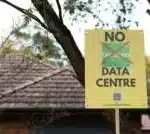
The rapid development has led to significant community opposition, particularly in areas like Lane Cove, Sydney, where residents report being blindsided by plans for multiple data centres near their homes and schools. Rochelle Flood, deputy mayor of Lane Cove, questions the sustainability of Australia’s ambition to be a data centre capital, asking, “Can we actually do that sustainably or is it going to set us back in terms of net zero and our water storage targets?”
Concerns extend to local economies. The construction of a large data centre can create over a thousand jobs, but operational roles typically number around 100. Businesses in affected industrial areas face relocation, potentially leading to the loss of local employment. Felipe Tanaka, a business manager facing relocation, expressed dismay: “We never knew that something like this would happen. Thousands of jobs are going to be gone from this area in the next few years.”
Furthermore, the ultimate purpose and value generated by these data centres, particularly those supporting generative AI, are being questioned. Critics point out that some AI applications, like creating simple animations, consume energy equivalent to running a microwave for an hour. “They’re telling us this is essential… that we need to have these centres in our neighbourhood but they’re not saying what it’s for,” Flood remarked. “When our drinking water, energy and land is being used for generative AI slop, that is not giving any value back.”
Conclusion
Australia’s data centre boom presents a complex dichotomy between economic opportunity and environmental responsibility. While the sector promises significant investment, job creation in new industries, and a crucial role in the AI revolution, the substantial demands on energy and water resources, coupled with community impacts, necessitate careful planning and regulation. As the nation navigates this growth, balancing the drive for technological advancement with the imperative of sustainable resource management and community well-being will be paramount.








.png "You Can Get Peacock or Paramount+ With Walmart+ Proper Now (2025)")