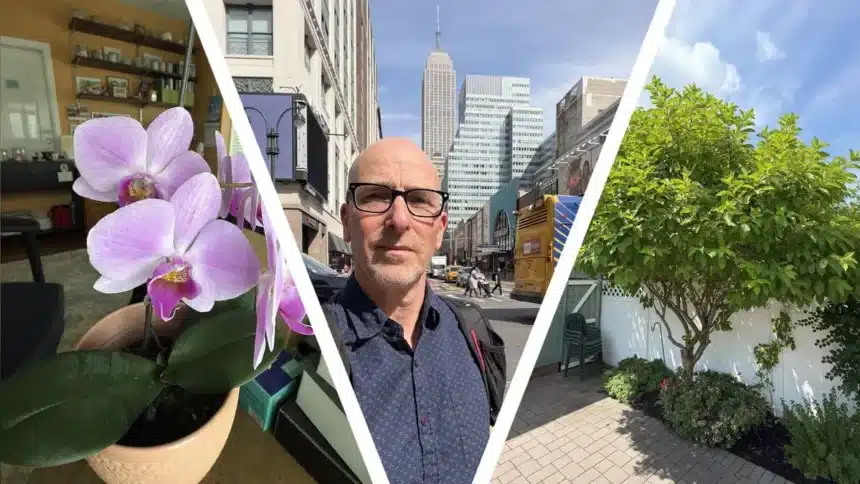
Apple’s AI Image Tools Showcase Remarkable Potential in Early Beta
Initial impressions of Apple’s foray into artificial intelligence, as previewed in the iOS 27 Developer Beta, reveal powerful new capabilities within the Photos app. Specifically, features like Spatial Reframing and Extend are demonstrating impressive generative abilities. These tools, which leverage a sophisticated private-compute cloud-based diffusion model, represent a significant departure from Apple’s previous technology offerings.
Spatial Reframing and Extend: A Glimpse into Generative Photography
Spatial Reframing allows users to alter the perspective of a photograph, revealing elements that the camera did not originally capture. This feature offers a new dimension to how images can be viewed and manipulated. However, the Extend tool has proven to be particularly engaging. It excels at guessing and generating content for areas that were cropped out of the original frame.
While the exact framing of a photo is often a deliberate choice, there are instances where additional context or a wider view is desired. Apple’s approach with Extend appears to be guided by intelligent guesswork, where the system analyzes the existing image to infer and create missing details. This has been tested by taking both wide and tightly cropped shots to see how effectively the Extend tool can fill in the gaps.
Testing the Limits: Unexpected Results and Safeguards
In early testing, the Extend tool has produced generally strong results, though some outcomes have been unintentionally humorous. A notable observation is the tool’s current limitation regarding the generation of human body parts. Attempts to extend a cropped hand, for example, did not result in the addition of missing fingers, a safeguard that prevents potentially unsettling or erroneous additions.
Analysis suggests that the Extend tool favors order and simplicity. It tends to generate clean, uncluttered additions with minimal elements, seemingly avoiding complex or chaotic scenes. This preference for order is evident when comparing original wide shots with their AI-extended counterparts.
Real-World Applications and Future Refinements
The effectiveness of these tools is highlighted through various examples. In one instance, a home office scene was extended, leading to the unexpected addition of a third closet door and a mysterious glass feature. This demonstrates the tool’s tendency for creative interpretation when asked to fill in larger areas.
In another test, an image of foliage showed a realistic extension of a tree, while the sky took on a more dramatic appearance. A guitar on a wall was rendered with a clean, orderly suggestion of a lampshade and tidied blinds, indicating a focus on maintaining the original subject’s integrity.
Complex scenes, such as an office shelf, also presented challenges. While the tool opted for order over clutter, it notably transformed a perceived object into a jetliner. Similarly, backyard furniture was decluttered, and a fire pit was rendered as a featureless box.
The generation of a jetliner was particularly impressive, showcasing the tool’s ability to assume order even in chaotic original scenes. These early experiments with Apple Intelligence’s image generation capabilities are promising, especially considering the development stage. With months remaining before the expected public release, further refinements are anticipated.
It is anticipated that most users will employ these tools for more subtle adjustments, such as recentering subjects, extending solid backgrounds, or enhancing skies, rather than pushing the generative limits as extensively as in these early tests. The potential for these tools to enhance photography without fundamentally altering the core subject matter appears significant.