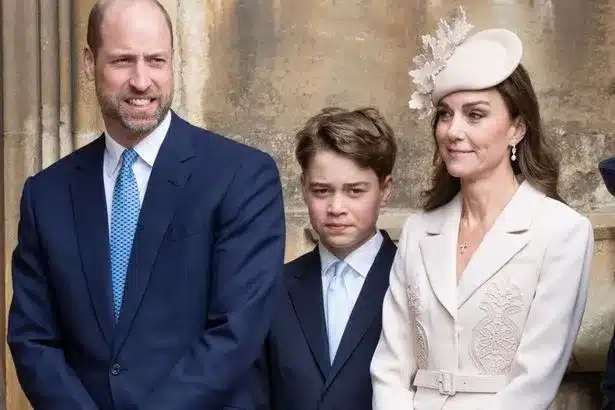
Prince George is set to embark on a significant new phase of his education as he officially enrolls at Eton College, a prestigious boarding school with a rich history. The 13-year-old future monarch will join the ranks of his father, Prince William, and uncle, Prince Harry, at the renowned institution located in Berkshire. This move marks a notable transition for George, as he will be boarding full-time for the first time.
A Historic Institution
Eton College, established in the 15th century, boasts a long-standing tradition of educating prominent figures, including 20 British Prime Ministers. The school is famous for its distinctive uniform, a formal ensemble comprising a black tailcoat, waistcoat, pinstripe trousers, and a white bow tie, setting it apart from typical school attire in the United Kingdom.
George’s enrollment is anticipated to draw parallels with his father’s first day at Eton in September 1995. At that time, Prince William, then a boarder from Ludgrove Prep, arrived to begin his studies. Despite the presence of numerous photographers and reporters, William appeared composed. His parents, then Prince Charles and Princess Diana, presented a united front for the occasion, a rare display amidst their ongoing marital difficulties.
A Bigger Step for George, Says Royal Expert
Jennie Bond, a former BBC royal correspondent who witnessed Prince William’s arrival at Eton over three decades ago, believes that Prince George’s transition to boarding school represents a more substantial step for him than it was for his father. Bond explained that George has, until now, benefited from the security and familiarity of living at home.
“It is much more of a big step for George, who has had the security and comfort of living at home until now,” Bond stated. “There’s no getting away from the fact that moving away from your family home – and George’s family home is a very happy and secure one indeed – is going to be a wrench.”
However, Bond also highlighted the advantages George will have, drawing from his father’s experience. “It’s going to be the most enormous help to George to know that his dad went through exactly the same process and he can turn to him for advice, comfort or support,” she added.
Bond noted that George has had some prior experience with overnight stays at his previous school, Lambrook, suggesting he may already be comfortable with periods away from home. She expressed confidence that Prince William and Catherine, the Prince and Princess of Wales, would not have sent George to Eton if he were not amenable to the idea. The presence of several of his school friends joining him at Eton is also expected to ease his adjustment, potentially fostering lifelong friendships similar to those Prince William formed.
The proximity of Eton to his family home means George will likely maintain frequent contact with his parents and siblings. “It’s a big step in any young boy’s life, but one for which, by all accounts, George is very much ready,” Bond concluded.
Life at Eton
Upon arrival, new students like Prince George must adapt to Eton’s established routines and traditions. The school’s distinctive uniform, first adopted in 1820, is a key element of its identity. The daily schedule includes lessons concluding around 5 p.m. on Mondays, Wednesdays, and Fridays, with half-days on Tuesdays and Thursdays, and academic work also taking place on Saturday mornings.
Eton College caters to approximately 1,345 boys aged between 12 and 19. The curriculum offers a wide array of academic choices, with students able to select from up to 28 subjects, including a variety of modern and classical languages. Beyond academics, the school provides extensive facilities for extracurricular activities, including 350 acres of playing fields and opportunities to participate in 25 different sports. Eton Fives, a unique handball game originating at the college in the late 19th century, is among the sports offered.
Privacy and Modern Monarchy
In contrast to the public attention surrounding Prince William’s early years at Eton, there will be a more restricted approach to coverage of Prince George’s school life. The Prince and Princess of Wales are committed to providing their children with as normal a childhood as possible. This philosophy extends to decisions regarding public updates on George’s academic progress, with a possibility that his GCSE and A-level results may not be publicly disclosed.
The choice of Eton, a bastion of tradition, has prompted some discussion, particularly given the royal couple’s efforts to present a more modern image of the monarchy. However, Bond emphasized that the decision prioritizes George’s well-being and happiness. “This isn’t about William. It’s about George and where he will be happy and safe – particularly in this age when everyone has a camera phone,” she remarked.
Bond further suggested that Eton, having previously provided a supportive environment for Princes William and Harry, is well-equipped to offer similar protection and nurturing to George, and potentially his younger brother, Louis. She expressed confidence that the Prince and Princess of Wales will instill in their children an awareness of their privilege and a commitment to using their future roles to assist less fortunate individuals.
A Haven and a Foundation
Reflecting on William’s first day at Eton, Bond recalled his apparent comfort with the new chapter, noting that the school indeed became a sanctuary for him during his parents’ public divorce and later, tragically, following Princess Diana’s death. The experience at Eton provided a stable environment during a tumultuous period for the young prince.
Prince George’s move to Eton signifies a significant milestone, blending tradition with a contemporary approach to royal upbringing, focused on providing a secure and supportive foundation for his future.