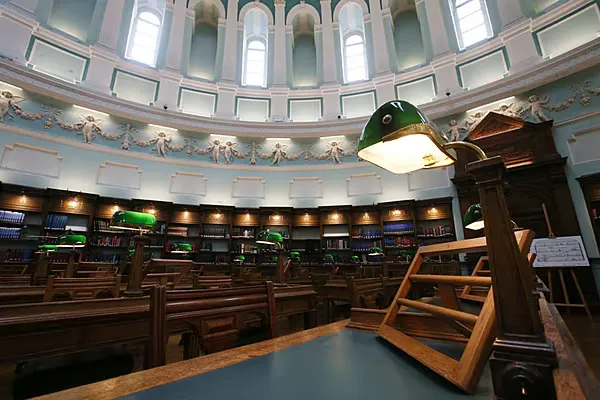
A significant new phase in the extensive redevelopment of the National Library of Ireland (NLI) has been initiated, marking a crucial step forward for the historic Dublin institution. Government approval has been secured for the refurbishment of the West Wing, a prominent section of the building that faces Kildare Street. This approval allows the project to move forward to the tender stage, paving the way for construction to begin.
Government Backs West Wing Refurbishment
Minister for Culture, Communications and Sport, Patrick O’Donovan, has officially confirmed the government’s support for this vital stage of the NLI’s redevelopment. The West Wing project is a key component of the Minister’s broader investment strategy for National Cultural Institutions, as outlined in the National Development Plan. A spokesperson for the Minister’s office highlighted that this initiative is central to the ongoing efforts to enhance and modernize the Kildare Street campus.
The announcement has been widely regarded as an “important milestone” in the NLI’s long history. The West Wing, which has served as a storage area for the library’s vast collections since 1890, is slated for a dramatic transformation. For the first time in its history, this historic space will be opened to the public, offering new opportunities for engagement and exploration.
Transforming Heritage into Public Space
Minister O’Donovan expressed his enthusiasm for the project’s potential, stating, “The West Wing project will restore this historic heritage building and transform it into an exciting exhibition, education and visitor engagement space that will showcase the library’s unique collections.” He further elaborated on the planned enhancements, which include the addition of a glazed, sound-proofed visitors’ gallery. This gallery will offer a unique vantage point, overlooking the Main Reading Room, widely considered the most iconic space within the National Library of Ireland.
The redevelopment aims to make the NLI more accessible and welcoming to a diverse range of audiences. “This project will enable the National Library to serve audiences of all abilities, from children and families to scholars and researchers, supporting lifelong learners and the culturally curious of all ages,” the Minister added. The project will be financed by the Department of Culture and will be executed by the Office of Public Works (OPW) in close collaboration with the National Library of Ireland.
A Pivotal Role for the OPW
Minister of State Kevin Moran, who oversees the Office of Public Works, also welcomed the advancement of the redevelopment. “I welcome this significant milestone to progress the redevelopment of the National Library of Ireland to tender stage,” he remarked. “Today marks an important step in securing the future of this iconic national institution.” Minister Moran emphasized the OPW’s commitment to the project, stating, “The OPW is proud to play a pivotal role in delivering a project that will not only protect and enhance this much-loved amenity but will also ensure that the library is fit for purpose for future generations to come.”
The planned improvements are expected to yield substantial benefits for both staff and visitors. “This redevelopment will provide improved facilities for staff and visitors while also safeguarding the invaluable collections and heritage held within this historic building,” Moran concluded.
Enhancing Public Access and Experience
Dr. Audrey Whitty, Director of the National Library of Ireland, echoed the positive sentiment, highlighting the profound public benefit of the planned changes. “The redevelopment project will allow us display more of the national collections in new exhibition and learning spaces, giving people greater access to experience and enjoy the National Library of Ireland for generations to come,” she explained.
Dr. Whitty underscored the historical significance of this transformation, noting, “This will be the most significant change in the public experience of the National Library of Ireland since we first opened our doors on Kildare Street in 1890.” The project represents a major step in making the NLI’s rich heritage and collections more accessible and engaging for the public, ensuring its continued relevance as a cultural cornerstone for decades to come.
Future Vision for the NLI
The redevelopment of the West Wing is more than just a renovation; it is a strategic initiative designed to reimagine how the public interacts with one of Ireland’s most important cultural institutions. By opening up previously inaccessible areas and creating state-of-the-art exhibition and educational facilities, the NLI aims to foster a deeper connection with its audience.
The inclusion of a visitors’ gallery overlooking the Main Reading Room is a particularly innovative feature. It promises to offer a unique perspective on the library’s historic heart, allowing visitors to appreciate its architectural grandeur and the scholarly activity it represents, without disturbing the quiet atmosphere essential for research. This thoughtful design balances public access with the preservation of the library’s core functions.
Furthermore, the commitment to serving audiences of all abilities is a testament to the NLI’s dedication to inclusivity. The new spaces will be designed to accommodate everyone, ensuring that the library’s resources and exhibitions are accessible to people of all ages and physical capabilities. This focus on accessibility aligns with modern museum and gallery practices, aiming to create a welcoming environment for all.
Conclusion: A New Chapter for a National Treasure
The progression of the National Library of Ireland’s West Wing redevelopment to the tender stage represents a landmark achievement. With government backing and a clear vision for the future, this project is set to revitalize a cherished part of Dublin’s cultural landscape. The transformation of the West Wing from a storage facility into a vibrant public space will undoubtedly enhance the visitor experience, provide greater access to national collections, and secure the NLI’s role as a leading cultural institution for future generations.