Iceland is contemplating a legislative move that could significantly alter the global landscape of commercial whaling. The government is preparing to submit a bill in February that, if passed, would outlaw the practice within the nation. This potential ban would leave Norway and Japan as the only two countries worldwide that continue to permit commercial whale hunts, according to recent government communications.
Potential Whaling Ban Under Consideration
Ministers in Iceland are currently reviewing various legislative options aimed at modernizing the country’s approach to whaling. A key focus of these deliberations is the possibility of enacting a permanent ban on commercial whaling. This update was shared on the official Icelandic government website late on Wednesday.
The governing administration in Iceland holds a majority in parliament, suggesting that legislative proposals, if unified, could have a strong chance of passage. The potential ban comes after years of persistent opposition from animal rights organizations and notable public figures who have voiced strong objections to the practice.
Current Status of Whaling in Iceland
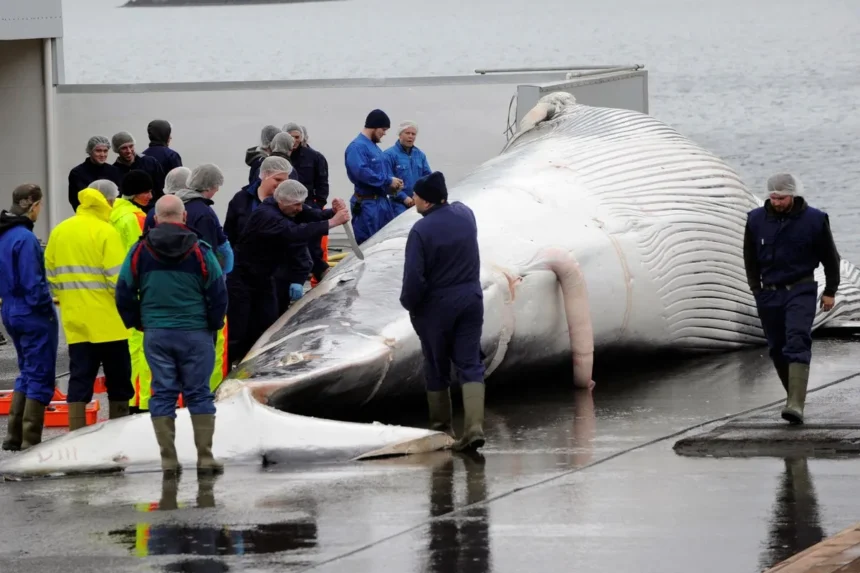
During the most recent hunting season, which spanned from June to the end of September, 80 fin whales had been caught by September 9. This figure was reported by the animal welfare group Humane World for Animals. The current annual quota permits the hunting of up to 150 fin whales per year. Fin whales are the primary species targeted by Iceland’s whaling industry.
Wendy Higgins, a spokesperson for Humane World for Animals, expressed optimism regarding the proposed legislation. “There is considerable political and public support for this bill to ban commercial whaling, and compelling ethical, veterinary, legal and conservation reasons to hope it succeeds,” she stated.
Conservation Status and Global Context
The fin whale, a species frequently targeted by Iceland’s whaling operations, is classified as ‘vulnerable’ by the International Union for Conservation of Nature (IUCN). This classification highlights concerns about the species’ long-term survival and the potential impact of continued hunting.
In 2024, Iceland’s interim government granted a five-year license to the nation’s sole remaining whaling company. This license was issued prior to the current legislative considerations for a ban.
Data from the International Whaling Commission (IWC) indicates that in recent years, only Iceland, Norway, and Japan have engaged in commercial whaling. Norway recommenced its commercial whaling activities in 1993, while Iceland began its modern whaling operations in 2006. Both nations continued these practices despite an international moratorium on commercial whaling that took effect in 1986, established with the aim of protecting whale populations.
Japan took a different approach, withdrawing from the IWC in 2019. Following its withdrawal, Japan resumed commercial whaling within its territorial waters and its exclusive economic zone.
Exceptions to the Moratorium
It is important to note that the international moratorium on whaling includes specific exceptions. These exceptions allow certain indigenous communities, such as those in Greenland and Alaska, to continue hunting whales. For these communities, whale products are often integral to their nutritional needs and cultural traditions.
The Future of Whaling
The potential ban in Iceland represents a significant development in the ongoing global debate surrounding whaling. Animal welfare advocates and conservationists have long argued for an end to the practice, citing ethical concerns and the vulnerability of whale species. The decision by Iceland, a nation with a history of commercial whaling, to consider a complete ban could exert further international pressure on the remaining whaling nations.
The outcome of the proposed legislation in Iceland will be closely watched by international bodies, environmental groups, and the public. If enacted, it would mark a substantial step towards a future where commercial whaling is significantly curtailed, leaving only a few nations to continue the practice under specific national regulations and international scrutiny.