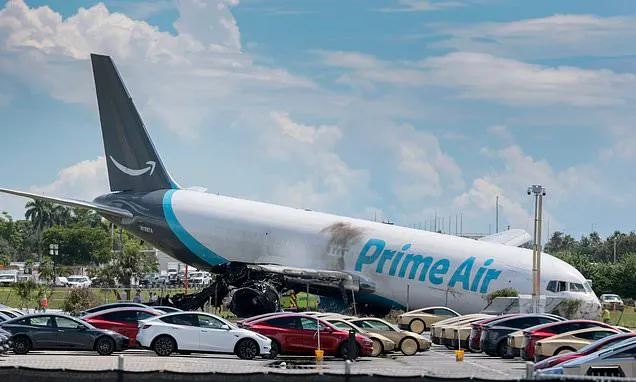
Amazon has suspended its cargo operations with 21 Air, the carrier involved in a fatal runway overrun incident at Miami International Airport on September 6. The decision follows a review of the circumstances surrounding the crash, which resulted in the deaths of five individuals. Amazon spokesperson Kelly Nantel stated that the company has been supporting the ongoing investigation into the accident and, after reviewing related details, opted to pause its work with the cargo airline.
Amazon Shifts Operations Amid Safety Review
In the wake of the Miami crash, Amazon has rerouted the shipments previously handled by 21 Air to other carriers. These include Sun Country Airlines, Hawaiian Airlines, Air Transport International, ABX Air, ASL Airlines, and Carojet. This move underscores Amazon’s commitment to ensuring the safety and reliability of its logistics network, especially after a significant incident involving one of its partners.
21 Air’s Response and Past Allegations
North Carolina-based 21 Air, which primarily handles cargo between the United States and Mexico, has expressed its dedication to supporting those affected by the crash. The company is actively cooperating with the National Transportation Safety Board (NTSB) and other partners during the investigation. A statement from 21 Air asserted confidence in their safety protocols, procedures, and training.
However, reports citing former employees and legal documents suggest a history of safety concerns within the company. According to interviews and records, some former employees claimed they were dismissed after raising issues related to flight safety. One pilot, Karl Seuring, who has over three decades of aviation experience, reportedly filed a legal complaint alleging retaliation after voicing safety concerns to management. He stated that when he raised issues, he was told, “It’s not going to change.”
Pilot Retaliation Claims
Seuring’s case, which involved claims of retaliatory firing after he reported safety issues, was initially dismissed by the Occupational Safety and Health Administration. He subsequently appealed this decision before a Department of Labor tribunal, where the case remains pending. Documents cited in reports indicate that several pilots had lodged complaints regarding aircraft maintenance, inadequate rest periods for flight crews, and issues with pilots’ English proficiency for safe communication. These complaints, according to the reports, were allegedly not adequately addressed by 21 Air management.
Seuring’s attorney, Michael Anello, also brought to light claims that another 21 Air pilot, Johnny Salmonson, felt pressured to operate flights that potentially violated required rest period regulations. Anello suggested that management’s pressure on pilots led to instances of retaliation.
Specific Safety Incidents Alleged
During testimony, Seuring detailed an incident in April 2022 where a mechanical issue caused a plane to accelerate uncontrollably, reaching speeds that could have damaged its wing flaps. He described feeling “concerned for my own safety” during this event. He also testified about an alleged incident in the spring of 2022 involving a 21 Air plane flying from Alabama to Trinidad. This flight reportedly experienced a pressurization problem, necessitating an emergency diversion to Puerto Rico. Seuring accused the captain of that flight of lacking command, requiring first officers to intervene to ensure the plane landed safely.
The captain in question, Amir Anoshiravani, denied these allegations to CBS News, stating he had never encountered Seuring and suggesting Seuring’s claims stemmed from anger over being fired. Another former 21 Air pilot, Bruce Joseph, testified in March 2024 that safety issues were frequently discouraged from being reported. Joseph alleged that the company’s former director of safety advised him against logging a safety concern without first consulting the then-CEO, Mike Mendez. Joseph indicated that his concerns were only logged on rare occasions when he insisted, which often resulted in negative repercussions from Mendez.
The Miami Crash Investigation
The crash on September 6 involved a Boeing 767 cargo jet operated by 21 Air as Flight 7598. The aircraft overran the runway at Miami International Airport, crashing through a fence and onto a local street, where it collided with vehicles. The five victims were identified as Rolando Aleman, 55; Yoel Rodriguez Naranjo, 53; Julio C Pineda, 75; Carlos Acosta Fajardo, 53; and Javierkys Reyes Quevedo, 47. The pilots, Joseph Carroll, 55, and Jaime Felipe Silva Molina, 37, were hospitalized but have since been released.
Preliminary findings from the NTSB indicate that during the landing attempt, one pilot cautioned the other about the aircraft’s excessive speed. The cockpit voice recorder data revealed a lack of consistent verbal response to these speed concerns. Approximately 15 seconds after touching down, a pilot initiated a go-around maneuver, attempting to abort the landing and circle back for another approach.
The flight data recorder showed an increase in thrust during the landing phase, consistent with a go-around attempt. However, investigators noted that the speed brakes and thrust reversers, crucial for slowing the aircraft, were not deployed. The reason for this remains under investigation. The NTSB also pointed out that Miami International Airport is not equipped with an Engineered Materials Arresting System (EMAS), a safety feature designed to stop overrunning aircraft at the end of runways.
Conclusion
Amazon’s decision to suspend operations with 21 Air highlights the critical importance of safety in air cargo logistics. While 21 Air cooperates with the ongoing investigation and maintains confidence in its safety procedures, allegations of past safety issues and retaliatory practices have surfaced. The NTSB’s investigation into the Miami crash is expected to provide further clarity on the factors contributing to the tragic event.