Deciding whether to install a Level 2 electric vehicle (EV) charger at home hinges on several factors, primarily your vehicle’s battery size, its charging speed capabilities, and your daily driving habits. While standard household outlets can charge EVs, a Level 2 charger offers significantly faster charging, which may be essential for drivers with larger batteries or longer commutes.
Understanding Your EV and Charging Needs
The first step in determining your need for a Level 2 charger is to assess your current electric vehicle or plug-in hybrid electric vehicle (PHEV). Battery capacities vary widely, from smaller units in city-focused cars like the Fiat 500e (around 38 kWh) to substantial batteries in larger vehicles such as the GMC Sierra EV (up to 155 kWh). PHEVs typically have smaller batteries, like the Toyota Prius Prime (14 kWh) or RAV4 Prime (18 kWh).
Your daily mileage is equally crucial. If your commute or typical daily use consumes only a small portion of your EV’s range, a standard 120-volt household outlet might suffice. These outlets provide approximately 1.8 kW of power. For context, charging a PHEV like the Toyota Prius Prime using a standard outlet could take under 10 hours. A smaller EV like the Fiat 500e might take around 21 hours for a full charge. However, larger EVs, such as a Tesla Model 3, could require over 43 hours, and a vehicle with a massive battery like the GMC Sierra EV might need more than 86 hours – over three and a half days – to fully recharge from a standard outlet.
EV Charging Speed Limitations
Beyond battery size, consider your EV’s maximum AC charging rate. Many PHEVs have lower AC charging limits, for instance, the Toyota Prius Prime at 3.5 kW and the RAV4 Prime at 7 kW. Battery electric vehicles also differ; some models, like the Nissan Ariya, MG4, and Kia e-Nero, are capped at 7.4 kW, while others, including the Tesla Model 3 and Model Y, can accept up to 11 kW.
If your daily driving consumes a significant portion of your battery – for example, using 40% of a Tesla Model 3’s battery (roughly 100 miles) – recharging solely from a standard household outlet could take around 18 hours. This scenario means you’d deplete your battery faster than you can recharge it overnight, making a Level 2 charger a practical necessity.
What is a Level 2 EV Charger?
Level 2 chargers are distinct from DC fast chargers. They operate on AC (alternating current) power and are designed for home or commercial installation. Unlike standard 120-volt outlets, Level 2 chargers typically connect to a 240-volt circuit, similar to those used for large appliances like electric ovens or clothes dryers. This higher voltage allows for significantly faster charging speeds, generally ranging from 3.3 kW to 11.5 kW for residential units, depending on the home’s electrical capacity and the charger’s amperage.
When you plug your EV into a Level 2 charger using either a J1772 connector or a Tesla NACS connector, the vehicle’s onboard charger converts the AC power to DC power for the battery. The charging speed you experience will be limited by the lower of either your EV’s maximum AC charging rate or the charger’s output capacity.
When a Level 2 Charger Makes Sense
For many PHEV owners or those with smaller EVs who drive less than 50 miles daily and use less than 15 kWh of energy, a standard household outlet may be perfectly adequate. Overnight charging on a 120V circuit can replenish the battery sufficiently for daily needs without the added expense of a Level 2 installation.
However, if your EV has a larger battery, you cover significant distances daily, or you simply want faster charging times, a Level 2 charger is highly recommended. Here’s a breakdown of common Level 2 charger amperages and their benefits:
- 16-amp, 240-volt charger: Offers about 3.5 kW of power, roughly doubling the speed of a standard 120V outlet. This can halve charging times compared to household power.
- 32-amp, 240-volt charger: Provides approximately 7.4 kW, delivering four times the power of a 120V outlet. This could fully charge a Tesla Model 3 in about 11 hours or a GMC Sierra EV in approximately 22 hours.
- 48-amp, 240-volt charger: Delivers up to 11.5 kW, offering the fastest charging speeds for many residential setups. It’s important to ensure your EV can support this high charging rate, as some models are limited to 7.4 kW.
Safety and Installation Considerations
Level 2 chargers often include enhanced safety features not typically found in portable EV chargers. These can include improved grounding, protection against ground faults, and DC leakage protection, offering greater peace of mind, especially in older homes with potentially outdated wiring. Many also provide energy monitoring capabilities to help manage power consumption and avoid overloading home circuits.
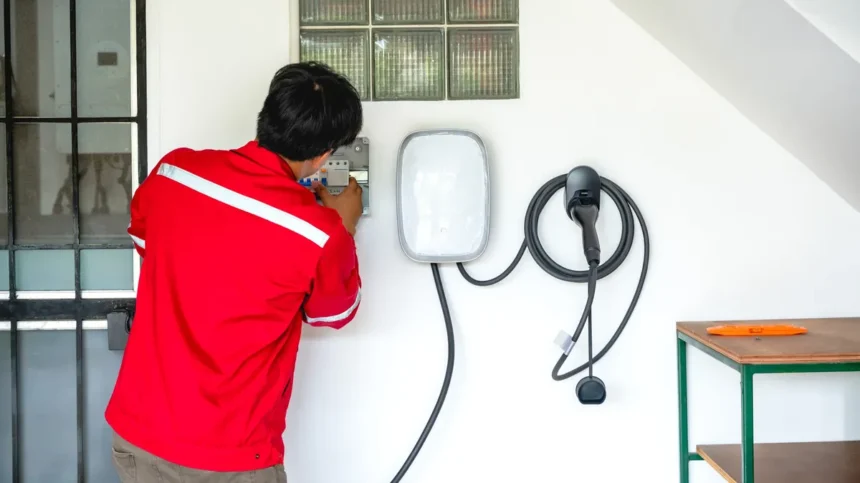
Installation is a key consideration. Most modern homes with 200-amp electrical service can support a Level 2 charger. However, homes with older or smaller electrical panels (100 amps or less) might require an electrical service upgrade, which can be a significant expense. It is essential to consult a qualified electrician to assess your home’s electrical system and determine the feasibility and cost of installation.
The cost of a Level 2 charger unit itself typically ranges from $250 to $700, with prices varying based on amperage, brand, and included features like smart connectivity or cord management. Installation costs, however, can range from several hundred to several thousand dollars, depending on the complexity of the job, any necessary electrical upgrades, and local labor rates.
Conclusion: Making the Right Choice
In summary, a Level 2 EV charger is a worthwhile investment for most EV owners who drive more than 50 miles daily, have larger battery vehicles, or simply desire quicker charging times at home. If you own a PHEV or a small EV and your daily mileage is low, a standard household outlet may suffice. Always verify your EV’s maximum AC charging speed and ensure your chosen Level 2 charger is compatible. For those with existing high-power outlets, such as those for large ovens or RVs, a compatible Level 2 charger might be plug-and-play, but always confirm wiring safety with an electrician.