A significant rift has reportedly emerged between King Charles III and his late sister Princess Diana’s brother, Earl Spencer, following explosive claims made in Spencer’s new memoir. The core of the dispute centers on an alleged comment made by the then-Prince Charles just days after Diana’s death in 1997, suggesting she would soon be “forgotten.” Buckingham Palace has issued an unprecedented statement refuting the accusation, suggesting that grief can distort memory.
Earl Spencer’s Memoir Alleges Royal Outburst
In his forthcoming book, titled Swan Song: Diana, My Sister, Earl Spencer recounts a heated exchange with Prince Charles concerning the funeral procession for Princess Diana. Spencer writes that he objected to the idea of Diana’s sons, a 15-year-old Prince William and a 12-year-old Prince Harry, participating in such a public and emotionally taxing event. He stated that he told the then-heir to the throne, “That’s not going to happen,” believing it was contrary to his sister’s wishes.
According to Spencer’s account, this stance provoked an angry reaction from Prince Charles. The Earl claims that Charles became furious, launching into a tirade that included the alleged remark: “Rest assured, we’ll forget her soon enough.” Spencer describes himself as stunned by the comment, reportedly responding, “I can’t believe you just said that,” before ending the conversation.
The memoir also details a conversation where Charles allegedly questioned the Spencer family’s sense of duty. Charles reportedly referenced his own experience walking in the funeral procession of his great-uncle, Lord Mountbatten, in 1979. Spencer countered that Charles was 30 years old at the time of Mountbatten’s funeral, implying a difference in maturity and context compared to the grieving princes.
Buckingham Palace Responds with Strong Rebuke
Buckingham Palace has responded to the claims with a statement that has been described as an “extraordinary” and “unprecedented slap-down.” While generally adhering to a policy of not commenting on book publications, the Palace made an exception in this instance. A Royal spokesman stated: “While we do not comment on books as a matter of principle, His Majesty is mindful that the pain of fraternal grief can cloud reason, affect judgement and colour memory in ways others do not recognise, even many years after such a loss.”
This response has been widely interpreted as a thinly veiled critique of Earl Spencer’s recollection. Royal observers have noted the similarity to the late Queen Elizabeth II’s famous “recollections may vary” remark, used in response to controversial claims made by Prince Harry and Meghan Markle during their interview with Oprah Winfrey. The Palace’s statement suggests that the King’s aides believe Spencer’s memory may be affected by his own grief.
Sources close to the King have also pushed back against the alleged comment, describing it as “just not in his nature” and particularly out of character for someone who was himself “absolutely grief-stricken” at the time. These sources highlighted that it was then-Prince Charles who insisted on a full state-style ceremonial funeral for Diana, overruling protocol, which they argue contradicts the idea that he wished to forget her.
Context of Diana’s Funeral and Earl Spencer’s Role
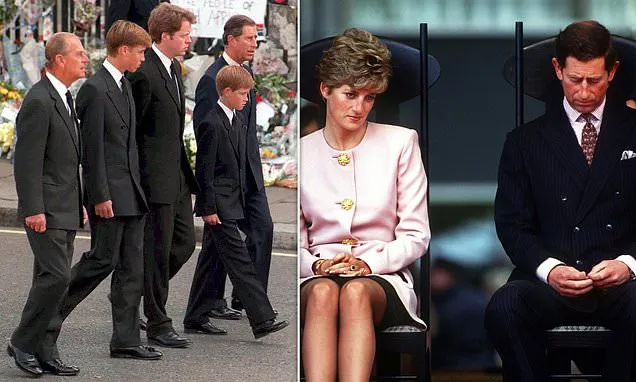
Princess Diana died in a car crash in Paris on August 31, 1997, at the age of 36, triggering a period of intense public mourning worldwide. Six days later, on September 6, 1997, Earl Spencer delivered a powerful eulogy at her funeral in Westminster Abbey. The speech, widely acclaimed for its emotional impact and defiance, was delivered after he walked in the funeral procession alongside his nephews, Prince William and Prince Harry, as well as Prince Charles and Prince Philip.
Earl Spencer, now 62, has stated that he wrote his memoir to address what he perceives as “untruths” that have been circulated about his sister. The book is set to be published worldwide next Tuesday, with an exclusive serialization beginning earlier this week. The publication has already generated significant attention, including reports of the theft of four copies of the book from a parked lorry in the Netherlands, which are being investigated as “extremely suspicious.”
Broader Implications and Royal Relations
The controversy surrounding Earl Spencer’s memoir adds another layer of complexity to the ongoing narrative of the Royal Family’s public image and internal dynamics. Coming shortly after the return of the Duke and Duchess of Sussex to the UK, the revelations threaten to reignite public discussion about past events and relationships within the monarchy.
The memoir promises further revelations about Diana’s marriage to Charles and the tumultuous period following her death. The stark disagreement between Earl Spencer and Buckingham Palace over the alleged comment underscores the enduring sensitivity surrounding Princess Diana and the events of 1997. The differing perspectives highlight the challenges of reconciling personal memory, public perception, and official accounts of significant historical moments.
As the book prepares for its official release, the public discourse is likely to focus on the veracity of Earl Spencer’s claims and the Palace’s strong denial. The situation presents a rare public confrontation between a senior royal and a member of the late Princess’s family, mediated through the lens of a highly anticipated memoir.