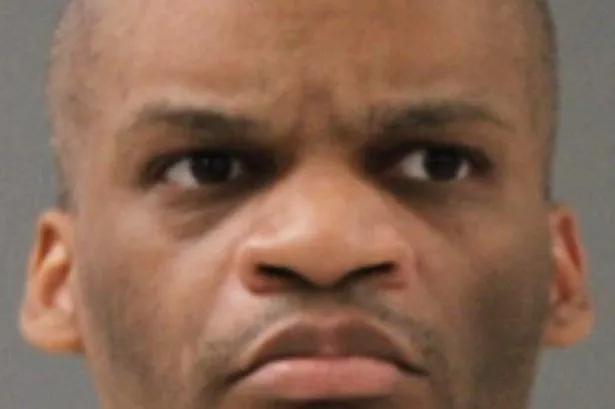
A 40-year-old man, LeJames Norman, was executed by lethal injection in Texas on Wednesday, September 16, for the 2005 murders of three of his neighbors. The execution took place at the Texas state penitentiary in Huntsville, 21 years after the brutal crime spree that stemmed from a botched drug robbery. Norman’s bid for a stay of execution was denied by the U.S. Supreme Court on the day of his death.
The 2005 Murders in Edna, Texas
The tragic events unfolded in Edna, Texas, in 2005 when Norman and his co-defendant, Ker’Sean Ramey, broke into a neighbor’s home. Their objective was to steal cocaine, but they found no drugs. Instead, they committed a horrific triple murder, killing Samuel Roberts, 24, Tiffani Peacock, 18, and Celso Lopez, 38. All three victims were residents of the same neighborhood as Norman.
Court documents detail the extreme violence of the attacks:
- Celso Lopez sustained four gunshot wounds, with three bullets striking the back of his head.
- Tiffani Peacock was shot twice in the head.
- Samuel Roberts suffered five gunshot wounds to his chest, neck, and head.
The motive for the murders was the failed attempt to locate drugs within the victims’ residence. The brutality of the crime shocked the small community.
Norman’s Apprehension and Conviction
Following the murders, Norman evaded capture for approximately five months. He was apprehended near the U.S.-Mexico border as he attempted to re-enter the country. During subsequent legal proceedings, Norman confessed to capital murder for the deaths of his three neighbors. A jury found him guilty and sentenced him to death for his role in the killings.
Ker’Sean Ramey, Norman’s co-defendant, also faced charges for the same crimes. He was likewise convicted and sentenced to death. His execution is reportedly scheduled for the following week.
The Execution of LeJames Norman
At 6:00 PM local time on Wednesday, September 16, LeJames Norman was put to death via lethal injection. When asked if he wished to make a final statement by the prison warden, Norman reportedly shook his head, indicating he had nothing to say. His sister, two of his children, and a friend were present to witness the execution. According to reports from the Houston Chronicle, Norman’s witnesses maintained eye contact as the lethal dose of the sedative pentobarbital was administered. Observers noted that Norman took a few deep breaths, appeared to yawn, and made several snoring sounds before all movement ceased.
A doctor examined Norman and officially declared him deceased at 6:44 PM. His body was then covered with a white sheet, with only his right hand and lower forearm, wrapped in a bandage, remaining visible.
No relatives or friends of the victims, Samuel Roberts, Tiffani Peacock, or Celso Lopez, were present to witness Norman’s execution.
Executions in Texas and the U.S.
LeJames Norman’s execution marked the fifth such event in Texas in the current year. The state of Texas has historically been one of the most active in carrying out the death penalty. Nationally, Florida has conducted more executions than any other state, accounting for over half of the 25 executions that had taken place across the United States up to that point in the year.
Legal Appeals and Finality
The U.S. Supreme Court’s rejection of Norman’s request for a stay of execution was the final legal hurdle cleared before the sentence could be carried out. Such appeals are common in capital cases, often focusing on issues related to the trial, sentencing, or the method of execution. In this instance, the court’s decision allowed the execution to proceed as scheduled, bringing a close to the legal chapter of the 2005 triple murder case.
The case highlights the long passage of time that can occur between a conviction for a capital crime and the execution of the sentence, with Norman spending 21 years on death row. The finality of the execution brings closure for some, while the memory of the victims and the circumstances of their deaths remain a somber part of the community’s history.