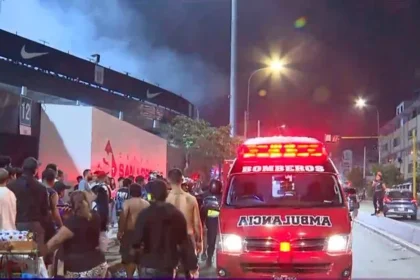
Red-light cameras across Ontario target everyday drivers, but emergency responders, particularly police officers, report facing unfair penalties when rushing to urgent calls. Unions representing officers argue that these automated systems undermine their ability to perform critical duties without fear of docked pay.
Union Raises Alarm in Windsor
The Windsor Police Association, which represents nearly 500 officers, states that each red-light camera infraction results in a six-hour pay deduction for the first offense and 12 hours for subsequent ones. “You’re working a day and a half for free,” says Kent Rice, president of the association.
Rice emphasizes that officers receive extensive training and exercise professional discretion, especially in high-stakes situations. He argues that current practices contradict the intent of relevant legislation. “I understand balancing the line between public safety, but I also believe this was never the intent of the legislation put in place. They’re given discretion for a reason,” Rice explains. “I don’t think the public would agree that this is what the intent of the legislation should be.”
For instance, during priority calls like active domestic incidents, break-ins, or shootings, officers may proceed through a red light—particularly a right turn at night—after assessing visibility. “You can see from blocks around that nobody is coming,” Rice notes, highlighting how call type, time, and intersection conditions influence decisions. He urges authorities to prioritize response focus over potential penalties. “I want them to be focused on doing their job, and getting to the emergency, and not being concerned about being disciplined and issued a penalty for going through a red light,” he adds.
Officers Share Frustrations
A current Windsor officer, speaking anonymously due to concerns over retaliation, describes docking pay after a red-light camera caught him during a Priority 1 call—the highest urgency level. He arrived in time to make an arrest but received a six-hour pay cut instead of commendation. “Instead of getting a, ‘Great work, you caught the guy,’ it’s, ‘Here’s your six-hour tariff,'” the officer recounts.
In the heat of the moment, safety remains paramount. “We all drive safely. You roll to almost a complete stop, you look both ways and if it’s clear, you go because your mindset is, ‘I gotta catch this guy.’ That’s what we signed up to do,” he says. The experience breeds resentment: “Anger is the emotion. You feel so betrayed by your organization.” Now, officers second-guess responses, which the officer finds demoralizing and unnecessary. He calls for a rational review of circumstances to grant exemptions when justified.
Rice reports no known cases where pay docking was waived, even when officers fully stop at intersections. Cruisers’ rapid acceleration can still trigger cameras in wide areas, he explains.
Variations in Emergency Service Policies
Ontario’s Highway Traffic Act permits police to proceed through red lights with activated lights and sirens after stopping and confirming safety. Windsor maintains 20 such cameras citywide.
While crashes involving first responders occur—such as a 2024 Winnipeg incident where an officer pleaded guilty—Rice points to existing accountability measures, including internal reviews, the Special Investigations Unit, and the Law Enforcement Complaints Agency. “That’s the goal of it. The officer has to come up to the intersection—they use discretion and judgment,” he says.
Paramedics in Essex-Windsor face potential discipline for infractions, but the County of Essex handles ticket payments or challenges after investigation. Firefighters in Windsor typically pay fines themselves, though past traffic-light override tech minimized issues; current upgrades have paused this capability, notes Chief Fire Prevention Officer John Smith.
The City of Windsor designs its system to exempt visible emergency responses. “Upon review, if the emergency lights (lights, sirens) are visible in the red light camera picture image captured, a ticket will not be issued as there is evidence that the vehicle was responding to an emergency,” states Michael Janisse, senior manager of communications.
Discretion in Larger Cities
In Toronto, the Police Service conducts internal reviews for exemptions. “If it is determined that no exemption applies, prescribed hours are docked from the officer’s pay as a penalty,” says Stephanie Sayer, manager of corporate communications.
London’s police union echoes Windsor’s concerns. President Gareth Harris cites a recent call for a non-breathing baby where an officer arrived first to assist but lost six hours of pay for not fully stopping at a nighttime red light during a right turn, despite active lights and sirens. “That’s a pretty serious call in our estimation,” Harris says. “In most circumstances, I think most people would say that should be a justifiable offence.”
Harris advocates considering call nature, weather, traffic, and time before penalties. The London Police Service confirms reviews: “If it is determined that the failure to stop was justified in the circumstances, there is no further action taken,” states Const. Matthew Dawson, media relations officer.
Provincial Government’s Position
The Ministry of the Solicitor General has not clarified if red-light cameras were meant to discipline first responders. A spokesperson directs inquiries to individual services: “Questions related to the internal disciplinary practices of police services or other emergency services should be directed to those organizations,” says Brent Ross.