The Hidden World of Bryophytes
Among Earth’s oldest plant colonizers, bryophytes first emerged nearly 500 million years ago. These moisture-dependent organisms thrive in rainy climates, making the United Kingdom’s environment particularly hospitable. The archipelago hosts nearly 300 liverwort and 770 moss species – representing approximately 5% of global bryophyte diversity.
Nature’s Luminous Tapestry
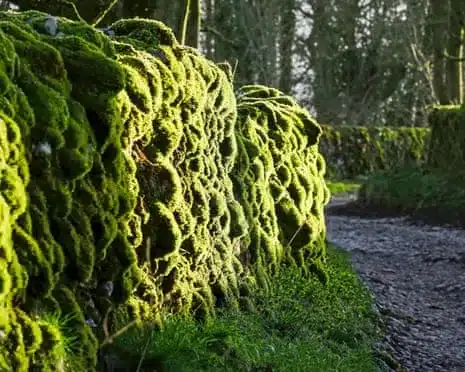
Though often overlooked, bryophytes transform landscapes during wet conditions. Their vibrant green hues intensify with rainfall, creating living carpets across forest floors, dense coatings on tree bark, and lush expansions in urban lawns. One observer noted that until recently, they hadn’t realized multiple bryophyte species existed.
When examined closely, these ancient plants reveal astonishing complexity. Their millimeter-long leaves exhibit thousands of subtle variations in growth patterns, twisting formations, and weather-responsive adaptations that challenge identification efforts.
Limestone Walls Come Alive
Derbyshire’s limestone structures showcase particularly remarkable bryophyte displays. The undulating walls in Priestcliffe parish demonstrate how these organisms transform stone surfaces into thriving ecosystems. Even novice observers can distinguish numerous species through careful examination.
A Lexicon of Moss Diversity
Distinctive varieties include the silky wall-moss with its smooth texture, frizzled crisp-moss featuring curled leaf tips, comb-moss displaying fine ridges, and glittering wood-moss that shimmers in low light. Notable specimens also include the unusual flat neckera and the visually striking wall scalewort liverwort.
While identification provides scientific interest, these organisms create their most profound impact when merging into continuous emerald formations. As one nature enthusiast described, “They become a serpent of shining green” – a living embodiment of bryophytes’ collective power to transform landscapes through unified growth.
Recent publications highlighting seasonal natural observations have brought renewed attention to these ancient plant communities and their ecological significance.