[ad_1]
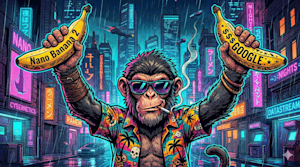
For the final six months, enterprises eager to deploy prime quality AI picture era at scale have confronted an uncomfortable trade-off: pay premium costs for Google's Nano Banana Professional mannequin, or accept cheaper (generally free), sooner, however noticeably inferior options — particularly when it comes to enterprise necessities like embedded correct textual content, slides, diagrams, and different non aesthetic data.
At this time, Google DeepMind is trying to break down that hole with the launch of Nano Banana 2 (formally Gemini 3.1 Flash Picture) — a mannequin that brings the reasoning, textual content rendering, and inventive management of the Professional tier right down to Flash-level pace and pricing.
The discharge comes simply sixteen days after Alibaba's Qwen crew dropped Qwen-Picture-2.0, a 7-billion parameter open-weight challenger that many builders argued had already matched Nano Banana Professional's high quality at a fraction of the inference value.
For IT leaders evaluating picture era pipelines, Nano Banana 2 reframes the choice matrix. The query is not whether or not AI picture fashions are adequate for manufacturing — it's which vendor's value curve most closely fits the workflow.
The manufacturing value downside: why Nano Banana Professional stayed within the sandbox
When Google launched Nano Banana Professional in November 2025, constructed on the Gemini 3 Professional spine, the developer group was impressed by its visible constancy and reasoning capabilities.
The mannequin may render correct textual content in photographs, keep character consistency throughout multi-turn conversations, and observe advanced compositional directions — all capabilities that earlier picture turbines struggled with.
However Professional-tier pricing created a barrier to deployment at scale. In line with Google's API pricing web page, Nano Banana Professional's picture output is priced at $120 per million tokens, understanding to roughly $0.134 per generated picture at 1K pixel decision.
For functions producing hundreds of photographs day by day — assume e-commerce product visualization, advertising and marketing asset pipelines, or localized content material era — these prices compound rapidly.
Nano Banana 2, constructed on the Gemini 3.1 Flash spine, dramatically undercuts that pricing. Flash-tier picture output is priced at $60 per million tokens, roughly $0.067 per 1K picture per picture — roughly 50% cheaper than the Professional mannequin. For enterprises operating high-volume picture era workflows, that's the distinction between a proof of idea and a manufacturing deployment.
What Nano Banana 2 truly delivers
The mannequin is just not merely a less expensive Nano Banana Professional. In line with Google DeepMind's announcement, Nano Banana 2 brings a number of capabilities that have been beforehand unique to the Professional tier whereas introducing new options of its personal.
The headline enchancment is textual content rendering and translation. The mannequin can generate photographs with correct, legible textual content — a traditionally weak level for AI picture turbines — after which translate that textual content into totally different languages throughout the similar picture modifying workflow.
Topic consistency has additionally improved considerably. Nano Banana 2 can keep character resemblance throughout as much as 5 characters and protect the constancy of as much as 14 reference objects in a single era workflow.
This allows storyboarding, product pictures with a number of SKUs, and model asset creation the place visible continuity issues. Google's documentation highlights the flexibility to offer as much as 14 totally different reference photographs as enter, permitting the mannequin to compose scenes incorporating a number of distinct objects or characters from separate sources.
On the technical specification aspect, the mannequin helps full facet ratio management, resolutions starting from 512 pixels as much as 4K, and two pondering ranges that permit builders stability high quality in opposition to latency.
One notable addition that Nano Banana Professional lacks is a picture search device — the mannequin can carry out picture searches and use retrieved photographs as grounding context for era, increasing its utility for workflows that require visible reference materials.
The Qwen-Picture-2.0 issue: why Google wanted to maneuver quick
Google's timing is just not coincidental. On February 10, Alibaba's Qwen crew launched Qwen-Picture-2.0, a unified picture era and modifying mannequin that instantly drew comparisons to Nano Banana Professional — however with a dramatically smaller footprint.
Qwen-Picture-2.0 runs on simply 7 billion parameters, down from 20 billion in its predecessor, whereas unifying text-to-image era and picture modifying right into a single structure.
The mannequin generates natively at 2K decision (2048×2048 pixels), helps prompts as much as 1,000 tokens for advanced layouts, and ranks at or close to the highest of AI Area's blind human analysis leaderboard for each era and modifying duties.
For enterprise consumers, the aggressive dynamics are vital. Qwen-Picture-2.0's 7B parameter depend means considerably decrease inference prices when self-hosted — a essential consideration for organizations with knowledge residency necessities or high-volume workloads.
The Qwen crew's earlier mannequin, Qwen-Picture v1, was launched beneath Apache 2.0 roughly one month after its preliminary announcement, and the developer group broadly expects the identical trajectory for v2.0. If open weights materialize, organizations may run a Nano Banana Professional-competitive picture mannequin on their very own infrastructure with out per-image API fees.
The mannequin's unified generation-and-editing structure additionally simplifies deployment. Fairly than chaining separate fashions for creation and modification — the present {industry} norm — Qwen-Picture-2.0 handles each duties in a single go, lowering latency and the standard degradation that happens when outputs are handed between totally different techniques.
The place Qwen-Picture-2.0 at present trails is ecosystem integration. Google's Nano Banana 2 launches at present throughout the Gemini app, Google Search (AI Mode and Lens), AI Studio, the Gemini API, Google Antigravity, Vertex AI, Google Cloud, and Stream — the place it turns into the default picture era mannequin at zero credit score value. That breadth of distribution is tough for any challenger to copy, significantly one whose API entry is at present restricted to Alibaba Cloud's platform.
What this implies for enterprise AI picture methods
The simultaneous availability of Nano Banana 2 and Qwen-Picture-2.0 creates a choice framework that IT leaders haven't had earlier than within the picture era house.
For organizations already embedded in Google's cloud ecosystem, Nano Banana 2 is the apparent first analysis. The associated fee discount from Professional pricing, mixed with native integration throughout Google's product floor, makes it the trail of least resistance for groups that want production-quality picture era with out re-architecting their stack. The mannequin's textual content rendering capabilities make it significantly well-suited for advertising and marketing asset era, localization workflows, and any software the place legible in-image textual content is a requirement.
For organizations with knowledge sovereignty issues, high-volume workloads that make per-image API pricing prohibitive, or a strategic desire for open-weight fashions, Qwen-Picture-2.0 presents a compelling different — supplied Alibaba follows by way of on open-weight availability. The mannequin's smaller parameter depend interprets to decrease GPU necessities for self-hosting, and its unified generation-editing structure reduces pipeline complexity.
The wild card is Nano Banana Professional itself, which isn't going away. Google AI Professional and Extremely subscribers retain entry to the Professional mannequin for specialised duties, accessible by way of the regeneration menu within the Gemini app. To be used instances demanding most visible constancy and inventive reasoning — assume high-end artistic campaigns or functions the place each picture must look bespoke — Professional stays the ceiling.
The provenance layer: a quiet however essential enterprise differentiator
Buried in Google's announcement is a element which will matter extra to enterprise authorized and compliance groups than any high quality benchmark: provenance tooling. Nano Banana 2 ships with SynthID watermarking — Google's AI-generated content material identification know-how — coupled with C2PA Content material Credentials, the cross-industry normal for content material authenticity metadata.
Google stories that since launching SynthID verification within the Gemini app final November, the function has been used over 20 million occasions to determine AI-generated photographs, video, and audio. C2PA verification is coming to the Gemini app quickly as nicely.
For enterprises working in regulated industries or jurisdictions with rising AI transparency necessities, baked-in provenance is not non-compulsory. It's a compliance checkbox — and one which self-hosted open-weight options like Qwen-Picture-2.0 don't natively present.
The underside line
Nano Banana 2 doesn't signify a generational leap in picture era high quality. What it represents is the maturation of AI picture era from a artistic novelty right into a production-ready infrastructure part. By collapsing the associated fee and pace hole between Flash and Professional tiers whereas retaining the reasoning and textual content rendering capabilities that make these fashions helpful for precise enterprise workflows, Google is making a calculated guess: the subsequent wave of enterprise AI picture adoption can be pushed not by the fashions that produce probably the most stunning photographs, however by those that produce good-enough photographs quick sufficient and cheaply sufficient to deploy at scale.
With Qwen-Picture-2.0 pushing from the open-weight flank and Nano Banana Professional holding the standard ceiling, Nano Banana 2 occupies precisely the center floor the place most enterprise workloads truly dwell. For IT decision-makers who've been ready for the associated fee curve to bend, it simply did.
[ad_2]