Erbil, Iraq — Abdullah Mahmoud Tahir called his son on Saturday night amid rising concerns over drone attacks targeting this northern Iraqi city. “No worries, father, I’ll be OK,” his son replied. Tragically, 90 minutes later, a drone strike killed Walat Tahir while he guarded the closed Erbil airport. Pro-Iranian militia groups face blame for the attack.
Erbil, the capital of Iraq’s Kurdistan region, remains officially uninvolved in the ongoing conflict involving the United States, Israel, and neighboring Iran. Yet, the city endures frequent missile and drone strikes as Iran deploys proxy groups from within Iraq to retaliate. Explosions and anti-missile defenses have become commonplace in this Kurdish city of over one million residents.
Civilian Areas Targeted
Iran describes its strikes as retaliation against U.S. military sites and Israel, but civilian buildings and even a monastery have suffered damage. On Tuesday, the United Arab Emirates condemned an overnight drone attack on its Erbil consulate as an “unprovoked terrorist” act.
“This is against human principles,” stated Jamil Bassam, who worked at an Erbil church struck by a drone on March 4 evening. Thirty-six families resided in the nearby Pope Francis Residential Complex; most fled and hesitate to return.
Airport Under Siege
The church sits close to Erbil International Airport, which hosts a U.S. air base. The Islamic Resistance in Iraq claims responsibility for assaults on the site, citing vengeance for the deaths of Iran’s Supreme Leader Ali Khamenei and Hezbollah leader Hassan Nasrallah.
Kurdistan Regional Government President Masoud Barzani warned that his patience grows thin, accusing pro-Iranian groups of targeting civilian zones, economic infrastructure, and Kurdish peshmerga bases. “We’ve been hit every day by these drones from Mosul and Kirkuk,” said Omar Salimomar, an Ottawa resident born in Erbil and stranded due to the airport closure. He urged the Shia militias to heed Barzani’s call to halt attacks, noting their disregard fuels anxiety for families abroad.
Economic Fallout
The airport shutdown amid the Iran conflict delivers a severe blow to the local economy, according to Ano Jawhar Abdoka, Kurdistan Regional Government’s Minister of Transportation and Communications. “It’s a huge loss,” Abdoka said. “It’s very important for the economy of Kurdistan region. It’s the main way we get our electronics, medicine, and the closing of the airport is affecting a lot of businesses.”
Abdoka labeled airport drone strikes as “acts of terror” and demanded Iraqi government control over the militias. “They are just tools of spreading terror and fear between our people,” he added. “We cannot remain, as Iraqis, under the mercy of proxy, uncontrolled, semi-terrorist militias.” U.S. strikes on nearby pro-Iran militias leave Kurdistan caught in crossfire.
“Now Iraq is very vulnerable, maybe one of the most vulnerable countries because of this conflict,” the minister, who represents Christians, observed.
Rising Casualties
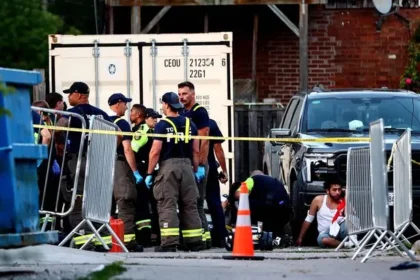
Casualties mount steadily. Nazim Hamad Kanabi recovered in an Erbil hospital Monday after surgery for shrapnel wounds from a weekend drone attack at the airport. “Suddenly I felt something was dropping down from the sky. I woke up and I was inside the hospital,” he recounted. The drone exploded three to four meters away, injuring his legs, right arm, shoulder, and chest.
Across town, Abdullah Mahmoud Tahir mourned his 31-year-old son Walat, a bodybuilder with two young sons. “The only thing we know is that he was on duty and the drone fell close to his position,” Tahir said, calling Iran’s regime “fascist” for striking neighbors it cannot confront directly. “My son, he was a very kind and good person, and he was always seeking peace. But unfortunately, because of the black regime of Iran, he’s been killed. This isn’t our war, but it has been put on our shoulders.”