Deep-Seated Western Grievances Transcend Pipeline Debates
OTTAWA – The federal minister representing Alberta acknowledges that feelings of western alienation run deeper than infrastructure projects, emphasizing that the current political climate demands unity rather than division.
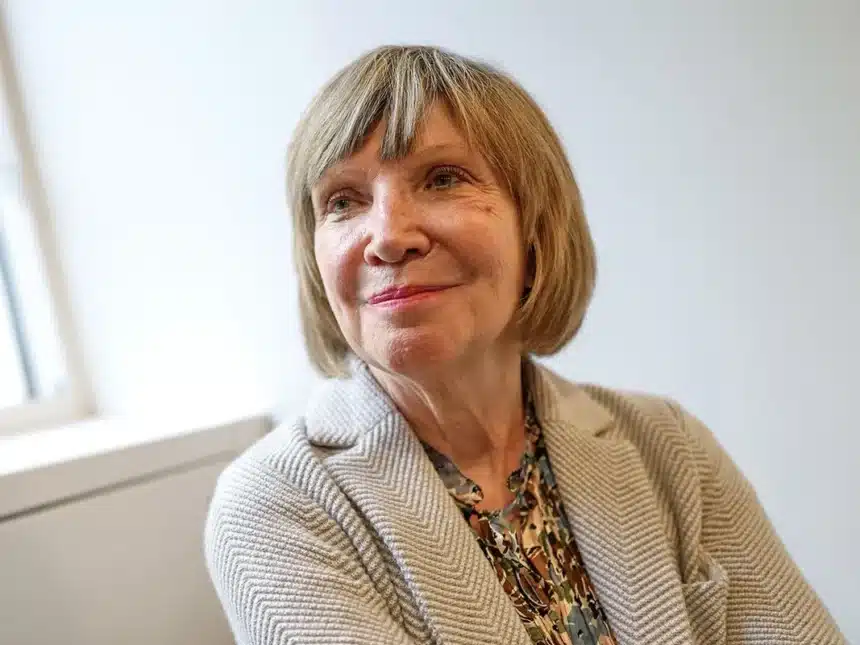
Eleanor Olszewski, the Member of Parliament for Edmonton Centre and the sole Liberal cabinet minister from Alberta, is grappling with the growing calls for the province to consider independence. This sentiment has prompted Alberta Premier Danielle Smith to include a question on the upcoming provincial referendum asking Albertans if they wish to remain in Canada or pursue a formal vote on secession.
Minister Expresses Disappointment in Referendum Question
“Honestly, I’m disappointed in the premier’s decision to put this question, this particular referendum question on a ballot,” Olszewski stated in a recent interview. She believes the timing is particularly ill-advised, given existing uncertainties stemming from international trade disputes and global economic disruptions. “This is not the time to be dividing Canadians, or to be … putting a choice to Albertans,” she asserted. “Honestly, out of all the times in our history … it’s not the time. This is a time for unity.”
Olszewski indicated she has not yet personally conveyed her reservations to the premier. However, she noted that the referendum question has elicited offers of support from her federal colleagues, including Prime Minister Mark Carney, who was raised in Edmonton. According to Olszewski, Prime Minister Carney is “very engaged in this issue” and, drawing on his personal connection and past acknowledgments of Alberta’s industrial development, possesses a unique understanding of the province’s perspective.
Resetting Federal-Provincial Relations
Premier Smith has previously commended Prime Minister Carney for his efforts to improve relations with Alberta and foster a more collaborative federalism, a departure from the approaches of his predecessor, whose energy policies were seen as a significant driver of public discontent and separatist sentiment.
A key initiative in the current federal-provincial dialogue involves a proposed deal to advance a new oil pipeline from the oilsands to the West Coast. In exchange, Alberta, a major oil producer, would commit to increasing its industrial carbon tax. Negotiations around this agreement, including setting a deadline for federal approval of the pipeline as being in the “national interest,” preceded the official announcement of the independence question on the referendum ballot.
Alienation Rooted in Deeper Issues
Olszewski views the separatist movement as stemming from issues far more complex than a single infrastructure project. “It’s not a pipeline issue,” she declared. She contends that understanding the roots of western alienation requires firsthand experience and extensive dialogue with Albertans. She described it as a long-standing sentiment of feeling disrespected by the federal government and other Canadians, a feeling that has historically ebbed and flowed.
While federal politicians typically visit Alberta for events like the Calgary Stampede, Olszewski plans a more extensive provincial tour before the October 19 referendum. Her itinerary includes visits to smaller communities beyond Edmonton and Calgary, building on recent trips to Red Deer, Medicine Hat, Camrose, and Airdrie. “It’s my feeling that it’s even more important to do that now,” she emphasized.
Engaging with Albertans
Olszewski, who previously ran unsuccessfully as a Liberal candidate multiple times before winning the Edmonton Centre seat, advises those in Central Canada to take the referendum seriously and actively listen to Albertans. “I think that’s fundamentally important.”
Conservative leaders, including Opposition Leader Pierre Poilievre, have begun organizing to campaign for Alberta to remain in Canada and have called for broader support from leaders. Poilievre has pledged to engage with individuals on both sides of the referendum debate, cautioning against divisive rhetoric that could hinder efforts to persuade those considering separation.
When asked about the potential impact of a Liberal minister’s voice in a predominantly conservative province, Olszewski acknowledged the challenge but stressed the importance of engagement. “It’s a really good question,” she admitted. While some minds may already be made up, she believes it is crucial to be present, to answer questions, and, most importantly, to listen. She reflected that, at times, the Liberal party could have done a better job of this. “Sometimes I do think we could have done a better job,” she concluded.