Top Scientists Warn of Missed Opportunity in AI Revolution
Australia’s leading scientific minds are sounding the alarm, asserting that the nation risks being left behind in the artificial intelligence revolution without a significant increase in research and development funding. Despite a burgeoning data centre industry, a coalition of 640 prominent researchers has united to advocate for greater investment, warning that current underfunding could stifle job creation and productivity gains.
Calls for Increased R&D Investment Amidst Global Competition
As the nation seeks to capitalize on the economic potential of AI, which is being compared to the scale of the 2012-13 mining boom, these researchers are urging lawmakers to prioritize scientific funding. Their lobbying efforts, including direct communication with Members of Parliament, aim to reverse a perceived decline in Australia’s research standing. Currently, Australia invests approximately 1.69 percent of its GDP in science, falling considerably short of the 2.7 percent average observed among OECD nations.
Data Centre Boom Faces Local Capacity Challenges
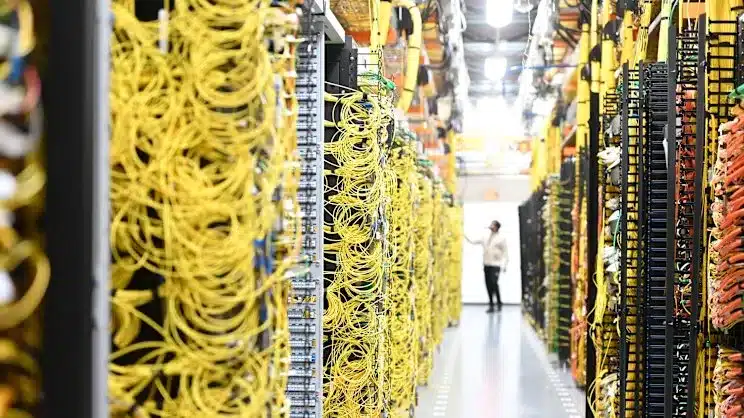
Government officials are actively engaging with international AI companies, known as “hyperscalers,” to attract investment in local data centres – the critical infrastructure powering AI technologies. In the past year alone, these firms have injected nearly $300 billion into data centres in New South Wales and Victoria. This investment parallels the $250 billion channeled into Queensland and Western Australia during the 2012-13 mining boom.
The Risk of Outsourcing Expertise
Hayley Teasdale, head of science at the Australian Academy of Science, voiced concerns echoed by Assistant Minister for Science, Andrew Charlton. They warn that without cultivating local capacity to develop Australian-owned AI products, the nation will not fully benefit from the AI revolution. “We are in the midst of the biggest technological revolution the world has ever seen, and that is happening through AI,” Teasdale stated. “If we invest in homegrown capability, we can bolster our economy through productivity and jobs.”
Teasdale elaborated on the potential pitfalls: “The risk we have is we are not investing in AI capabilities, and we’re not getting enough out of the opportunities that exist for data centres in Australia. While these [data centres] will be built no matter what, our biggest concern is they will not be using Australian talent, skills and science.”
She proposed a solution: “The best solution is for governments to ensure these companies building data centres are investing in local [research and development], because it will make the centres more sustainable over time and build our local AI capability.”
CSIRO Job Cuts and Budgetary Pressures
Despite a recent federal government funding announcement of an additional $387.4 million, the Commonwealth Scientific and Industrial Research Organisation (CSIRO) is reportedly proceeding with plans to cut up to 350 positions. This situation highlights the complex budgetary landscape, where increased research funding must be balanced against growing demands in defense, health, aged care, the National Disability Insurance Scheme (NDIS), and rising interest payments due to national debt and an aging population.
Government’s Stance on AI and Economic Growth
Recent budget adjustments by the government have introduced more favorable R&D incentives for certain businesses. Assistant Minister Charlton emphasized the broader objective: “The real prize is not simply hosting the infrastructure of the AI age, but using it to build a more productive economy, create better jobs, lift living standards and support a vibrant culture that helps create new Australian businesses.”
Australia’s Global Standing and Historical Innovations
Australia currently ranks among the top 10 nations globally for data centres, with an estimated 278 facilities. The Academy’s “Restore Science” campaign, described as its most significant in 70 years, follows a poignant appeal from the late Professor Richard Scolyer, former Australian of the Year. Professor Scolyer, shortly before his passing, urged continued public and governmental support for scientific and medical research, calling it the most impactful way to drive progress.
Professor Sam Berkovic, President of the Australian Academy of Science, acknowledged Australia’s proud history of innovation, citing contributions like Wi-Fi, sunscreen, the cochlear implant, and the cervical cancer vaccine. However, he cautioned: “The reality is that it spends a third of what its global peers do when it comes to backing scientists, researchers and doctors.”
Prime Minister Anthony Albanese indicated an upcoming announcement regarding health research.