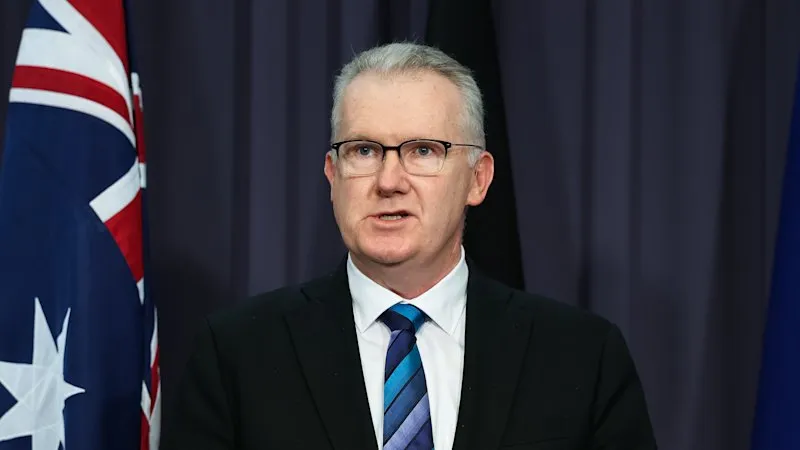
A significant debate is unfolding within Australian government agencies and among international envoys regarding the definition of terrorism, specifically concerning the role of religion and ideology. Home Affairs Minister Tony Burke has indicated the government is unlikely to alter the current wording, which includes religious and ideological motivations, despite calls for change from some special envoys.
Contrasting Views on Terrorism Definition
The discussion pits the Special Envoy to Combat Islamophobia, Aftab Malik, against the Special Envoy to Combat Antisemitism, Jillian Segal, and raises concerns from domestic spy agency ASIO. At the heart of the matter is whether the definition of terrorism should continue to emphasize religious, political, or ideological motivations, or shift focus towards the capacity to cause harm and erode social cohesion.
Call to De-emphasize Religious and Ideological Motivation
Aftab Malik, in his submission to an antisemitism royal commission, proposed that the government reduce its reliance on ideological, political, or religious motivation as central criteria for defining terrorism. Malik argued that the current definition is insufficient for addressing modern extremism, which he described as often hybrid, intersecting, fluid, and driven by personal grievances rather than coherent ideologies. He suggested that greater emphasis should be placed on the actual outcomes of extremist activity, such as the ability to mobilize harm, incite violence, and undermine social cohesion, irrespective of the underlying ideological path.
A coalition of 15 Muslim groups has echoed this sentiment, advocating for the removal of “religion and ideology” as recognized motivations for terrorist acts.
Government’s Stance and Ongoing Review
Minister Tony Burke stated that while the government is considering Malik’s report, he is personally “comfortable with the definition that we use” for terrorism. He noted that the current definitions align with global standards and facilitate cooperation with international partners. The government’s formal response to Malik’s report is pending.
Meanwhile, the Independent National Security Legislation Monitor (INSLM), Jake Blight, is conducting a comprehensive review of Australia’s national security and counter-terrorism laws. A key aspect of Blight’s review is whether the Criminal Code Act’s reference to violence seeking to “advance a political, religious or ideological cause” remains appropriate. Blight believes that terrorism has evolved since the September 11 attacks, necessitating a re-evaluation of the definition to ensure all terror attacks are treated equally, regardless of their ideological underpinnings.
Concerns Over Stigmatization and Propaganda
Blight expressed concern that explicitly including religion in the terrorism definition could inadvertently stigmatize Muslim Australians and play into the propaganda of extremist groups like the Islamic State. He argued that by repeatedly associating these groups’ actions with “religious work” or “holy work,” authorities might inadvertently grant them undeserved credibility. Blight suggested that attacks by groups such as IS could be adequately covered by referencing ideology alone, without the need to specifically name religion.
Malik’s submission to Blight’s review further elaborated on this, calling for the removal of religious motive from any statutory or policy definition of terrorism in Australia. He contended that such a focus has contributed to the stigmatization of Muslim Australians, increased polarization between social groups, and fostered an environment of suspicion and fear.
ASIO’s Strong Opposition and Data
The Australian Security Intelligence Organisation (ASIO) has strongly opposed any changes to the current definition. In its submission, ASIO argued that retaining “political, religious, or ideological” motives is crucial. These motivations, ASIO stated, reflect core belief systems that can be effectively leveraged to mobilize large numbers of people towards violent action. Obscuring these motives, ASIO warned, could significantly hinder the implementation of effective interventions and preventative actions, potentially leading to “catastrophic consequences.”
ASIO provided data indicating that from 2014 to 2025, 13 out of 16 terror attacks in Australia were religiously motivated. Of these, 12 were linked to Islamist violent extremism, and one to Christian violent extremism. ASIO believes that the current definition accurately captures these motivations and aids in identifying and countering threats.
Law Enforcement and International Alignment
The Australian Federal Police (AFP) also defended the existing definition, asserting that it is clear, has been consistently tested in Australian courts, and aligns with definitions used by key international law enforcement partners. This alignment is seen as vital for effective international cooperation in counter-terrorism efforts.
Special Envoy for Antisemitism’s Support for Current Definition
Special Envoy to Combat Antisemitism Jillian Segal submitted that retaining the terms “political, religious or ideological cause” within the definition is particularly important. Segal argued that these terms help to focus the definition, thereby enabling law enforcement authorities to allocate their finite resources more effectively.
Department of Home Affairs’ Position
The Department of Home Affairs reiterated that the current definition of terrorism “remains fit for purpose.” The department characterized the definition as intentionally precise and one that has undergone frequent scrutiny and testing, reinforcing its suitability for current security challenges.
Conclusion: Balancing Security and Social Harmony
The ongoing debate highlights a complex challenge: how to define terrorism in a way that is both effective for national security and sensitive to social cohesion. While some advocate for a definition focused on the impact of actions, emphasizing the capacity to mobilize harm, others, including key security agencies, believe that understanding the underlying political, religious, or ideological drivers is essential for prevention and intervention. The government’s final decision on whether to amend the current definition, which includes religious and ideological motivations, will have significant implications for counter-terrorism strategies and community relations in Australia.