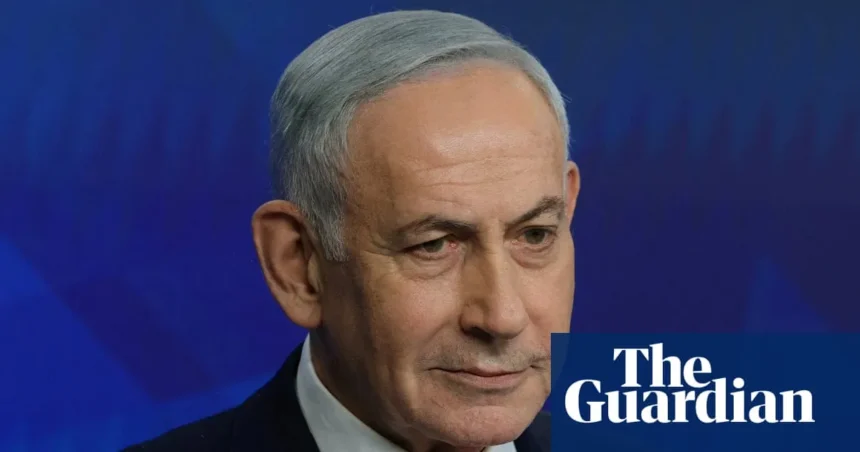
Israeli Prime Minister Benjamin Netanyahu’s public dismissal of a United States-backed proposal for Gaza has sparked considerable skepticism within Israel. Reports suggest that just days prior, Netanyahu himself was involved in finalizing details for a pilot military withdrawal from the territory. This situation highlights the prime minister’s difficult task of navigating conflicting demands regarding Gaza policy from both his domestic coalition partners and international allies.
Domestic Pressures vs. International Diplomacy
Netanyahu’s government relies on support from far-right politicians who advocate for intensified military operations in Gaza and the establishment of Israeli settlements within the territory. Simultaneously, former US President Donald Trump, a significant source of diplomatic and military aid for Israel, reportedly favors a path toward a permanent resolution and the return of Palestinian administration in Gaza, facilitated by the Board of Peace organization he established and leads. With an Israeli election approaching in just over two months, Netanyahu appears to be prioritizing appeasing his domestic allies, who are already actively campaigning.
Rejection of the 15-Point Plan
On Sunday, Netanyahu publicly rejected a new 15-point plan for Gaza. A key component of this proposal was a commitment from Hamas to disarm, a primary demand from Israel. Furthermore, he resisted pressure from the US to cease hostilities in Gaza, Lebanon, and Iran without Israel’s explicit agreement.
This public stance reportedly caught Israeli military commanders by surprise. According to reports from Israel’s Channel 12 television, defense officials stated they learned of the rejection through media reports. “We learned about it today from the media,” an official was quoted as saying. “At the meetings that were held until now, the prime minister personally gave his consent to this plan and to a withdrawal from the points in Rafah.” These meetings had apparently delved into the specifics of three pilot zones in southern Gaza, where an international force, yet to be assembled, would potentially take over from the Israeli military, and outlined the operational interface between these forces.
Defying US Objectives
Netanyahu’s public criticism of the Board of Peace plan seemed to be a direct challenge to US objectives, particularly as it followed a reported visit by Admiral Brad Cooper, the head of US Central Command. Israeli media indicated that Admiral Cooper’s visit was intended to convey the Trump administration’s desire for Israel to conclude its military engagements in Gaza and Lebanon. A senior Israeli military officer informed Channel 13 Television that the American message to the Israel Defense Forces (IDF) was to “move in the direction of shutting down all three theatres of operations.”
Challenging Donald Trump, known for his sensitivity to criticism, is considered a risky maneuver, especially given Israel’s current international isolation and its reliance on US military supplies. However, Netanyahu has a history of bold political strategies, both domestically and internationally, often demonstrating resilience even when facing significant power disparities. This echoes sentiments attributed to former President Bill Clinton, who, after a 1996 meeting with Netanyahu, reportedly questioned, “Who’s the fucking superpower here?”
A Pattern of Divergence
This is not the first instance of Netanyahu diverging from US-backed proposals. In May 2024, US President Joe Biden announced a ceasefire and hostage release plan for Gaza, which Netanyahu subsequently distanced himself from and ultimately rejected. Currently, the US administration appears to be largely dismissing Netanyahu’s recent comments as politically motivated, possibly influenced by military decisions that suggest a greater alignment with Trump’s preferences.
Evidence of this alignment includes Netanyahu’s decision last week to scale back Israeli airstrikes in Gaza by raising the authorization threshold for attacks. Targeted killings now require approval from the chief of staff, rather than a regional commander, unless Israeli forces are in immediate danger. This follows a pattern of Netanyahu yielding to US pressure to de-escalate conflicts that have strong backing from his far-right allies, such as recently limiting the offensive in Lebanon and, the previous year, ordering fighter jets bound for Iran to turn back at Trump’s directive.
Balancing Act and Shifting Alliances
While Netanyahu’s combination of strong domestic rhetoric and some on-the-ground conciliatory actions in Gaza may have bought him time, US patience could be wearing thin before the Israeli elections in late October. Trump also has his own electoral considerations, with the US holding midterm elections just a week after Israel votes.
Netanyahu’s visit to the White House last month was notably understated for a leader who often emphasizes his international statesmanship and close ties with the US president, as noted by the Haaretz newspaper. The visit concluded without a joint statement, underscoring the growing strain caused by the Israeli prime minister’s competing political priorities. “That’s how it is when you try to juggle too many balls; you start dropping them,” the newspaper commented.
Nickolay Mladenov, the top envoy for the Board of Peace, declined to comment on Netanyahu’s rejection of the deal, which reportedly took months to negotiate. He indicated only that “discussions continue.”
The Humanitarian Situation in Gaza
Meanwhile, the humanitarian crisis in Gaza persists. Palestinians have endured nearly a year of severe hardship following a nominal ceasefire brokered by Trump last October, which was intended to halt fighting and facilitate reconstruction. Israeli attacks have continued, resulting in over 1,200 fatalities. Israel has also obstructed the entry of essential equipment, supplies, and fuel required for rebuilding homes, schools, and medical facilities. A significant portion of Gaza’s surviving population resides in tent camps with inadequate sanitation. Although hunger has somewhat abated, food shortages remain widespread. Food security experts have warned that over 70,000 children are projected to require treatment for acute malnutrition by April 2027.
Netanyahu’s office has denied reports that detailed withdrawal plans for Gaza were discussed.