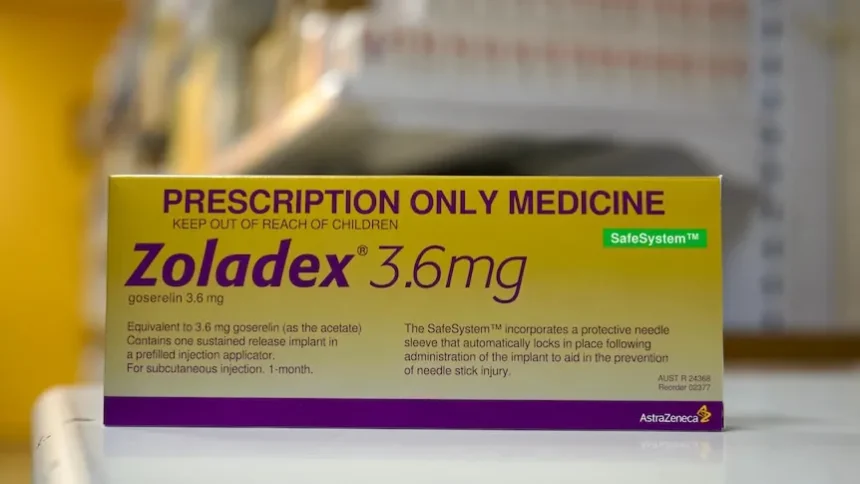
Critical Breast Cancer and Endometriosis Medication to be Discontinued
A major global pharmaceutical company, AstraZeneca, has announced it will withdraw a vital medication used in the treatment of breast cancer and endometriosis from Australian markets in November. The decision has been met with significant distress and confusion from patients who rely on the drug, Goserelin 3.6mg implant, also known as Zoladex.
The medication, which is delivered monthly as a small injected pellet, will be removed from both the Pharmaceutical Benefits Scheme (PBS) and the private market. AstraZeneca has cited commercial reasons for the discontinuation of this specific dosage, though a higher dose of Zoladex (10.8mg), used for prostate cancer, will remain available on the PBS.
Patient Anxiety and ‘Cruel’ Decision
Breast cancer patients, already navigating challenging health journeys, have expressed deep concern and anxiety. Vicki Durston, director of policy advocacy and support services at Breast Cancer Network Australia, stated that many women are worried about the sudden removal of a drug that has proven effective, with no immediate alternatives provided.
“Women are very concerned… this drug that’s been very effective has just been removed with no explanation and no alternative,” Durston said. “They’re already living with fear of recurrence or fear of progression.”
Zoladex 3.6mg functions as a hormone therapy, suppressing the ovaries’ production of estrogen. This is crucial for slowing the growth of certain types of breast cancer and reducing the risk of recurrence, as well as managing endometriosis, a condition fueled by estrogen.
Kate Hardman, a 41-year-old mother of three with stage 4 metastatic breast cancer, has been on Zoladex 3.6mg since 2023. She described the decision as “cruel” and “soul-destroying,” highlighting the immense stress of potentially losing access to a life-saving treatment.
“It’s kind of shocking because for me, that’s life-saving. For a lot of women, that’s saving their fertility, so to have that just taken away is cruel,” Hardman stated. “It’s a bit soul-destroying. You have a price put on your life because if I don’t take it, that could be the end of me.”
Health Authorities Respond to Discontinuation
While the precise reasons for AstraZeneca’s decision remain somewhat opaque, a notification from the Department of Health indicated the removal was a commercial choice by the manufacturer. A spokesperson for AstraZeneca confirmed the dosage removal was part of a global strategy to adjust available options in certain countries, emphasizing it was not linked to the drug’s safety or effectiveness. However, the company did not elaborate on which other nations were affected by this change.
During Senate estimates, health department officials confirmed they had actively sought to keep the medication on the PBS. Duncan McIntyre, a health department official, explained that discussions were held with AstraZeneca and other companies regarding retention, but the company’s decision to withdraw the product from multiple markets was firm.
The Pharmaceutical Benefits Advisory Committee (PBAC), which advises the government on PBS listings, has flagged that the drug’s removal will lead to an “unmet clinical need.” Figures from the Department of Health show that approximately 8,600 patients received the medication in the first three months of the year.
Efforts are underway by health authorities and patient advocacy groups to identify and secure alternative treatment options. The higher 10.8mg dose of Zoladex is available and administered every 12 weeks, but is currently only approved and listed on the PBS for prostate cancer patients in Australia. There is a possibility that the PBAC will consider expanding the PBS listing for this higher dose to include breast cancer patients at an upcoming meeting.
AstraZeneca’s Access Program and Future Outlook
In response to the concerns, AstraZeneca has stated it will offer free access to the 3.6mg implant in Australia for an initial six-month period for patients who do not have alternative treatment pathways. The company is working to provide detailed information about this Zoladex Access Program to clinicians, urging patients to consult their doctors regarding future treatment options.
Dr. Rachel Dear, a clinical oncologist at St. Vincent’s Hospital, acknowledged the reassurance provided by the access program but noted that some patients remain apprehensive. “Being a pre-menopausal woman with early breast cancer going into medical menopause is already a huge overlay on already difficult treatment,” Dr. Dear commented. She expressed hope for the approval of the 10.8mg dose for breast cancer patients but acknowledged uncertainty about whether the longer-acting version is universally the most suitable option.
Context of Pharmaceutical Pricing and PBS
The discontinuation also brings to light ongoing discussions about pharmaceutical pricing in Australia. The PBS significantly subsidizes medication costs for patients. However, some international pharmaceutical companies have previously expressed dissatisfaction with the PBS pricing structure, arguing it undervalues their innovations.
Professor Nial Wheate, a pharmaceutical chemistry expert, suggested that while pricing could be a contributing factor in AstraZeneca’s decision, the government’s negotiation approach is key to maintaining the PBS’s affordability. A spokesperson for the Department of Health reiterated that the removal of medicines from the PBS is initiated by the pharmaceutical companies themselves, as they are private entities making independent commercial decisions.