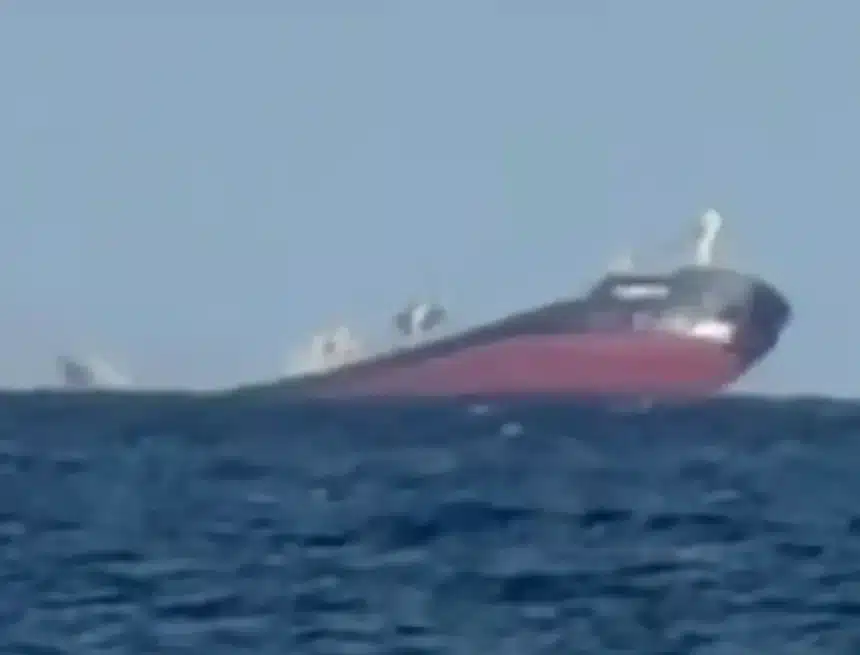
A large cargo ship has sunk in the Black Sea following a Russian missile attack, with reports indicating that ten individuals lost their lives in the incident. Dramatic footage captured the moment the vessel, believed to be a dry cargo ship, capsized in Odesa Bay after sustaining severe damage from Russian strikes. These attacks targeted Ukrainian supply routes and infrastructure.
Escalation in Black Sea Tensions
The strike on the cargo vessel is part of a broader escalation of conflict in the region. Reports suggest that Russia’s actions are a retaliatory measure against recent Ukrainian drone attacks. These Ukrainian operations reportedly targeted approximately 200 vessels belonging to Russia’s “shadow fleet,” which includes tankers and cargo ships.
The specific cargo ship that sank had reportedly been holed several days prior to its final submersion on Sunday, succumbing to the cumulative damage. As the ship listed heavily, its large, red-painted hull became visible before it sank deeper into the water.
Identification of the Sunken Vessel
Some Ukrainian media outlets identified the stricken vessel as the Golden Leo, a ship flying the Turkish flag. It is understood that the Golden Leo was likely carrying grain supplies, a critical export for Ukraine. According to reports, the vessel was struck by three Kh-59/Kh-69 cruise missiles as it was departing the port of Odesa on July 19. One of the missiles is believed to have hit the ship’s superstructure on the starboard side, triggering a fire onboard.
The attack resulted in the deaths of ten individuals. Eight sailors were successfully evacuated and subsequently transported to hospitals for treatment. The fate of any other crew members remains unclear.
Another Vessel Damaged in the Attack
The same strike also impacted another vessel, identified as the AGN Ragnar. This ship, flagged in Palau, was reportedly carrying nearly 2,800 tonnes of corn. While the Ukrainian pilot and seven crew members aboard the AGN Ragnar were rescued, two Indian sailors are reported missing. They are believed to have been thrown into the sea upon impact.
Condemnation of Attacks on Maritime Infrastructure
Ukrainian officials have previously voiced strong condemnation of Russian strikes targeting grain vessels and maritime infrastructure. Such attacks have been characterized by Ukrainian authorities as potential war crimes, given their impact on global food security and civilian lives.
In recent weeks, Russia has intensified its attacks on deepwater ports located in southern Ukraine. These ports are vital for the transit of a significant portion of Ukraine’s grain and other essential cargo. The strategic targeting of these maritime assets underscores the evolving nature of the conflict.
Broader Russian Retaliation
Russia’s retaliatory actions have not been confined to maritime targets. On the night of July 18, Russia launched a substantial barrage of ballistic missiles targeting Kyiv. This aerial assault, lasting approximately 40 minutes, was described as one of the most intense bombardments of the war to date.
The intense missile blitz over Kyiv resulted in numerous fires, claimed at least one life, and injured around 40 people. The targets of this attack reportedly included civilian residences, office buildings, a metro station, and a key logistics hub connected to Ukraine’s armed forces. The widespread damage highlights the indiscriminate nature of some of the strikes.
Context of the Conflict
The ongoing conflict between Russia and Ukraine has had significant repercussions for international trade, particularly concerning grain exports. Ukraine, a major global supplier of agricultural products, relies heavily on its Black Sea ports to facilitate these exports. Disruptions to shipping routes and port infrastructure pose a threat not only to Ukraine’s economy but also to global food security.
Russia’s stated justifications for its actions often relate to perceived security threats and responses to Ukrainian military operations. However, the targeting of civilian infrastructure and commercial shipping has drawn widespread international criticism and concern. The situation remains highly volatile, with potential for further escalation and unpredictable consequences for the region and beyond.
Conclusion
The sinking of the cargo ship Golden Leo and the damage to the AGN Ragnar represent a grave development in the Black Sea conflict. The reported loss of life and the destruction of commercial vessels underscore the severe human and economic costs of the ongoing hostilities. As Russia continues its military operations and retaliatory measures, the international community remains watchful, concerned about the stability of the region and the broader implications for global trade and security.