Australia Confirms First Mainland Bird Flu Outbreak
For years, Australia stood as the sole continent untouched by the devastating H5 strain of avian influenza, a virus that has significantly impacted animal populations globally. However, this changed on Saturday with the confirmation of the first positive case on the Australian mainland.
Discovery and Confirmation
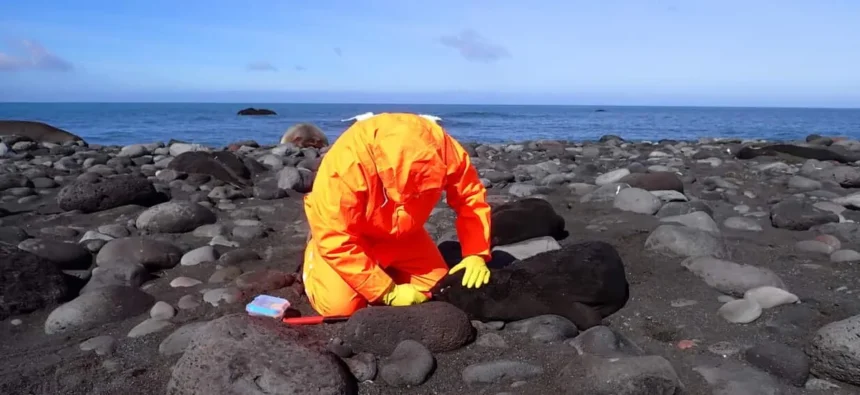
Federal Agriculture Minister Julie Collins announced the detection of the H5 bird flu strain in a migratory bird found in Western Australia. The discovery was made on June 14, when a single, potentially infected sub-Antarctic brown skua was found on a remote beach within Cape Le Grand National Park, located near Esperance, approximately 700km southeast of Perth.
WA Agriculture and Food Minister Jackie Jarvis stated that the bird was observed in an unwell condition on Sunday and subsequently died that night. Jarvis noted that it is unusual for this species to be found on the south coast of Western Australia, as they are migratory. She added that it is not uncommon for sick birds to be blown off course.
Prior to the official confirmation, Minister Collins had indicated on Friday that the development would be “not unexpected, given the spread globally.”
Understanding Avian Influenza
Avian influenza, commonly known as bird flu, is a contagious viral disease primarily affecting birds. It also has the potential to infect other animal populations, including humans.
The highly pathogenic H5N1 strain of avian influenza has been present for over two decades. Strains are classified based on their pathogenicity, or their capacity to cause disease. In birds, including poultry, seabirds, and dense wild bird colonies, H5 viruses can spread rapidly, leading to severe illness, neurological damage, and sudden death.
Infected birds transmit the virus through respiratory secretions and faeces. This can contaminate water, soil, feathers, carcasses, and shared environments, facilitating further spread.
Past Outbreaks and Current Risks
Australia has experienced previous avian influenza outbreaks, but these have historically involved different strains, such as H7 viruses, rather than the globally prevalent H5N1 lineage. The country recorded its first human H5N1 case in 2024, which was associated with overseas travel and involved a child who subsequently recovered.
More recently, H5 bird flu was identified in wildlife on Heard Island, a remote Australian territory in the sub-Antarctic. Researchers estimate that the H5N1 strain was responsible for the deaths of approximately 13,000 elephant seal cubs out of 17,000 born since last August.
Expert Assessment of Human Risk
Dr. Michelle Wille, a senior research fellow from the Centre for Pathogen Genomics at the University of Melbourne, has stated that the risks to the general human population remain low. She cited confirmations from the World Health Organization (WHO), the Food and Agriculture Organization (FAO), and the World Organisation for Animal Health regarding this assessment.
Despite the low risk, the public is urged to report any sightings of sick or deceased wild birds or marine mammals. Individuals can contact the emergency animal disease hotline at 1800675888, which operates across all Australian states and territories.
Members of the public are advised not to touch any dead wildlife but to observe and note details about the animal. Reporting such findings is considered critical.
Preparedness and Resilience
Dr. Wille indicated that the extended duration of the global animal pandemic has provided Australia with valuable time to prepare for the virus’s arrival. This preparation includes the establishment of a Highly Pathogenic Avian Influenza Preparedness Taskforce, comprising representatives from agriculture, environment, and human health sectors. The taskforce has been focusing on identifying and addressing Australia’s vulnerabilities to enhance resilience in wildlife populations.