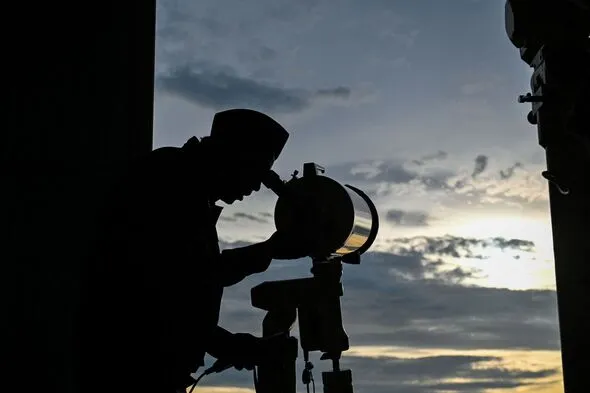
Senior religious leaders, astronomers, and scholars in the UAE convene today, March 18, to observe the Shawwal crescent moon and determine the end of Ramadan. The official announcement for Eid al-Fitr is expected within hours, with the festival likely falling on Thursday or Friday based on astronomical data.
Moon Sighting Developments
A photograph capturing the Ramadan crescent in Abu Dhabi circulates widely on social media, sparking speculation about an early confirmation of Eid al-Fitr. Captured earlier on Wednesday by an astronomical observatory, the image shows the moon sighted during daylight hours before sunset.
Experts clarify that this does not constitute an official religious sighting. Authorised committees in the UAE and Saudi Arabia typically validate observations after sunset. The International Astronomy Center shared details of the sighting, noting it occurred at 1 p.m. UAE time, with the moon positioned 9.2 degrees from the sun.
Eid al-Fitr Traditions: Gift-Giving Customs
Families and friends exchange gifts, sweets, or money—often called “Eidi”—especially for children during Eid al-Fitr celebrations. This practice spreads joy, fosters bonds, and ensures participation in the festivities marking Ramadan’s end.
Many also prioritize Zakat al-Fitr, charitable donations that aid those in need to partake in the holiday.
What is Eid al-Fitr?
Eid al-Fitr ranks among Islam’s most significant festivals, signaling the conclusion of the holy month of Ramadan. Muslims worldwide observe it through special dawn prayers, family reunions, lavish meals, and charitable acts.
The date varies annually, hinging on the new crescent moon’s sighting, as confirmed by religious authorities. Communities in the UK and beyond await the announcement to plan whether celebrations begin Friday or Saturday.