[ad_1]
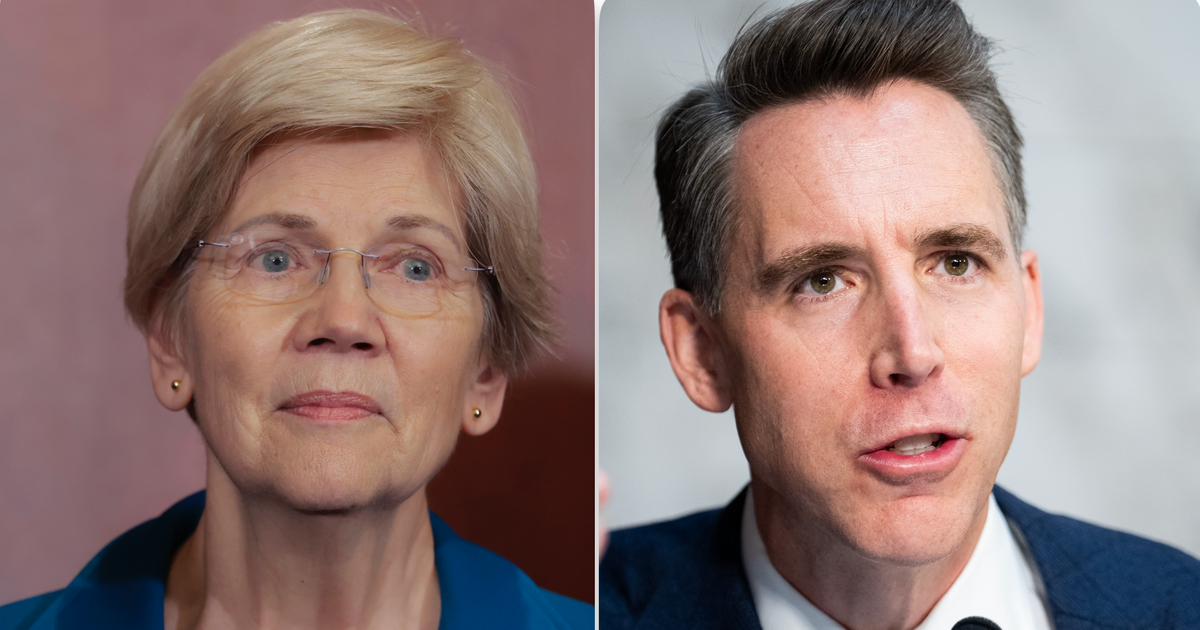
Sens. Elizabeth Warren and Josh Hawley might not agree on a lot — she’s a Democrat from Massachusetts who ran for president in 2020, and he is a Republican from Missouri who’s a staunch ally of President Trump. However they’re teaming up on laws geared toward addressing a few the most important political points heading into the midterm elections: well being care and affordability.
Warren and Hawley are introducing a invoice Tuesday to interrupt up what they name “Massive Medication,” specializing in well being care conglomerates they are saying are manipulating the system, driving up prescription drug prices and stifling competitors, CBS Information has completely realized.
“There is no query that huge well being care firms have created layers of complexity to jack up the value of the whole lot from prescribed drugs to a go to to the physician,” Warren mentioned in an announcement to CBS Information. “The one solution to make well being care extra inexpensive is to interrupt up these well being care conglomerates. Our invoice can be a monumental step in the direction of ending the stranglehold that company giants have on our damaged well being care system.”
“Individuals are paying increasingly for healthcare whereas the standard of care will get worse and worse,” Hawley mentioned in an announcement to CBS Information. “Of their quest to place earnings over individuals, Massive Pharma and the insurance coverage firms proceed to gobble up each impartial healthcare supplier and pharmacy they will discover. Working Individuals deserve higher.”
Getty Photos 
The invoice targets giant well being firms, like UnitedHealthcare or CVS Well being, that personal or management varied components of the well being care provide chain, from the doctor’s workplace to the pharmacy to the Pharmacy Profit Supervisor — often called a PBM — which function the middlemen between drug producers and insurance coverage firms. The laws primarily says {that a} healthcare firm can not personal either side of a transaction. (Supporters of this kind of regulation have known as it the “Glass-Steagall” of well being care, referring to the Nineteen Thirties-era act that separated business and funding banking after the inventory market crash.)
UnitedHealthcare, for instance, owns Optum Rx, a PBM that negotiates drug advantages and reductions. CVS Well being owns the PBM CVS Caremark, and so they additionally personal the insurance coverage supplier Aetna. Optum, Caremark, and ExpressScripts are the highest three PBMs that handle practically 80% of prescription drug claims, in accordance to the impartial well being analysis agency KFF. And, because the senators level out, every of those PBMs are owned by an organization that additionally operates its personal medical health insurance firm, physician’s workplace, and a pharmacy.
The lawmakers argue that by “controlling each the corporate that pays for well being care companies and likewise the entity that units the costs for these well being care companies” these healthcare firms “could also be steering enterprise to their very own suppliers, evading legal guidelines supposed to rein in company profiteering, or utilizing physicians they make use of to spice up authorities funds to their insurance coverage arms.” In addition they level to the methods the consolidation leaves impartial pharmacies unable to compete.
In keeping with the senators, the laws would: prohibit a mother or father firm from proudly owning a medical supplier or administration companies group and a PBM or an insurer and prohibit a mother or father firm of a prescription drug or medical system wholesaler from proudly owning a medical supplier or administration companies group. It might additionally create monetary penalties and allow the Federal Commerce Fee, Well being and Human Companies Division, and Justice Division to convey lawsuits towards those that do not comply.
Business heads have pushed again towards the characterization of the system as market focus. “No I would not agree that it is market focus. I’d recommend it is a mannequin that works very well for the patron,” mentioned CVS Well being Group president David Joyner when pressed by Democratic Rep. Alexandria Ocasio Cortez of New York at a Home listening to on Capitol Hill final month.
PBMs have garnered bipartisan criticism, and new guidelines regulating them have been included within the newest appropriations bundle signed into regulation by President Trump final week. The president has additionally issued govt orders round prescription drug costs, together with one directive to “reevaluate the position of middlemen.”
Warren and Hawley additionally teamed up on PBM laws in 2024. However this new, expanded invoice comes as each events are looking for methods to reign in well being care prices forward of a midterm election that would hinge on the state of the economic system and shopper costs.
Each senators have staked out populist positions inside their events and have crossed the aisle on laws. Lately, Warren teamed up with Sen. Tim Sheehy of Montana on the proper to restore laws that was endorsed by the administration. Final month, President Trump known as Warren after she gave an financial speech to speak a couple of plan to cap bank card rates of interest. Final yr, Hawley launched laws with Democratic Vermont Sen. Peter Welch to extend the federal minimal wage to $15 an hour, a place conservatives have lengthy opposed.
[ad_2]